

Medical device components sit inside equipment where a dimensional error can affect diagnosis, dosing, or a surgical outcome. Housings for imaging systems, surgical instrument handles, implant trial parts, fluidic manifolds, and diagnostic device brackets are all produced by precision CNC machining. This guide explains what makes the category different from general precision work and what a buyer should verify before qualifying a supplier.
The difference is rarely the machine itself. It is the evidence around the part: material traceability, controlled processes, defined cleanliness, validated inspection methods, and documentation that survives an audit. Understanding medical device components as a specification problem rather than a machining problem is the fastest way to avoid a costly requalification later.
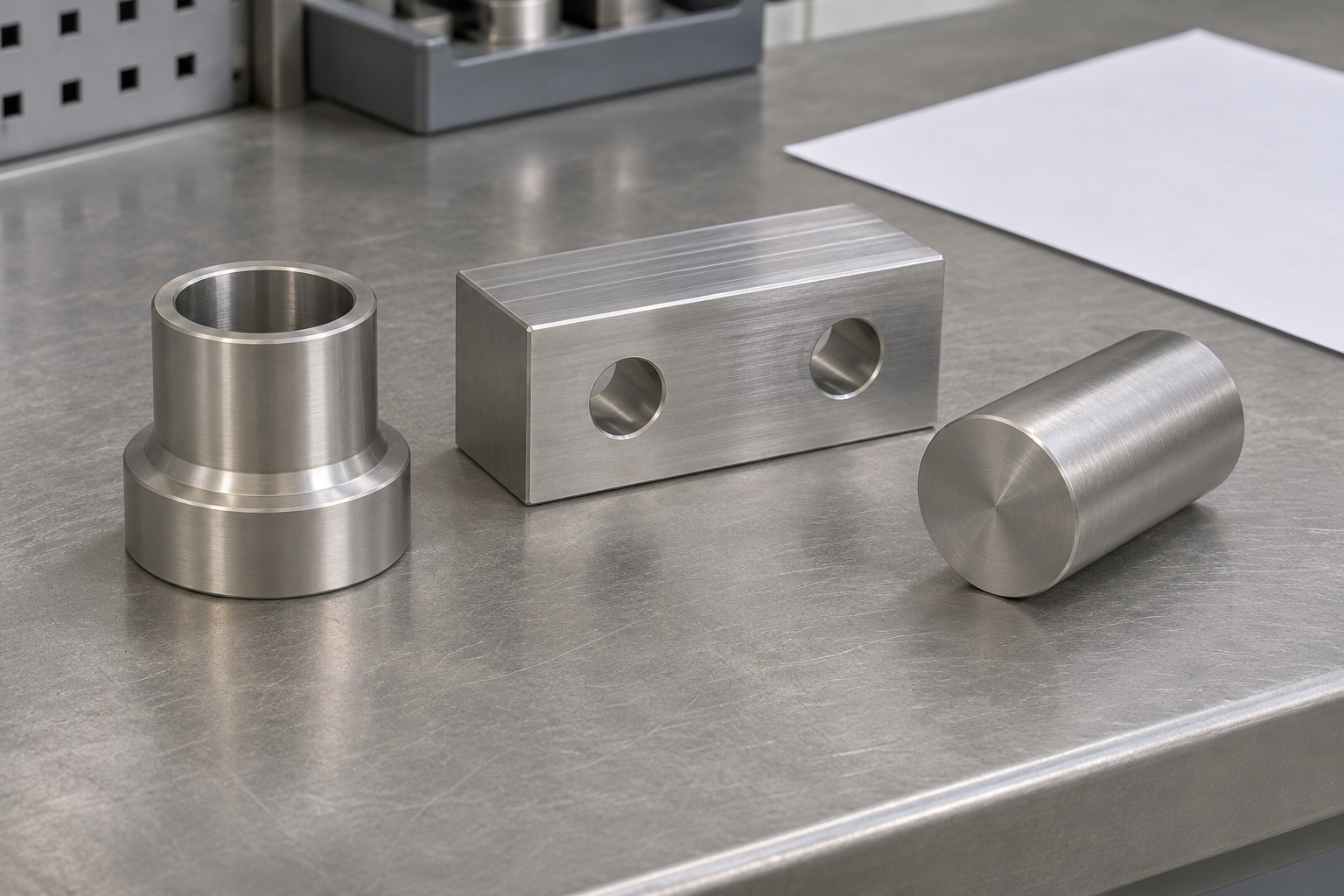
What Makes medical device components Different
General precision parts are judged mainly on dimensions and finish. Medical device components carry additional requirements: biocompatibility where contact occurs, resistance to repeated sterilisation, full material traceability, and a change-controlled process. A part can be dimensionally perfect and still be unusable if its alloy certificate cannot be tied to the delivered lot.
Risk classification drives the depth of documentation. A component inside a diagnostic instrument may need a certificate and a dimensional report, while an implant-adjacent part may require validated cleaning, surface analysis, and a controlled environment. Ask early which class the finished device falls into, because that answer sets the evidence burden for every supplier on the project.
Consistency matters more than a single perfect sample. A buyer qualifying medical device components should ask how the supplier holds a process stable over months, not just how it made the first article. That question leads naturally to validation, in-process control, and written change notification rather than a one-off inspection certificate.
Materials and Their Traceability
Stainless steels such as 316L are common for instrument parts because they tolerate sterilisation and resist corrosion. Titanium and its alloys serve implant-related and lightweight structural components. Aluminum appears in housings and fixtures, while engineering plastics such as PEEK and PTFE are used where chemical resistance or radiolucency matters more than raw strength.
Each material brings a distinct machining behaviour. Titanium work-hardens and holds heat, stainless can gall, and PEEK moves with temperature. A supplier should be able to explain tooling, coolant, and workholding choices for the specific grade rather than quoting a generic capability table. The certificate should name the melt source, heat or lot number, and the applicable material standard.
Controlled substitutions are a common source of problems. If a grade is unavailable, the replacement must be approved in writing before it is cut, not reported afterwards. For medical device components, an undocumented material change is a quality event even when the substitute is nominally equivalent, because the traceability chain has been broken.
Tolerances, Surfaces and Functional Interfaces
Tolerances should follow function. Sealing faces, bearing seats, and mating interfaces need defined control, while cosmetic surfaces rarely do. A blanket tight tolerance across an entire drawing raises cost and inspection time without improving how the device performs, and it makes competing quotations much harder to compare on a like-for-like basis.
Surface condition deserves its own callouts. Roughness affects cleaning, friction, and coating adhesion; edge breaks affect handling and sterility; burrs at intersecting bores can trap contaminants. These characteristics are not covered by a size check, so they must appear separately in the purchasing specification for medical device components.
Define the datum scheme and the measurement conditions. Thin-wall or flexible parts can deform under a probe or a fixture, and temperature matters when limits are tight. Agreeing the support condition and inspection environment before production prevents a dispute where two readings are both technically correct but describe different setups.
| Characteristic | Why it matters | Typical evidence |
|---|---|---|
| Datum scheme | Defines how the part is located | Drawing with functional datums |
| Surface roughness | Affects cleaning and friction | Measured roughness values |
| Edge and burr | Affects handling and sterility | Edge-break note and borescope check |
| Material lot | Enables traceability | Mill certificate with lot number |
| Inspection conditions | Makes readings comparable | Stated temperature and support |
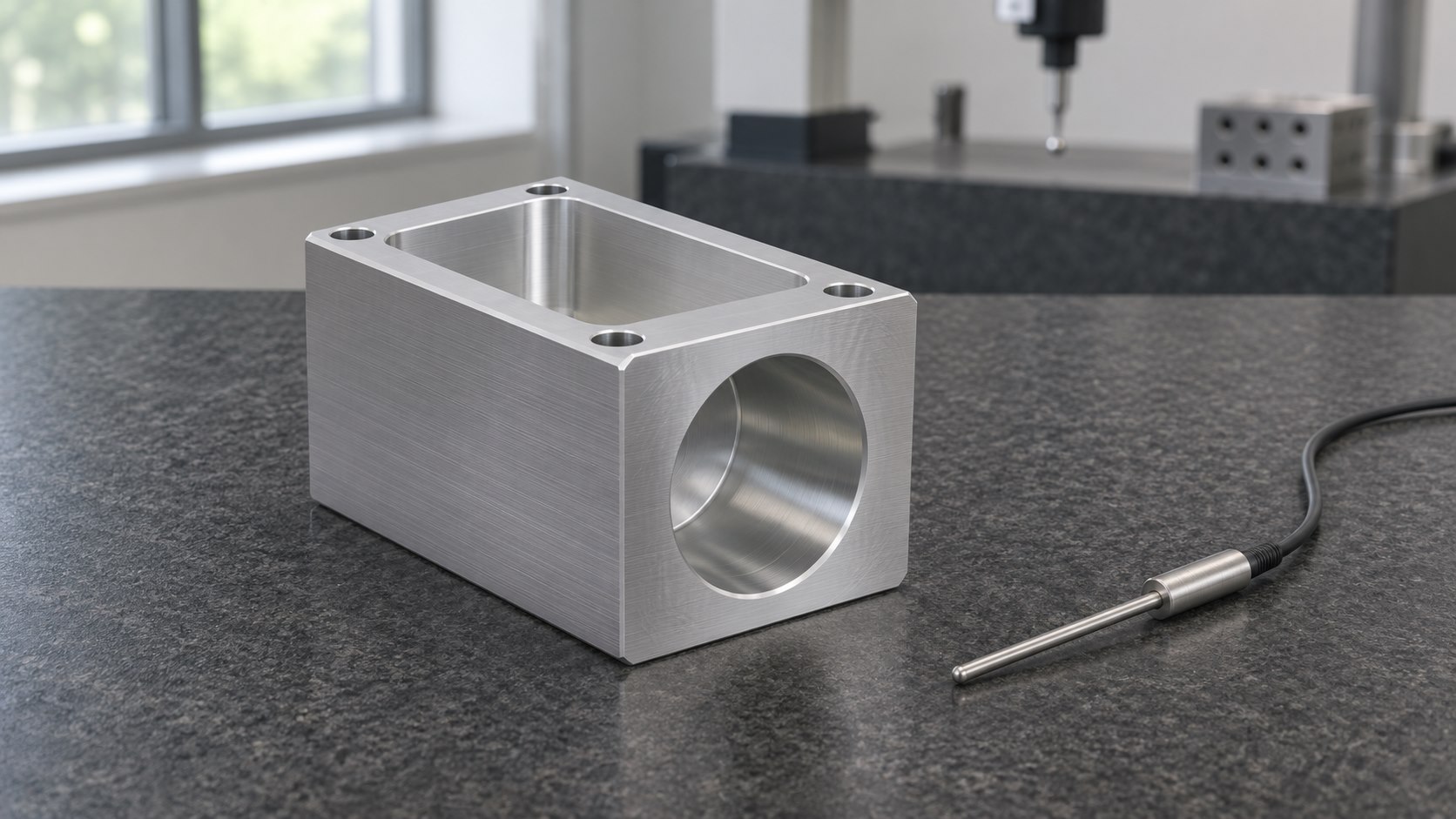
Cleanliness, Burrs and Edge Control
Cleanliness is a functional requirement, not a cosmetic one. Residual cutting fluid, fine swarf, or loose particles can interfere with assembly, contaminate a fluidic path, or compromise a sterile barrier. State the acceptable cleanliness level and the cleaning method rather than leaving it to the shop default wash cycle.
Internal crossings are the hardest places to clean. Cross-drilled manifolds, blind bores, and threaded features trap debris that a visual check will miss. Ask how those areas are deburred, flushed, and verified, and whether borescope or particle checks are part of the standard route for medical device components rather than an optional extra.
Packaging protects the result. Specify individual protection, sealed packing where required, and labelling that carries the lot and revision. A component that leaves the shop clean but arrives contaminated has failed the requirement regardless of what the inspection report says about its dimensions.
Process Validation and Documentation
For regulated devices, the manufacturing process often needs to be validated: the supplier demonstrates that a defined setup repeatedly produces conforming parts. That is different from inspecting every part and simply finding the good ones. Ask whether the machining, cleaning, and inspection steps are validated and how a change is re-approved.
Records should include the drawing revision, program or setup identification, material lot, inspection results, and any deviations. A first-article report establishes the baseline; in-process checks show that the run stayed in control. For medical device components, the ability to retrieve a complete record a year later is as important as the record itself.
Change notification is essential. A new tool supplier, a different coolant, a revised program, or a relocated machine can all alter the outcome. Agree in writing which changes require notice and revalidation before the next order, so a quiet process change does not invalidate the qualification work already completed.
Design for Manufacturability
Generous internal radii, accessible features, and uniform wall thickness make parts easier to machine and to clean. Deep blind bores, undercuts, and sharp internal corners create tool-access and debris problems. A short review with the machinist before the drawing is released usually removes more risk than any amount of later inspection.
Consolidating features can reduce setups but may create an uncleanable cavity. Sometimes two pieces joined later are better than one complex monolithic part. The decision should be driven by function, cleaning access, and inspection access, not only by the attraction of a single machined component.
Specify thread class, edge breaks, and surface texture explicitly. Our CNC machining tolerances guide explains how to derive controls from the assembly, and our CNC machining RFQ checklist turns those points into a repeatable enquiry form.
Prototyping Versus Production
A prototype can be machined with temporary fixturing and extensive hand finishing, and that is perfectly acceptable for a design review. It does not prove that a production process is stable. Treat the prototype and the production route as two separate conversations with the supplier rather than as one continuous scale-up.
As volume rises, dedicated fixtures, fixed tooling, and a defined inspection plan replace flexible setups. The unit price falls, but the cost of a change rises. Ask at what quantity the supplier expects to switch approach, and what evidence will accompany that transition for medical device components.
Keep one approved reference part from the prototype stage and one from the validated production process. Comparing them later makes it obvious whether a difference came from the design or from the manufacturing route, which matters when a device is already in clinical or field use.
| Aspect | Prototype | Validated production |
|---|---|---|
| Fixturing | Temporary or universal | Dedicated and documented |
| Inspection | Extensive, often manual | Defined sampling plan |
| Documentation | Basic dimensional report | Full record package |
| Change control | Informal | Written notice and revalidation |
Qualifying a Supplier
Look beyond the machine list. Ask what quality system is in place, whether inspection equipment is calibrated, who signs the report, and how nonconformances are handled. A shop that can explain its measurement uncertainty and its change-control process is usually better prepared than one quoting only a positioning accuracy figure.
Responsiveness is a useful signal. Clarifying questions about material certificates, burr limits, or cleaning indicate that the drawing is being engineered. A quote returned immediately with no questions may mean the requirements were never examined closely, which is exactly the risk a qualification review should uncover.
Ask for a sample report, not a capability brochure. A real dimensional report with measured values, revision, and method shows how the supplier actually documents medical device components. If the format is clean and traceable, later audits and reorders are far simpler to handle.

Cost Drivers
Material, setup count, cycle time, inspection depth, cleaning, and documentation make up most of the price. Documentation and validation can be a larger share than in general machining, which is why two quotes for the same drawing can differ substantially. A low number may simply omit the evidence you need.
Ask for separate lines for tooling or fixtures, machining, finishing, inspection, cleaning, and packaging. That structure makes it clear which costs are one-time and which scale with quantity, and it shows where a design change would actually save money rather than shifting it between categories.
Volume affects unit price through setup amortisation and process stability. A long-running validated programme is cheaper per part than intermittent small lots that repeatedly require setup verification. Discuss the forecast honestly so the quoted route and its documentation level are realistic.
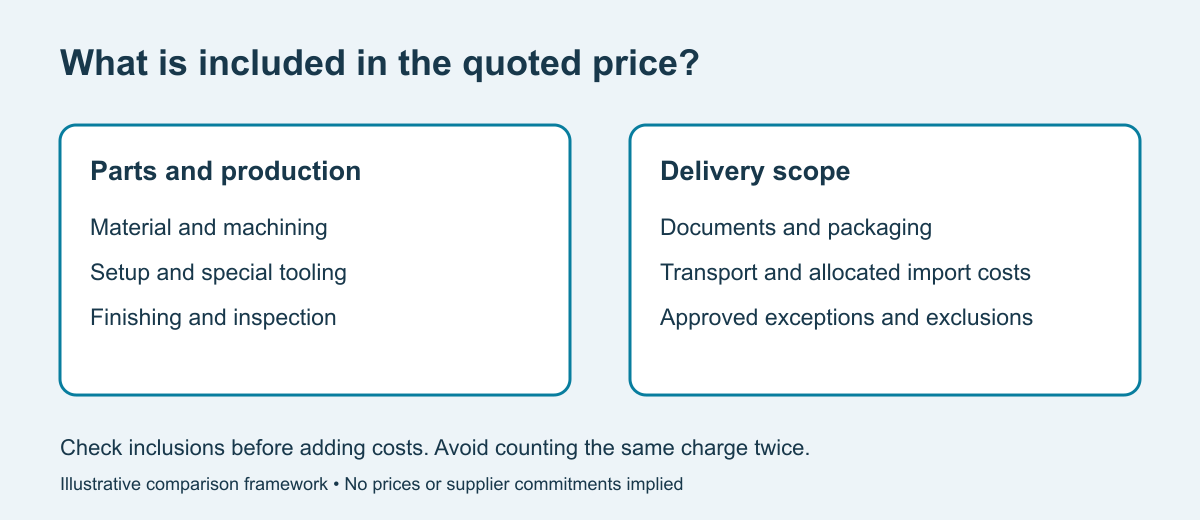
Typical Applications
Surgical instrument handles and hinges, endoscope components, imaging system brackets, dental and orthopaedic trial parts, diagnostic device housings, and fluidic manifolds are all common products. Each combines tight interfaces with demanding cleanliness or material requirements that general machining rarely encounters.
Beyond finished devices, medical device components also appear in tooling, fixtures, and test rigs used to validate the device itself. Those parts may not contact a patient, but they still need controlled geometry and traceable material because the measurement results of the whole programme depend on them.
Frequently Asked Questions
What makes medical device components different from general precision parts? Traceability, cleanliness, controlled processes, and documentation that can survive an audit, on top of dimensional accuracy.
Which materials are most common? 316L stainless, titanium alloys, aluminum, and engineering plastics such as PEEK, each with a certificate tied to the delivered lot.
Do medical device components need validated processes? Often yes for regulated devices. Validation demonstrates that a defined setup repeatedly produces conforming parts over time.
How are burrs and cleanliness handled? They must be specified separately, since a dimensional check does not cover internal crossings or residual particles.
Can a prototype predict production cost? Only loosely. Prototypes use flexible setups; production pricing reflects dedicated fixtures and validated inspection.
What should a buyer send for a quote? The drawing and model, material and standard, device classification, cleanliness requirements, volume, and required records.
A Practical Buyer Checklist
Medical device components should be quoted against a named drawing revision. Ask that the revision appear on the program, the inspection report, and the material certificate.
Material traceability defines medical device components. Require a certificate with heat or lot number and written approval before any substitution is cut.
Cleanliness is a specification for medical device components. State the acceptable particle level and the cleaning and verification method, not just a visual check.
Edge condition matters for medical device components. Define burr limits at internal crossings and describe how those areas will be inspected.
Inspection evidence protects medical device components. Ask for measured values, the method, and the support condition used during measurement.
Change control stabilises medical device components. Agree which process changes require written notice and revalidation before the next order.
Packaging is part of medical device components. Specify sealed or protective packing and lot labelling so parts arrive in the condition they left.
Record retention closes the loop for medical device components. Confirm how long reports and certificates are kept and how they can be retrieved.
Medical device components in Regulated Supply Chains
A device manufacturer is accountable for its suppliers, not only for its own processes. That is why medical device components usually arrive with an approved-vendor record, a defined specification, and an audit trail rather than a purchase order alone. Ask what documentation a supplier can support before assuming a standard machining quote will satisfy a regulator.
Incoming inspection at the device maker should be planned around the risk of the part. Some medical device components can be accepted on a certificate and a sampling plan; others need measured verification on every lot. Define that at the qualification stage so the supplier knows which records are contractual and which are informational.
Nonconformance handling belongs in the same agreement. State how a suspect lot is segregated, who investigates the root cause, and what evidence closes the issue. A clear process protects the production schedule for medical device components and prevents the same defect from returning on the next order.
Working Across Borders on medical device components
Overseas sourcing adds logistics and communication steps to medical device components. Agree the drawing revision, the inspection report format, and the language of the certificates before the first order. A mismatch in document revision is a more common cause of delay than a dimensional problem, and it is entirely avoidable.
Shipping conditions matter. Temperature swings, humidity, and rough handling can affect packaging and, for some materials, surface condition. Specify protective packing and request photographs of the packed lot before dispatch so any dispute can be resolved against evidence rather than memory.
Plan a periodic review. Standards change, device classifications are updated, and a supplier may move a machine or change a subcontractor. Reviewing medical device components annually keeps the qualification current and catches small process drifts before they become a formal nonconformance.
Common Mistakes With medical device components
The first mistake is specifying tight tolerances everywhere instead of on functional interfaces. It raises cost and inspection effort without improving the device. The second is treating cleanliness as an afterthought, which is usually discovered only when parts reach the assembly line and the schedule is already committed.
A third mistake is approving a prototype and assuming the production route is qualified. The two use different fixturing and documentation, so a bridging sample is worth requesting. A fourth is accepting a material substitution after the fact, which breaks traceability for medical device components even when the grade is equivalent.
A fifth, quieter mistake is storing the approved sample without its matching report. A physical reference part is useful only when the revision, the measured values, and the inspection conditions are recorded alongside it. Without that context, a later comparison becomes a matter of opinion rather than evidence.
Finally, avoid letting a quotation expire into a reorder without review. Material prices, coating costs, and specification updates move over time, and a part qualified two years ago may no longer be made under the same conditions. A short requalification check is cheaper than discovering the difference at incoming inspection.
Technical Resources
For background on medical device components, see the FDA medical device guidance, an overview of ISO 13485 quality management for medical devices, and independent guidance on preparing technical drawings for machining. Clear requirements reduce interpretation disputes and give the inspection team a stable reference for every order.