
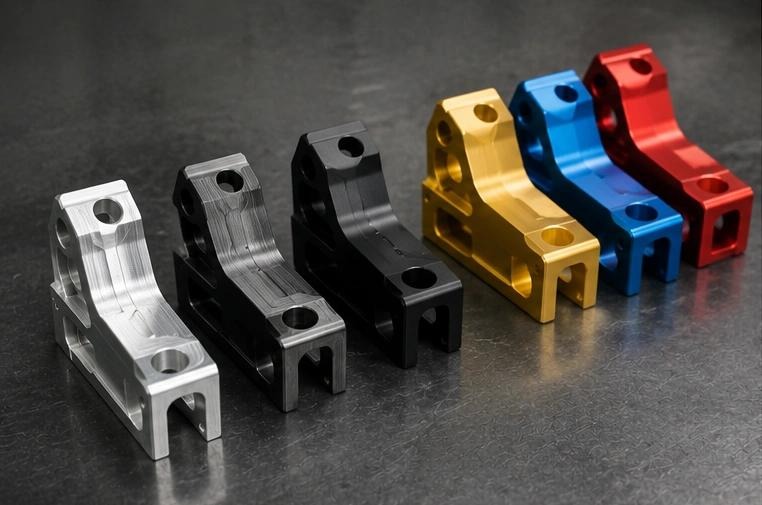
For cosmetic CNC parts, a machined enclosure can meet its dimensions and still be rejected because the buyer and supplier understood “good appearance” differently. A sample approved under one light may look different beside the mating cover, and a small handling mark may fall on the face the customer sees first. Cosmetic CNC parts need an appearance agreement as well as a dimensional drawing.
Here, cosmetic means visible surface appearance, not parts for the cosmetics industry. This purchasing checklist is intended for machined housings, covers, knobs, and other components where finish consistency affects acceptance.
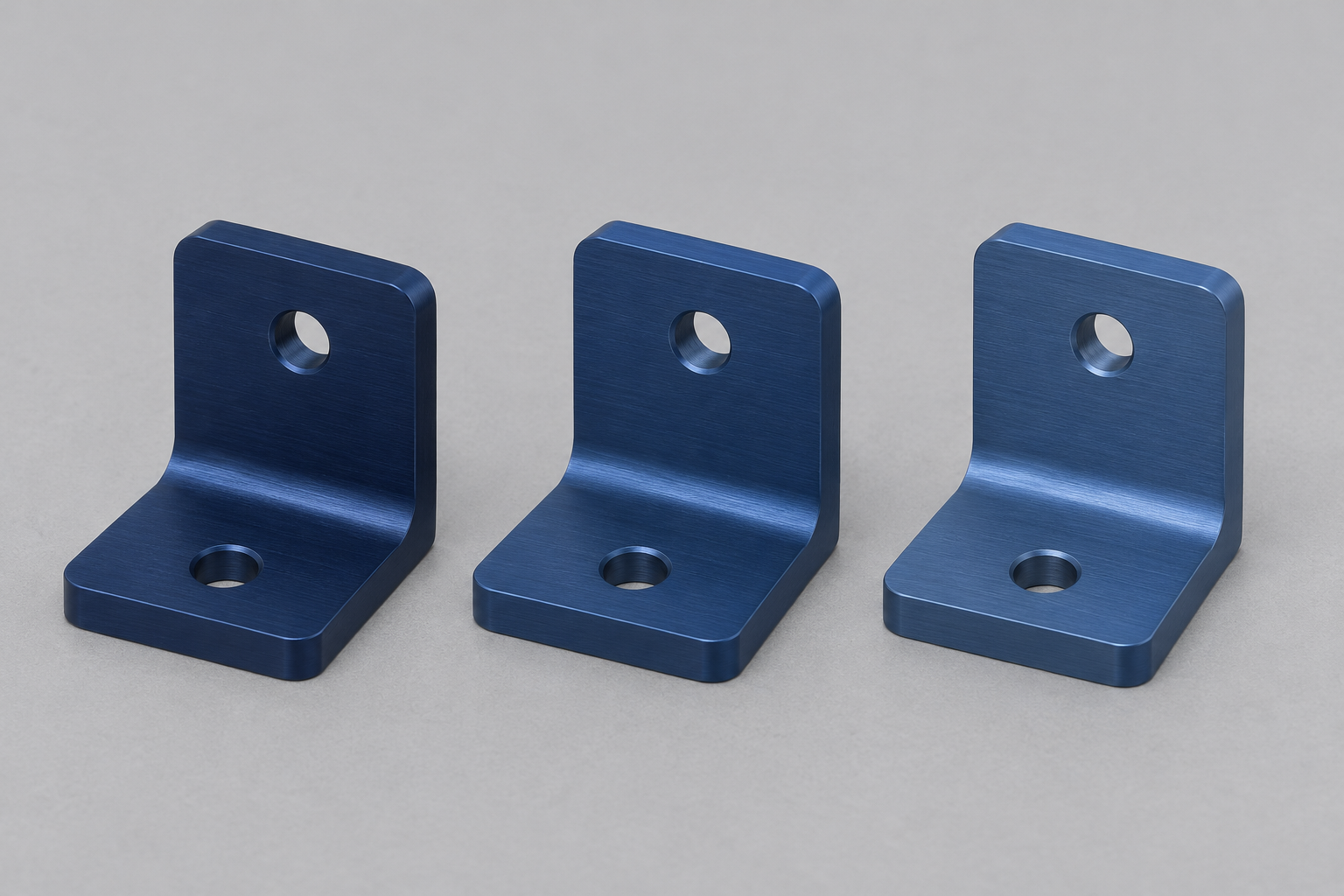
Cosmetic CNC parts: mark which surfaces the customer will see
For cosmetic CNC parts, use an annotated drawing or controlled visual specification to identify the exposed faces, edges, recesses, and assembly interfaces. A simple zone map can distinguish visible surfaces from concealed areas. Define the meaning of each zone; a letter by itself creates no acceptance rule.
On cosmetic CNC parts, show where clamp contact, rack contact, masking boundaries, or identification marks may be acceptable. Ask the supplier to identify proposed contact locations before the sample is made. Do not assume that a hidden area can be used without checking its functional requirements.
Describe the finish of cosmetic CNC parts beyond a color name
Specify the required finishing process and any governing specification, surface preparation, texture direction, and appearance reference. State which requirements apply to the final delivered condition. “Black anodized” does not completely describe sheen, texture, color variation, or permitted contact marks.
For cosmetic CNC parts in aluminum, the Aluminum Anodizers Council explains that alloy and finishing choices affect anodized appearance. A color reference therefore needs an agreed material and preparation context. Do not assume a sample on a different alloy or surface texture will reproduce the appearance of your machined housing.
For cosmetic CNC parts where color matching matters, agree a reference sample and how variation will be evaluated. Photographs are useful for communication, but camera settings, lighting, and screens can change the apparent color. Decide whether a physical master, an agreed range, or a defined measurement method will control acceptance.
Agree how the sample will be viewed
For cosmetic CNC parts, record the viewing conditions used for the decision: lighting arrangement, viewing distance and angle, inspection time if relevant, and whether the component is assessed alone or beside mating parts. These are project requirements to agree, not numbers to copy from an unrelated product.
| Item to agree | Useful instruction | Question to close |
|---|---|---|
| Visible surfaces | Identify them on the current drawing. | Are edges and recesses included? |
| Finish reference | Identify the approved sample and finish specification. | Does the reference use comparable material and preparation? |
| Viewing conditions | Use the same agreed assessment conditions. | Will both parties judge the sample consistently? |
| Marks and texture | Define permitted and rejected conditions by zone. | Where may contact marks or texture transitions occur? |
| Functional interfaces | Identify masking and final measurement requirements. | Which fits, threads, or contact faces need protection? |
| Packaging | Protect the approved visible surfaces. | Can parts contact one another in transit? |
Separate appearance approval from dimensional approval
In cosmetic CNC parts a pleasing finish does not establish that a bore, thread, or sealing interface meets its requirement. Conversely, a dimensional pass does not resolve a disputed color or visible scratch. Keep the two acceptance decisions identifiable in the sample report.
For cosmetic CNC parts such as anodized housings, agree masking and the stage at which critical dimensions are measured. The finishing review should address the specified interfaces, rather than adding a generic note that all dimensions will remain unchanged.
Use surface treatment information to discuss the process, and retain the controlled drawing for dimensional acceptance. Avoid changing technical limits in an email solely to make an appearance sample acceptable.
Make the approved sample usable for repeat orders
Record the sample identifier, drawing revision, material, finish, approval date, and any exceptions. If a sample is approved only for color, say so. If one edge is conditionally accepted for the trial, do not let that exception become an undefined production standard.
For cosmetic CNC parts, ask how the approved reference will be stored and identified. A replacement reference, proposed surface-preparation change, or material substitution should receive the review required by the order. Repeat production needs a clear baseline that both parties can retrieve.
Include packaging in the appearance review
Agree how the visible faces of cosmetic CNC parts will be protected from rubbing and impact. Check that wrapping, separators, labels, and any protective films suit the finish and the next assembly step. Inspect trial packaging as well as the parts; a finish that passes at dispatch may be damaged by part-to-part contact in transit.
When comparing a China machined-parts supplier with another source, keep these requirements in every quotation. An offer that includes individual protection and documented appearance approval has a different scope from one that includes only bulk-packed parts. Our CNC machining RFQ checklist helps keep that comparison explicit.
For general background on surface finishing and appearance, see surface finish references. These are educational sources; the controlled drawing governs acceptance.
Reference
Aluminum Anodizers Council: Specifying Anodized Finishes on Aluminum. The checklist above is a purchasing framework, not a substitute for an applicable finish specification or a claim of AAC endorsement.
When appearance and numerical texture requirements coexist, define them separately. See when to inspect roughness before or after finishing for stage-specific checks and measurement comparability.
For anodized parts that must match when assembled, use the anodized color-variation review to compare material, texture and representative samples before approving appearance.
Why appearance needs its own specification
A machined part can satisfy every dimension on the drawing and still be rejected when a customer looks at it. That is because appearance is a set of requirements in its own right: color, gloss, texture, edges and the presence or absence of visible marks. None of these is established by a passing dimensional report. For cosmetic CNC parts, the appearance requirement must be defined as deliberately as a tolerance, with its own reference, method and acceptance rule.
The word “cosmetic” causes confusion because it sounds subjective. It is only subjective if it is left undefined. A controlled visual specification can state which faces matter, what finish they require, which marks are acceptable and where the boundaries sit. Once those are written down, an inspection decision can be repeated by a second person and defended if the parts are disputed. Without them, the decision depends on whoever happens to look at the part.
This is also why a good photograph is not a specification. Exposure, reflections and display settings change how the same surface appears. A photograph is useful for locating a mark or recording which samples were compared, but it should support a defined reference rather than replace one. Preserve the physical sample when an appearance decision matters.
Defining finish, texture and visible marks
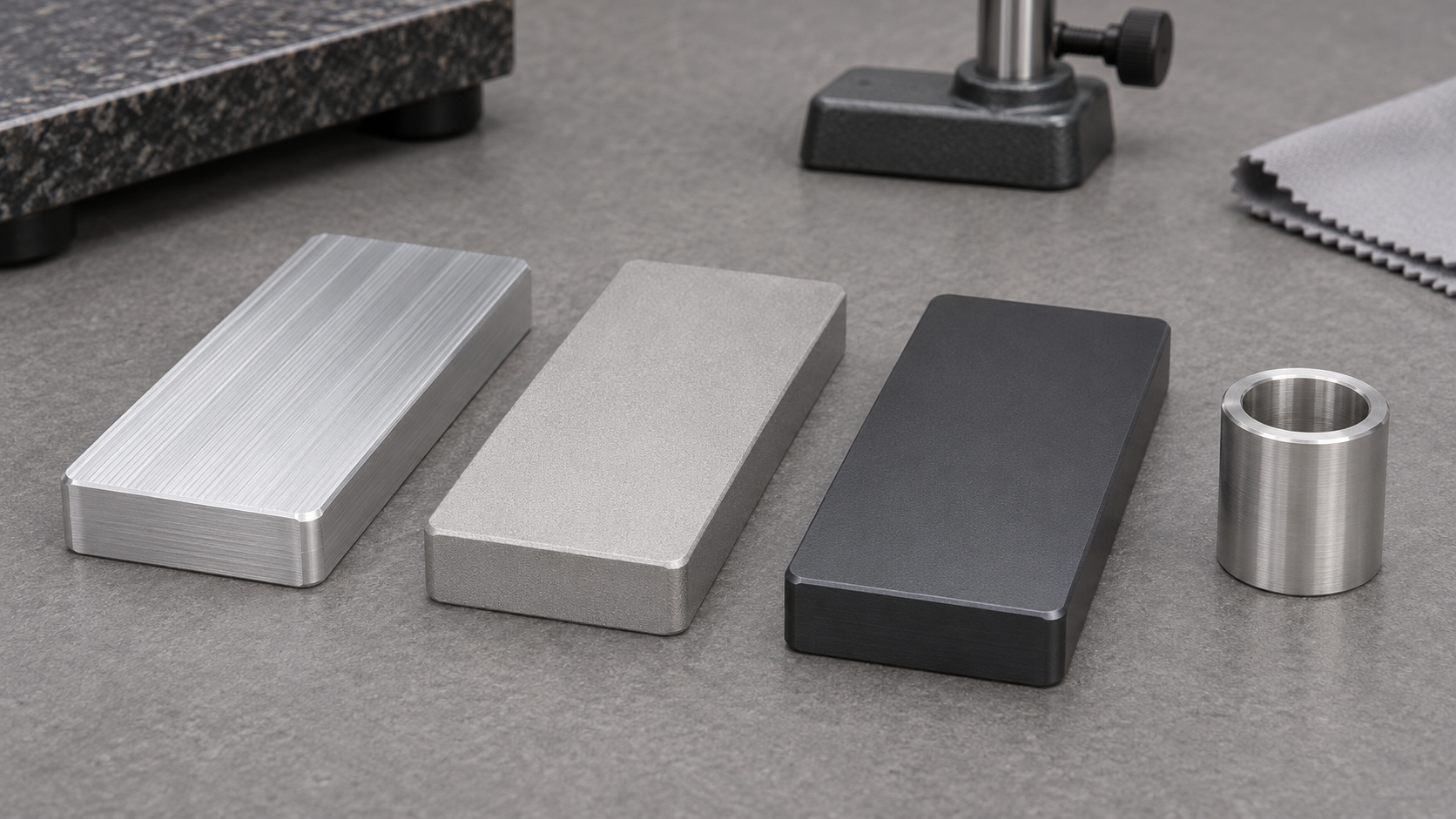
Anodizing, painting, powder coating and mechanical finishing each produce a characteristic appearance. When a drawing calls out a finish by name, it should also say which surfaces receive it and what condition is expected. A finish name alone does not describe the texture beneath it, and the texture changes how the finish reflects light. Brushing, blasting and polishing can all produce an acceptable color while looking visibly different.
Marks should be treated individually. A tooling mark on a concealed mounting face may be irrelevant, while the same mark on a visible face is a rejection. Define the zones and the permitted marks in each. For anodized aluminum housings, agree masking for threads, sealing faces and grounded areas, since a coating on those features can change a fit or function even when the appearance is acceptable.
Color variation is a separate subject. Even within one alloy and finish, small differences can occur between lots or across a large part. Decide in advance how much variation is acceptable and how it will be judged. If instrumental measurement is used, agree the method, the illuminant and the calculation basis. A numerical limit without a method is not a stable requirement.
Appearance approval versus functional acceptance
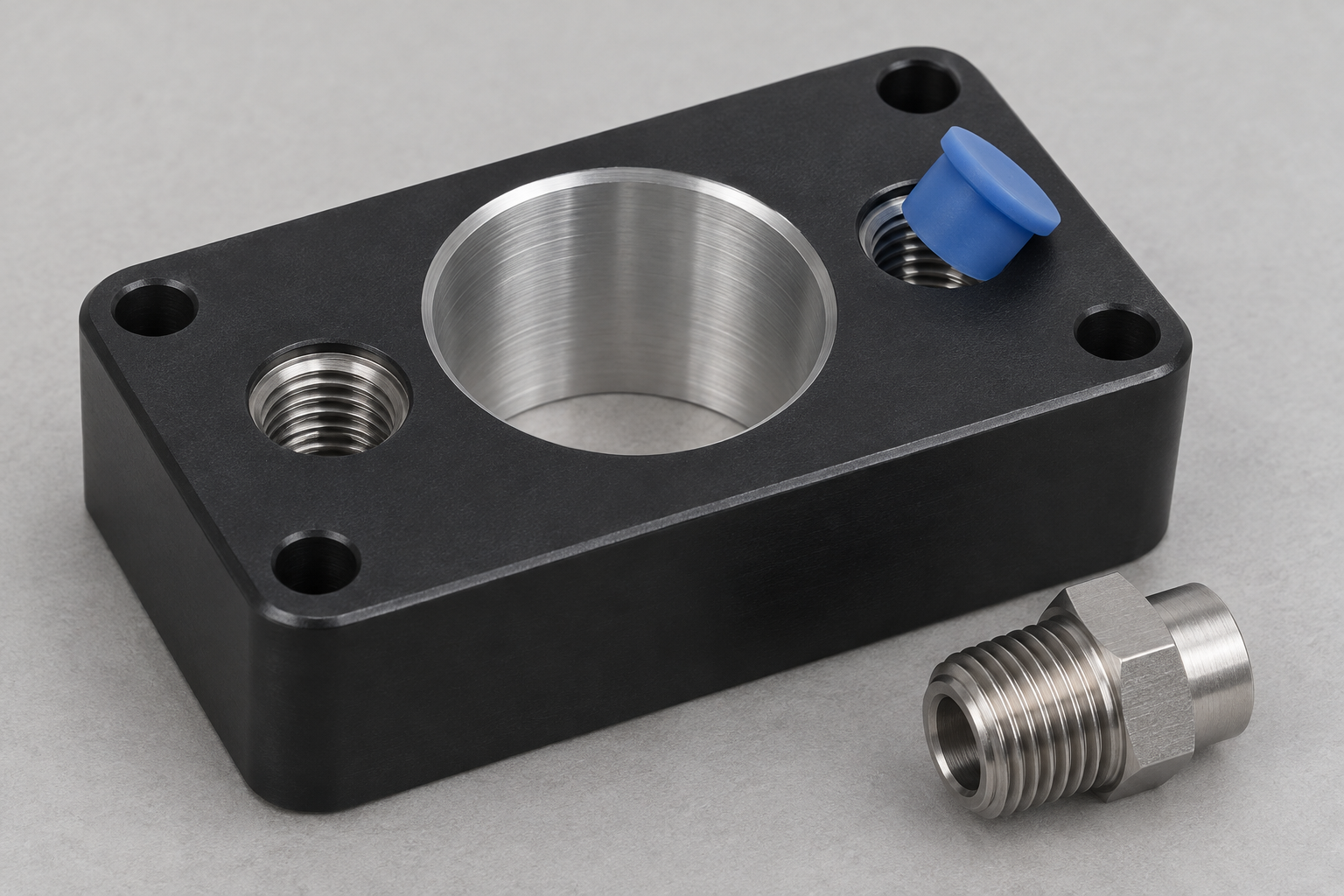
A pleasing surface does not establish that a bore, thread or sealing interface meets its requirement, and a part that passes functional inspection may still fail appearance. Keep the two approvals separate so a cosmetic decision never substitutes for a dimensional or functional check. Record which features belong to each category, and make sure the inspection plan covers both.
Sequence the checks sensibly. If polishing or rework could change a dimension, measure the functional features after the last operation that affects them. If a coating adds thickness, state whether the dimension applies before or after finishing. Mixing the stages is a common source of disputes, because two parties can measure the same feature in different conditions and reasonably report different values.
For cosmetic CNC parts in an assembly, check how the visible faces sit together. A single part can look acceptable alone and reveal a tone or texture difference when placed beside another. If parts are supplied as a set, approve the set under the agreed viewing conditions rather than approving one sample and assuming the rest will match.

Keeping the approval valid across repeat orders
An appearance approval that lives in an email is easy to lose or misapply. Record the sample identifier, the drawing revision, the material, the finish, the approval date and any exceptions. Store the record with the controlled documents so it can be found when the next order is reviewed. When an approval is tied to a specific revision, a design change naturally triggers a fresh look at the appearance requirement.
Agree how the reference sample will be protected and replaced. Samples fade, get handled and eventually wear out. Define who holds the master, how it is stored and what happens when it must be replaced. A replacement that is not controlled can quietly change the standard against which future parts are judged.
Finally, treat a change of material source, finisher or process as a reason to review the approval. Cosmetic CNC parts are sensitive to inputs that may not appear on the drawing, so continuity of supply is part of maintaining appearance. A short review at the point of change is far cheaper than discovering a visible difference after a batch has been delivered.
Cost drivers in cosmetic CNC parts
Cosmetic CNC parts usually cost more than an equivalent functional part because the appearance work adds operations and inspection. A cosmetic finish may require extra polishing, careful masking, controlled handling and a dedicated inspection under agreed lighting. Each of these steps takes time. When a buyer asks why a visually similar part costs more, the answer is usually the control behind the appearance rather than the material itself.
Understanding the cost drivers helps both sides make sensible tradeoffs. If a face is visible only from a distance, a high-polish finish may add cost without value. If it is the first thing a customer sees, the same finish may be essential. Marking the cosmetic zones clearly lets the supplier focus effort where it matters and avoid paying for appearance on hidden surfaces.
Rejection risk is also a cost. When the acceptance standard is vague, a supplier may produce parts that are functionally correct but visually disputed, leading to rework or a replacement batch. A short, clear appearance specification reduces that risk for everyone. It is one of the cheapest forms of quality planning available on cosmetic CNC parts.
Working with the finisher on cosmetic CNC parts
The finisher needs more than a process name. Tell them which faces are cosmetic, which are masked, what the reference sample is and how the parts will be viewed. If an anodized housing contains sealing faces or threads, identify those explicitly so the coating does not create a fit problem. A finisher who understands the function can propose a route that protects both appearance and performance.
Ask how the process is controlled between lots. Consistency matters more than a single perfect sample, because an order is filled over time and often across more than one production run. Discuss the variables that could change appearance, such as the material source, the preparation step or the finishing bath, and agree when the customer should be notified of a change.
For cosmetic CNC parts, the first article should include finished samples that both parties can keep. Compare them under the agreed lighting and record the result. If the parts will be assembled with other components, review them in that context. A sample approved in isolation may reveal a difference once it sits beside a neighboring part, which is exactly the situation the customer will judge.
From sample approval to production
Sample approval is a starting point, not the end of the process. The approved conditions need to be carried into production through the drawing, the work instructions and the inspection plan. If the sample was made by hand on a prototype route, confirm that the production process can reproduce it. A finish that depends on an operator’s individual technique is difficult to sustain across a batch.
Agree what happens when a later part differs from the sample. Define who decides, what evidence is considered and whether a concession or rework is appropriate. A clear disposition path prevents an appearance issue from stopping a shipment while everyone debates who is right. It also keeps the decision traceable if a similar issue arises on a later order.
Finally, review the appearance requirement when anything significant changes: a new drawing revision, a different material supplier, a change of finisher or a revised process. Cosmetic CNC parts are sensitive to inputs that a dimensional inspection will not detect. A short review at each change preserves the appearance that was originally approved and avoids a slow drift away from the standard.
Planning cosmetic CNC parts from the first enquiry
The earliest stage is the cheapest place to control appearance. When requesting a quotation for cosmetic CNC parts, send the drawing with visible faces marked, the finish requirement, the reference sample if one exists and the intended viewing conditions. State whether alternatives may be proposed and who approves them. For cosmetic CNC parts assembled with other components, say whether the parts will be judged individually or as a set, because that changes what must be approved.
These inputs let the supplier quote the right process rather than assume a generic finish. They also reveal conflicts before production: a finish that cannot be applied to a masked feature, or a reference sample from a material that will not be used in the order. A short conversation at enquiry stage prevents most appearance disputes, and it keeps the approval meaningful through to delivery.