
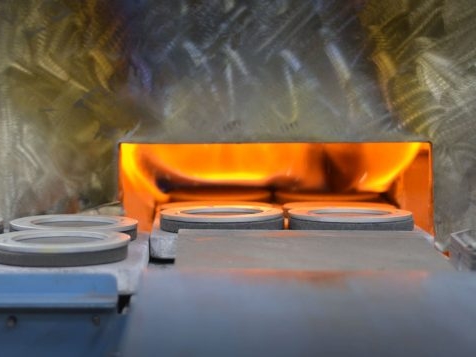
Powder metallurgy is a near-net-shape manufacturing method that turns metal powder into precision parts through compaction and sintering. Understanding the powder metallurgy process explains how a loose powder becomes a component with controlled density, geometry, and properties, often with very little waste.
From automotive gears to medical components, the process is chosen where repeatability, complex shapes, and material efficiency matter. This guide walks through each stage, from powder production to secondary operations, and explains why each step affects the finished part.
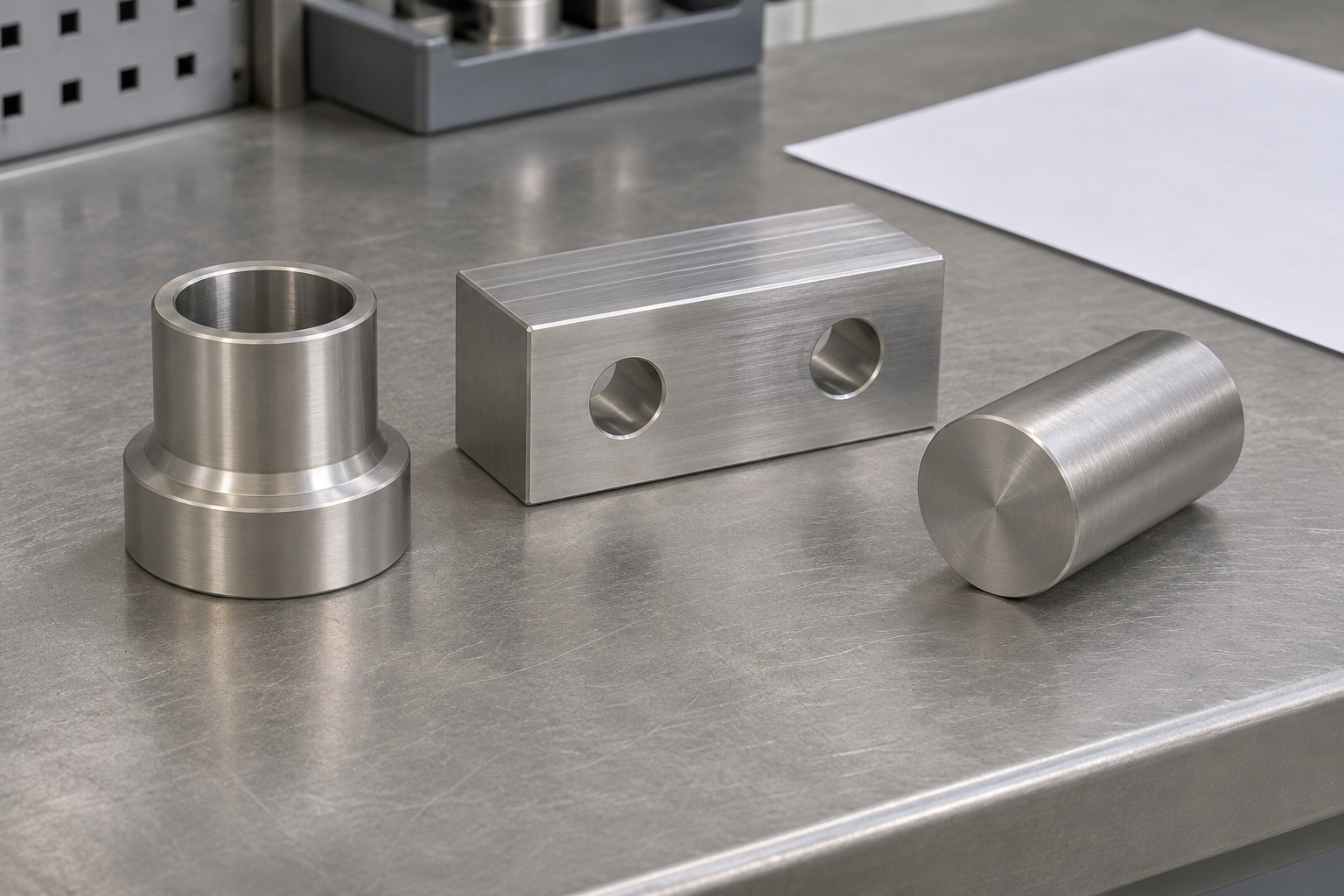
Overview of the Powder Metallurgy Process Steps
The powder metallurgy process follow a consistent sequence: produce powder, blend it, compact it into a green part, sinter it to bond the particles, and apply secondary operations if needed. Each step builds on the previous one, so quality problems early in the chain cannot be fully corrected later.
This route is distinct from machining, which removes material from a solid blank, and from casting, which pours molten metal into a mold. Powder metallurgy forms a part from particles, which is why it can achieve high material utilization and shape complexity at volume.
Step 1: Powder Production
The quality of a powder metallurgy part begins with the powder. Several production methods yield different particle shapes, sizes, and purity.
- Water atomization: molten metal is broken by high-pressure water into irregular particles. Cost-effective and common for structural parts.
- Gas atomization: inert gas produces spherical particles with excellent flow, preferred for high-performance and additive applications.
- Reduction: metal oxides are chemically reduced to porous, sponge-like powders, common for iron and copper.
- Mechanical milling: powders are ground to fine sizes or blended into homogeneous alloys.
Particle size distribution, shape, and apparent density are controlled because they determine how the powder flows into a die and how it compacts. These are the first of the powder metallurgy process to influence final dimensional consistency.
Step 2: Blending and Mixing
Most parts require a combination of powders. A base metal such as iron, copper, stainless steel, or aluminum is mixed with alloying elements like nickel, molybdenum, or graphite. Lubricants such as zinc stearate reduce die wear during pressing, and binders help fragile green parts hold together.
The aim is a homogeneous blend so that every portion of powder has the same composition. Inconsistent mixing shows up as local variation in density or chemistry after sintering, which is difficult to correct. Uniform blending is therefore one of the quiet but essential powder metallurgy process.
Step 3: Compaction
The blended powder is fed into a precision die and pressed, typically between 150 and 800 megapascals. The result is a green part that holds its shape but has only a fraction of its final strength. Pressure must be distributed evenly, or density gradients will cause distortion during sintering.
| Method | Suited to |
|---|---|
| Die compaction | Axisymmetric and simple prismatic shapes |
| Isostatic pressing | Parts needing uniform density in all directions |
| Metal injection molding | Very small, intricate parts with fine detail |
Tooling design is critical at this stage. Multiple levels, undercuts, and side features need advanced tool systems, and the chosen method sets what geometries are practical. For complex shapes, the tooling decision is made before any of the later powder metallurgy process begin.

Step 4: Sintering
Sintering bonds the particles. Green parts are heated in a controlled atmosphere to a temperature below the metal’s melting point, often around 70 to 90 percent of the absolute melting temperature. Neck formation occurs at contact points, pores shrink, and the part gains strength.
Furnace atmosphere is carefully selected. Endothermic gas, nitrogen-hydrogen mixtures, or vacuum prevent oxidation and control carbon content. The cycle, including temperature, hold time, and cooling rate, is engineered for each material system.
After sintering, parts typically reach 90 to 98 percent of wrought density, with corresponding gains in tensile strength, ductility, and fatigue resistance. This is the stage where the earlier powder metallurgy process produce their combined result.

Step 5: Secondary Operations
Many parts receive further treatment to meet specific requirements. Common operations include sizing or coining for tight dimensions, impregnation with oil or resin, heat treatment for hardness, surface finishing, machining of features that cannot be pressed, and steam treatment for corrosion resistance.
These operations are part of the powder metallurgy process that turn a sintered blank into a finished component. Not every part needs all of them, and specifying only what the function requires keeps cost under control. For how machining complements pressed parts, see our CNC machining services.
Advantages and Applications
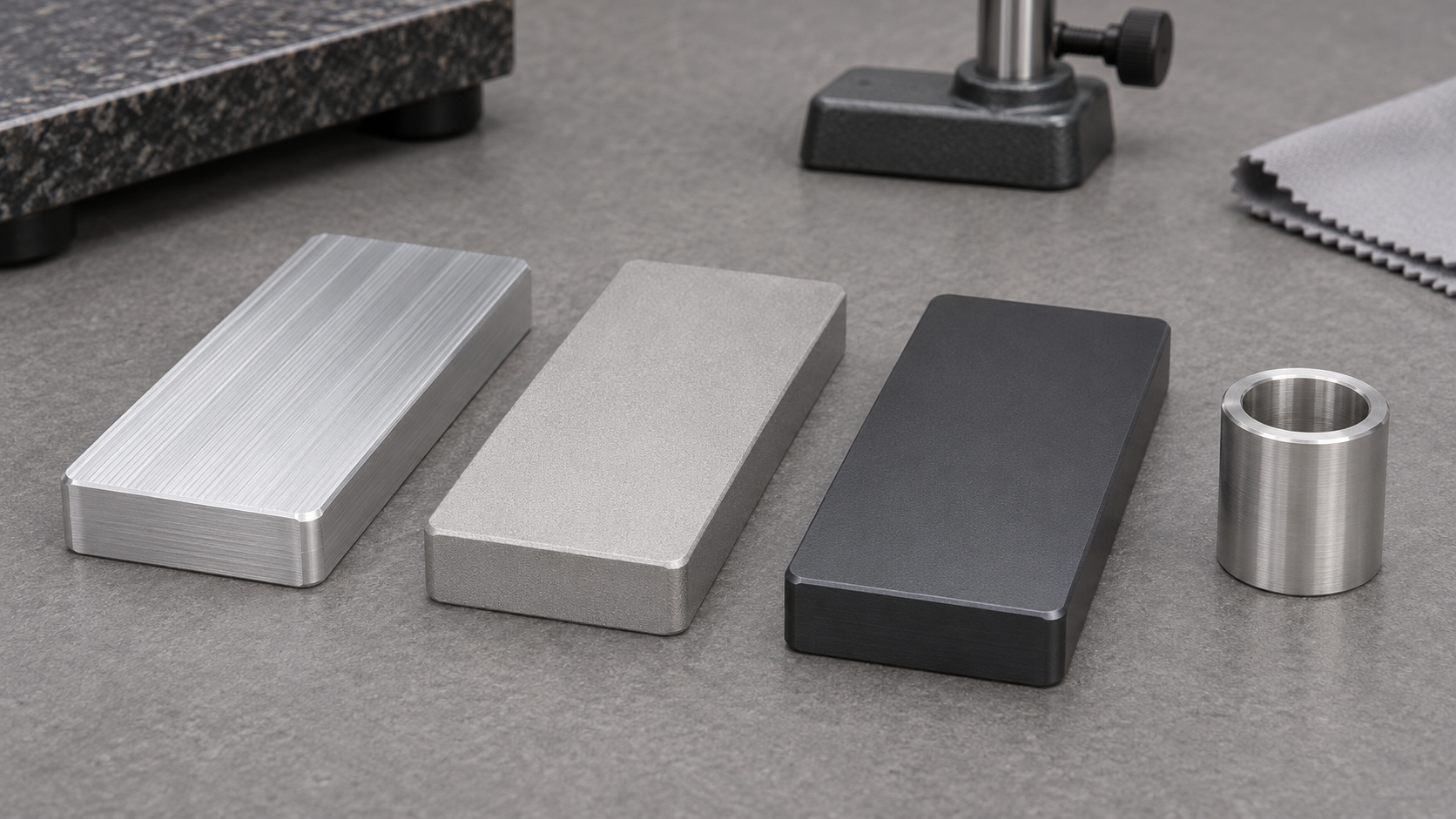
Powder metallurgy offers high material utilization, sometimes around 97 percent, because little is removed as scrap. It forms multi-level parts and intricate features in one press cycle, delivers repeatability at volume, and can tailor porosity for bearings and filters. These advantages explain why the powder metallurgy process are widely used in automotive, aerospace, medical, electronics, and industrial products.
Automotive applications include transmission gears, valve seats, and bearing caps. Aerospace uses lightweight structures and filter elements. Medical and dental parts use biocompatible alloys, while electronics use heat sinks and magnetic components. An independent overview of powder metallurgy applications describes the breadth of the industry.
Frequently Asked Questions
How many powder metallurgy process are there? Five main stages: powder production, blending, compaction, sintering, and secondary operations.
Why is sintering done below the melting point? Bonding occurs by solid-state diffusion, which preserves the part’s shape while building strength.
Is the process economical for small runs? Tooling cost makes it most suitable for volume. Prototypes are often made by machining instead.
How Powder Quality Shapes the Powder Metallurgy Process Steps
The behavior of a powder in a die is governed by its shape and size distribution. Spherical particles from gas atomization flow like fine sand and fill a cavity evenly, which helps produce uniform density. Irregular particles from water atomization interlock more, giving a stronger green part but flowing less freely.
Fine powders sinter faster because they have more surface area, but they can be harder to handle and may pose safety concerns. Coarser powders flow well but may leave larger pores. Selecting the right distribution is a balance between compaction behavior, sintering response, and the tolerance the part must hold.
Apparent density determines how much powder fills a die by volume. Two powders of the same metal can produce different green densities, which then shrink by different amounts during sintering. This is why powder suppliers and process engineers work together to control this parameter tightly.
Compaction Density in the Powder Metallurgy Process Steps
Green density is one of the strongest predictors of final performance. Higher compaction density reduces porosity, improves strength, and lowers shrinkage during sintering. Achieving it requires sufficient pressure and uniform transmission of that pressure through the powder.
In a simple die, pressure falls with distance from the punch, so tall or complex parts can develop density gradients. Multi-level tooling, careful punch design, and lubricants help even the distribution. When gradient cannot be avoided, the design may be changed to suit the process.
Sintering shrinkage depends on green density. A part with uneven density will shrink unevenly, making dimensional control difficult. This is why compaction is treated as a critical stage among the powder metallurgy process rather than simply a shaping operation.
Dimensional Control Across the Powder Metallurgy Process Steps
Because sintering causes shrinkage, the die is made larger than the finished part by a calculated allowance. Predicting that allowance requires experience with the powder, the geometry, and the sintering cycle. A first article confirms the assumption before a production run.
Where tighter dimensions are required, sizing or coining presses the sintered part in a die to bring it within tolerance. This works because the part is now stronger and can accept a controlled deformation. Not all geometries suit sizing, so the need should be reviewed during design.
Inspection should focus on features that control assembly. A coordinate measurement or a dedicated gauge can verify critical dimensions, while general features need lighter checks. Our tolerances, fit, and function guide explains how to decide which features deserve tight control.
Choosing Powder Metallurgy Versus Other Processes
Powder metallurgy is most competitive at volume, when tooling cost is spread over many parts and material efficiency becomes significant. It suits parts with moderate complexity that can be formed in a press and do not require extreme mechanical properties in every direction.
Machining is better for low volumes, very tight tolerances on a few features, or geometries that a die cannot release. Casting suits larger parts and complex internal passages. Metal injection molding handles very small parts with fine detail, but at higher material cost.
Many products combine routes. A pressed part may be machined for a critical bore or thread, then heat treated for wear resistance. Understanding where the powder metallurgy process end and secondary work begins helps a buyer compare quotations on the same scope.
Quality Assurance Across the Powder Metallurgy Process Steps
Quality in this route is built in rather than inspected in at the end. Powder lots are checked for chemistry and particle characteristics, blends are sampled for uniformity, green parts are weighed and measured, and sintered parts are checked for density and dimensions.
Statistical process control is common in high-volume production. Trends in green weight or sintered dimension can signal tool wear or furnace drift before defective parts are made. Catching the trend early is far cheaper than scrapping a batch.
Documentation matters for regulated industries. Material certificates, furnace records, and inspection results show that the part was produced under controlled conditions. Ask which records are available at the request stage, because they are easier to retain during production than to reconstruct later.
Final Thoughts
The powder metallurgy process form a chain in which each stage sets up the next. Powder quality determines compaction, compaction determines sintering behavior, and sintering determines the properties that secondary operations refine.
A buyer who understands this chain can ask better questions and compare suppliers more fairly. Specify the material, density, critical dimensions, and inspection needs, and the supplier can choose the right tooling and cycle to deliver them.
Common Challenges in the Powder Metallurgy Process Steps
Each of the powder metallurgy process has failure modes worth knowing. In powder production, contamination or an unsuitable particle shape can weaken the compact. In blending, poor mixing leads to local differences in composition that only appear after sintering. Both are easier to prevent than to correct.
During compaction, uneven pressure produces density gradients, and worn tooling causes dimensional drift. During sintering, incorrect atmosphere can oxidize the part or change its carbon content, while a poorly controlled cycle leads to excessive shrinkage or incomplete bonding. Recognizing these signs lets a supplier adjust the relevant stage rather than discarding finished parts.
Secondary operations bring their own risks. Machining a porous part can smear material or break edges, and heat treatment can distort dimensions. Planning these operations alongside the main powder metallurgy process avoids a conflict between what the press produces and what the finishing step requires.
Design Guidelines for Pressed Parts
Design for the process from the start. Parts that can be ejected along a single axis are simpler and cheaper to tool. Features such as undercuts and cross holes usually require secondary machining, so they should be marked as such on the drawing.
Keep walls reasonably uniform so pressure transmits evenly during compaction. Very thin sections can break during ejection, while very thick sections compact poorly at the center. Gradual transitions between thicknesses reduce both problems.
Set tolerances according to function. Pressed parts can hold consistent dimensions, but the tightest values should be reserved for features that control assembly. Our fit and function guide explains the general approach, which applies here as well.
The Role of Material Selection
Iron and steel powders dominate structural applications because they are economical and offer good strength after sintering. Stainless grades serve corrosive environments, copper and brass serve electrical and decorative roles, and aluminum reduces weight where strength demands are modest. Tool steels and specialized alloys support high-wear applications.
Alloying is often completed during the powder metallurgy process by mixing elemental powders, then allowing diffusion during sintering. This gives flexibility to create compositions that are difficult to cast. It also means the blend must be uniform, since the final chemistry depends on the distribution of the added elements.
Porosity can be a feature rather than a defect. Self-lubricating bearings are impregnated with oil, and filters rely on controlled pore size. Specifying the desired density range tells the supplier which of the powder metallurgy process to emphasize.
Evaluating a Powder Metallurgy Supplier
Ask about tooling design, powder sourcing, furnace control, and inspection capability. A supplier who can explain each stage of the powder metallurgy process is likely to control the result more reliably than one who treats pressing and sintering as a black box.
Request samples in the intended material and ask for density and dimensional data. Confirm how tooling cost is handled and what quantity is needed to make the route economical. For a small run, a machined prototype may be the sensible first step.
For projects that combine pressed and machined components, our CNC machining services and engineering review can support the full route.
Conclusion
The powder metallurgy process convert powder into precision parts through a controlled sequence of production, blending, compaction, sintering, and finishing. Each stage has a clear purpose, and understanding the chain helps buyers specify parts that the process can deliver consistently.
Define the material, density, critical dimensions, and inspection scope at the start. With those decisions in place, the supplier can select tooling and a sintering cycle that turn the design into a repeatable product.
Frequently Asked Questions
What are the main powder metallurgy process? Powder production, blending, compaction, sintering, and any required secondary operations.
Why is the process material efficient? The part is formed close to its final shape, so very little material is removed as scrap compared with machining.
Can powder metallurgy parts be machined? Yes. Features such as threads or precise bores are often added after sintering when the compact geometry cannot form them.
When is the process economical? It is most cost-effective at volume because tooling costs are spread across many parts and production is highly repeatable.
Final Considerations
When planning a component, decide early which of the powder metallurgy process are needed and which capabilities the finished part requires. A clear drawing that states material, density, critical dimensions, and inspection needs allows the supplier to design tooling and a sintering cycle around the real requirement.
Understanding the chain from powder to part helps avoid unrealistic expectations. The process is strong at repeating a proven geometry at volume, but it depends on tooling and controlled material behavior. Used in the right application, it delivers consistent parts with excellent material efficiency.
As a final checklist, confirm the powder grade, target density, critical dimensions, and inspection scope before releasing a request. The powder metallurgy process reward a defined specification, and a short review protects both the tooling investment and the delivered result.