
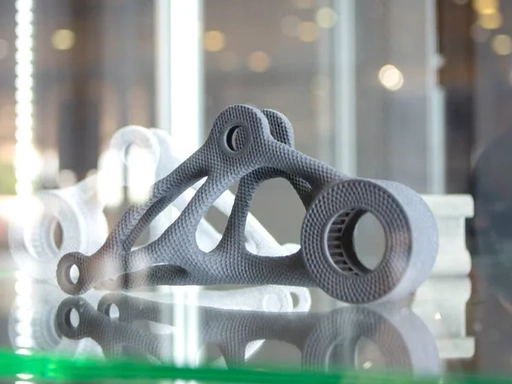
A printed prototype can have the lower quoted price and still cost more to qualify. A machined prototype can cost more initially but avoid later finishing or testing. When comparing 3D printing vs CNC, the useful measure is the cost of an accepted part that answers the prototype’s intended question.
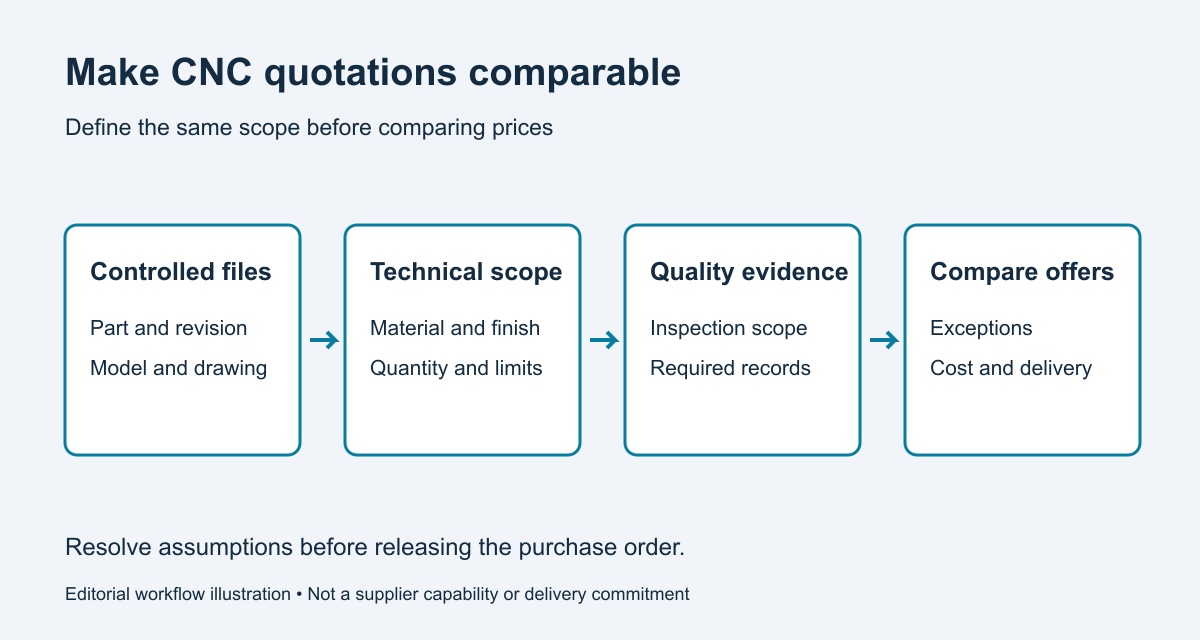
Compare 3D printing vs CNC using the same functional requirements, quantity, finishing, and acceptance scope. There is no universal batch size at which one process becomes cheaper, and no reliable comparison based only on part size or the word “complex.”
First Decide What the Prototype Must Prove
An appearance model, an assembly check, and a loaded functional test need different evidence. In the 3D printing vs CNC decision, a resin print used to check packaging may be appropriate even if it does not reproduce the production material. That same part may be unsuitable for validating a loaded bearing interface.
State what substitutions are acceptable. A printed polymer and a machined polymer with similar names are not automatically equivalent in behavior. A metal additive process and wrought stock each require their own material, condition, and qualification review. If the prototype cannot answer the engineering question, its lower unit price does not make it the better choice.
Put Both Quotations on the Same Basis
| Cost item | CNC machining review | 3D printing review |
|---|---|---|
| Preparation | Programming, workholding, tools, and setup scope. | Build preparation, orientation, nesting, and support strategy. |
| Material | Stock form, purchased quantity, allowances, and scrap recovery. | Qualified feedstock, supports, and reuse controls. |
| Processing | Machining time, setups, tool access, and secondary operations. | Build time, utilization, handling, and process operations. |
| Finishing | Deburring, surface treatment, cleaning, precision finishing. | Cleaning, support removal, curing, secondary machining. |
| Acceptance | Dimensional and functional checks, reports, material documents. | Functional checks, process evidence, additional qualification. |
| Delivered scope | Packaging, shipping, duties, rework responsibility, and the same delivery milestone. | |
These are review categories, not operations every part needs. Polymer SLS, vat photopolymerization, material extrusion, and metal powder-bed processes have different routes. Ask the supplier to identify the actual process rather than quote “3D printing” as one uniform technology.
Use a Break-Even Calculation Only Where It Holds
A simple comparison can separate one-time preparation from cost per accepted part:
Total batch cost = one-time cost + quantity × cost per accepted part.
If both unit costs are reasonably stable, the crossover quantity follows from setting the two totals equal. If the result is negative or outside the quoted range, it is not a useful production crossover.
The model becomes unreliable when another setup, build, machine, or inspection plan is needed at a particular quantity. Additive build utilization may change in steps; machining tool and fixture choices may also change. Request quotations at the actual trial and repeat-order quantities rather than extrapolating one price indefinitely.
Do not insert a generic scrap percentage to make one route win in the 3D printing vs CNC comparison. If yield or rework affects the result, identify whether the quotation covers accepted parts and who carries the risk. Use project evidence or a stated uncertainty instead of an unsupported average.

Geometry Can Change Both Routes
For machining, tool access, deep features, internal corners, workholding, and setup count influence the plan. For printing, orientation, supports, trapped material, cleaning access, and distortion control affect preparation and finishing. Complexity is not automatically free in additive manufacturing.
A part with internal channels may justify an additive route, but that does not establish the cost of verifying or cleaning those channels. A simple bracket may suit machining, but that does not guarantee it is cheapest for every material and quantity. Compare feasible routes that deliver the required evidence.
Count the Operations After the Main Process
Printed holes, threads, mating faces, or sealing features may need secondary work depending on the process and specification. Machined parts can also require further finishing or treatment. Avoid assuming either route delivers a fully accepted part immediately after its main operation.
Identify which requirements apply after finishing, including dimensions and surface texture. See when to inspect roughness before or after finishing and how tolerances connect to fit and function.

Compare Delivery and Revision Exposure
Lead time includes material availability, scheduling, preparation, processing, finishing, and inspection. A short machine cycle is not a shipment promise. Ask when the part will be ready for the agreed test, not only when the machine operation finishes.
A design revision may change toolpaths, workholding, build preparation, supports, or inspection in either route. Ask which work is reusable, what must be repeated, and whether the revision affects the material or qualification basis. Do not assume every print revision is free or every machining revision carries a fixed surcharge.
Send One Controlled RFQ for Both Options
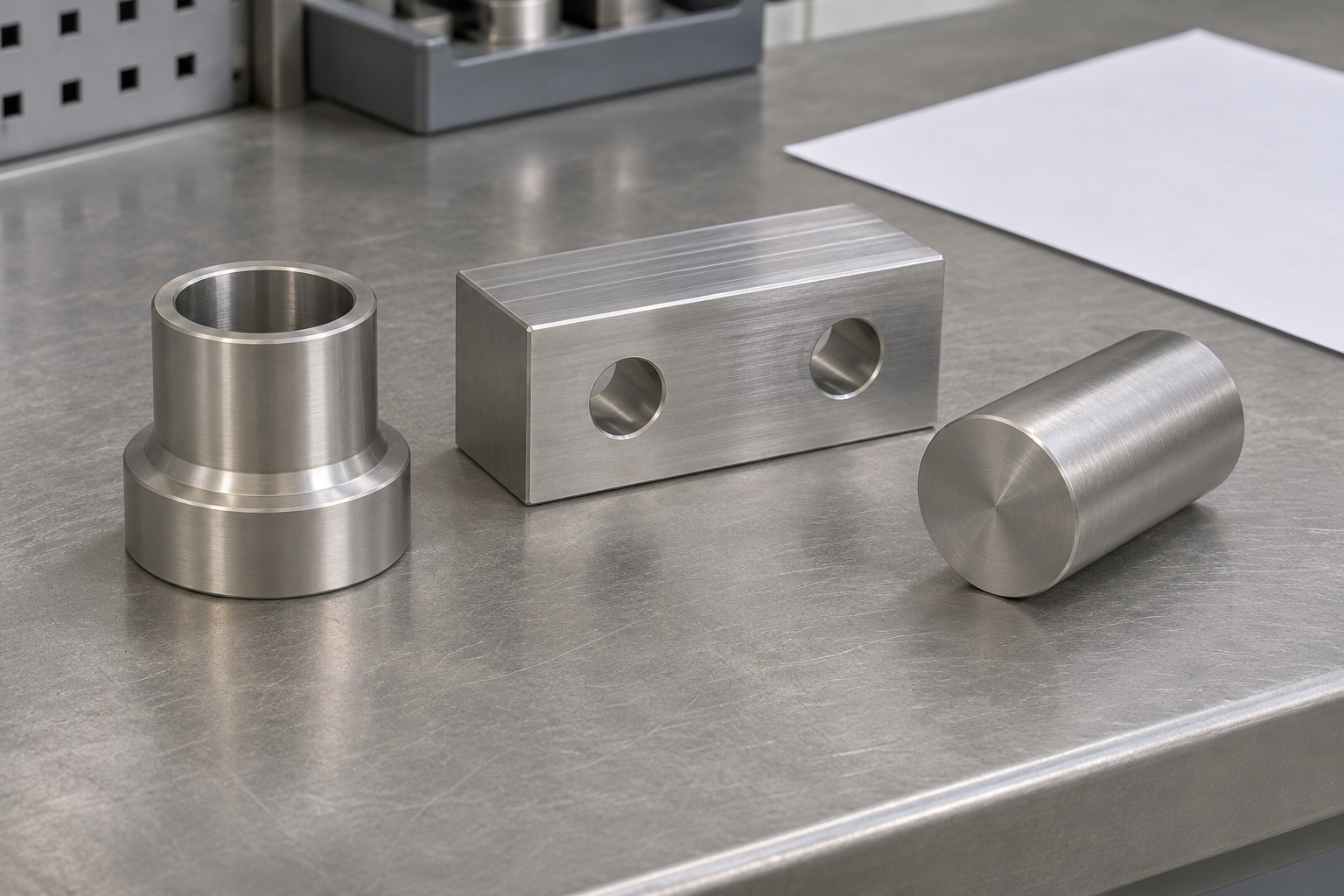
Provide the current model and drawing, prototype purpose, permitted material substitutions, quantities, critical features, finishing, required evidence, and deadline. Ask suppliers to separate assumptions and exclusions from the quoted scope. The machining RFQ checklist helps organize those inputs.
For a project comparison, review YUEYI’s CNC machining and 3D printing information, then send the drawings and acceptance requirements.
Frequently Asked Questions
Is 3D printing always cheaper for prototypes? Not necessarily. For simple parts and small quantities it often is, but finishing and acceptance work can close the gap.
When does CNC machining win? When tight tolerances, production materials, or functional loading matter, machining often gives more reliable evidence.
Can both processes make the same part? Often yes, but the material behavior and evidence differ. Compare accepted-part scope, not just geometry.
Sources and Scope
- NIST SP 1176: Costs and Cost Effectiveness of Additive Manufacturing — historical cost-model research, not current market prices.
- UltiMaker: comparing additive and subtractive manufacturing — process selection context.
This guide does not publish market price benchmarks or guaranteed savings. Obtain a quotation for the actual project.
Material Realism in the 3D Printing vs CNC Decision
A prototype made from the intended production material gives more useful evidence than one made from a convenient substitute. In the 3D printing vs CNC decision, this is often the factor that settles the choice, because each process has a different material universe.
Machining works from wrought stock, so a machined prototype in aluminum 6061 behaves much like a production part cut from the same grade and condition. Additive processes build from powders or resins whose properties depend on the process itself. A printed nylon part can differ from an injection-molded nylon part in strength and anisotropy, even when the material name matches.
Metal additive parts can be dense and strong, but they still require a qualification review. Heat treatment, build orientation, and post-processing change the result. If the prototype is meant to prove mechanical performance, ask whether the quoted material and condition represent the intended production route.
Where a substitute is unavoidable, document it and treat the test as indicative rather than conclusive. This keeps the 3D printing vs CNC comparison honest and prevents a low-cost model from being trusted with a question it cannot answer.
Quantity and Repeat Orders
Quantity changes the economics of 3D printing vs CNC in different ways. With no tooling, a single printed part can be inexpensive, while a machined prototype carries programming and setup cost on one piece. At higher quantities, machining spreads that setup over more parts and additive builds fill the platform more efficiently.
Repeat orders introduce another consideration. A machined part has a program and fixture that can be reused, while a printed part has a build file and orientation that can be repeated. Both become cheaper on repetition, provided the process was recorded properly the first time.
Ask for prices at the quantities you actually expect, including a pilot batch and likely repeat volumes. Label future demand as a forecast rather than a commitment. This gives a clearer 3D printing vs CNC comparison than extrapolating a single prototype price to a volume nobody has ordered.
Surface Finish and Its Cost
Surface requirements often decide the true cost of 3D printing vs CNC. As-printed surfaces show layer lines and may need support removal, sanding, or coating. As-milled surfaces carry tool marks and may need finishing for appearance or function. Each route starts from a different baseline.
For sealing faces or sliding surfaces, texture matters as much as roughness average. A printed part may require secondary machining to produce a reliable sealing face, which adds cost and time. A machined part may need only a finishing pass on that same face. The comparison must include the operations each route needs to reach the same acceptance criteria.
Define which surfaces are critical and what finish they require. Leaving this vague invites two suppliers to quote different scopes, which makes the 3D printing vs CNC price comparison meaningless.
Inspection and Evidence
Evidence is part of the delivered prototype. Dimensional reports, material certificates, and functional test results all cost time, and the required level depends on what the prototype must prove. An appearance model may need only a visual check, while a loaded functional part may need measurement and traceability.
In the 3D printing vs CNC comparison, ask whether the quoted price includes first-article inspection and in what form. A supplier who excludes inspection may appear cheaper while shifting the verification work to you. Clarify who measures the part, which features are checked, and when the report is issued.
Keeping the drawing, material record, and inspection results together makes later orders easier. If a batch differs, the record shows whether the cause was material, setup, or process drift.
Common Comparison Mistakes
One mistake is comparing the price of a single part without considering whether it will be accepted. A cheaper part that fails inspection or needs rework is not cheaper. Base the 3D printing vs CNC comparison on accepted parts.
Another is treating all printing as one process. Vat photopolymerization, powder-bed fusion, and material extrusion have different costs, materials, and finishing needs. Ask the supplier to name the process and explain why it suits the part.
A third is assuming geometry alone decides the route. A complex shape may be printable but still need costly verification, while a simple shape may be machined quickly and cheaply. Compare feasible routes against function, evidence, and delivery.
Working With a Supplier
A good supplier reviews the drawing before quoting and asks what the prototype must prove. That question is the heart of the 3D printing vs CNC decision. If a supplier quotes both routes, ask which one it recommends and why, and treat the answer as engineering advice rather than a sales preference.
Confirm lead time against the test date, not just the machine schedule. Include finishing, inspection, and shipping. A prototype that arrives after the design review is of little value, regardless of how cheap it was.
For teams that need both routes under one roof, YUEYI offers CNC machining and 3D printing, supported by engineering review before an order is placed.
Final Thoughts on 3D Printing vs CNC
The 3D printing vs CNC question is not settled by a generic rule. It is settled by defining the prototype’s purpose, putting quotations on the same scope, and comparing the cost of an accepted part. Material realism, finishing, inspection, and delivery all belong in that comparison.
With a controlled drawing and clear acceptance criteria, both routes can be quoted fairly. Choose the one that answers the engineering question at the required evidence level, and the price comparison becomes meaningful.
Breaking Down the One-Time Costs
One-time costs are where the 3D printing vs CNC comparison often surprises buyers. Machining needs programming, a setup plan, workholding, and sometimes a fixture before the first cut. Printing needs build preparation, orientation, and support planning. Both are real work, even when no hard tool is involved.
In machining, a simple part may be programmed and set up quickly, while a part with many setups or difficult fixturing takes longer. In printing, a part that nests well and needs few supports is cheaper to prepare than one that must be oriented carefully and cleaned extensively. The 3D printing vs CNC difference is therefore part-specific, not universal.
Ask the supplier to itemize preparation rather than hiding it in the unit price. When a revision is needed, knowing which preparation can be reused shows which route adapts more cheaply for your particular geometry.
Estimating Cost Per Accepted Part
Cost per accepted part includes the material and machine time plus the finishing and inspection needed to reach acceptance. In the 3D printing vs CNC comparison, ignoring the acceptance step is a common source of error, because the two routes often need different work to reach the same result.
A printed part may need support removal, sanding, and a secondary cut for a critical bore. A machined part may need deburring and a surface treatment. Once these are listed side by side, the cheaper route is often clear, and it is not always the one with the lower machine price.
Yield belongs here too, but only with evidence. If a supplier quotes accepted parts, the risk of rework is already included. If not, ask who pays when a part fails inspection. This should be explicit in the 3D printing vs CNC quotation rather than assumed.
Choosing Based on the Prototype Question
The most reliable way to decide 3D printing vs CNC is to name the question the prototype must answer. For fit and appearance, a quick print may be enough. For a part that will be loaded, assembled, or certified, a machined prototype in the production material gives stronger evidence.
Some teams use both in sequence. A printed model confirms shape and ergonomics early, then a machined prototype validates function. This uses each route for what it does best and avoids paying for production-grade evidence before it is needed.
Documenting the decision helps later. When the project reaches production, the record shows which prototype answered which question and why the chosen route was appropriate.
Planning for the Next Stage
A prototype is rarely the final part. In the 3D printing vs CNC decision, consider what happens next. A design validated by machining may move to larger machining volumes with the same program and fixture. A design validated by printing may move to molding, machining, or additive production depending on material and volume.
Keep the drawing revision, material grade, process notes, and inspection results together. When the next stage begins, that package tells the supplier exactly what was proven and what must be reproduced. It also prevents a later quote from being based on a different interpretation of the same design.
Conclusion
The 3D printing vs CNC comparison works when both routes are quoted on the same scope: material, quantity, finishing, inspection, and delivery. There is no universal winner, because geometry and evidence needs differ from one part to the next.
Define what the prototype must prove, ask for itemized quotations, and compare the cost of an accepted part. With that discipline, 3D printing vs CNC becomes a practical decision rather than a rule of thumb.
Final Checklist
Before requesting prices, confirm the drawing revision, material requirement, prototype purpose, quantity, critical features, finish, evidence, and delivery date. When comparing 3D printing vs CNC, send both suppliers the same controlled package so their offers describe the same scope.
Ask each bidder to state process, material, finishing, inspection, and exclusions in writing. A clear 3D printing vs CNC comparison protects the budget and gives the prototype the best chance of answering the question it was made for.