
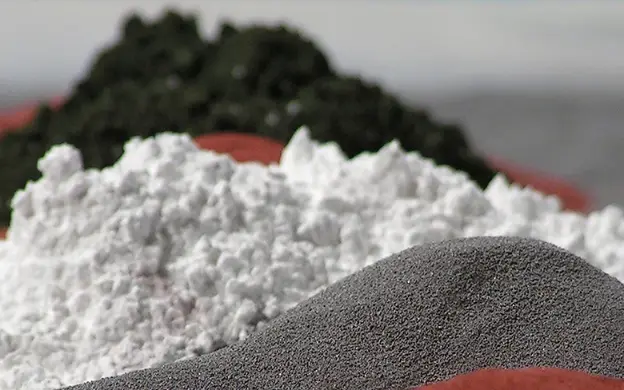
Powder metallurgy components are produced by compacting metal powder in a die and sintering the compact below the melting point so the particles bond into a solid component. The route is widely used for gears, bushings, structural brackets, and magnetic components in automotive and industrial equipment. This guide explains each stage of the process, the design rules that shape cost, and the checks a buyer should make before placing an order.
For procurement teams, the appeal is near-net-shape production with very little material waste and excellent repeatability at volume. Understanding how powder metallurgy components are made helps a buyer judge which geometries suit the process, what tolerances are realistic, and when a secondary machining step is worth adding instead of paying for an unnecessarily complex tool.
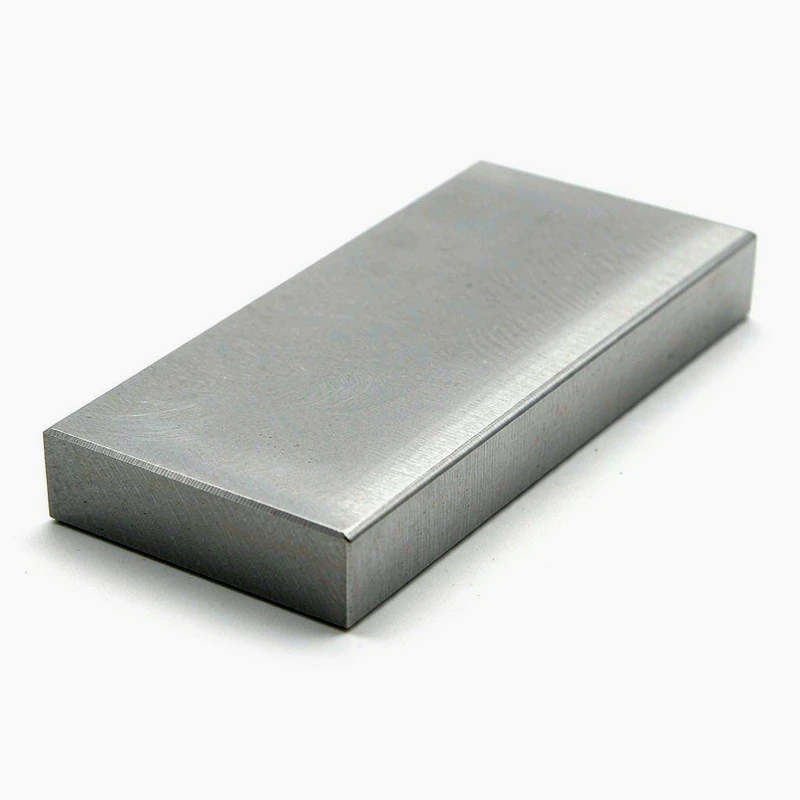
What powder metallurgy components Are and Why They Matter
Powder metallurgy is a forming route rather than a cutting route. Fine metal powder is blended with lubricants or alloying additions, pressed into a shaped cavity, and heated in a controlled atmosphere. The result is a part that already carries most of its final geometry, so little stock is removed afterwards. That is why the process is common for high-volume components with consistent cross-sections and moderate geometric complexity.
The economic logic is different from machining. A die and a sintering cycle carry fixed costs, but the per-part cycle is fast and scrap is minimal. At a few hundred pieces, machining is usually cheaper; at tens of thousands, powder metallurgy components often win clearly. Buyers who understand that crossover can plan a prototype route and a production route separately instead of forcing one method to cover both stages.
The method also enables compositions that are difficult to cast, including porous bearings that hold oil, tungsten-based heavy alloys, and soft magnetic composites. Those functional properties come from the powder route itself rather than from a coating or a later treatment. When a design needs controlled porosity or a uniform fine microstructure, powder metallurgy components can deliver something conventional melting cannot reproduce economically.
Powder Production and Characterisation
Powder properties set the ceiling for everything downstream. Atomisation, reduction, or electrolytic production produces particles with different shapes, sizes, and purity. Spherical powders flow and fill a die evenly, while irregular particles interlock and give a stronger green compact. A buyer rarely specifies the production route, but asking which one a supplier uses reveals how tightly the input material is actually controlled.
Particle size distribution, apparent density, and flow rate are measured before blending. Additions such as graphite, copper, nickel, or a lubricant are mixed in to reach the target chemistry and to reduce die friction during pressing. Inconsistent blending shows up later as density variation, dimensional scatter, or soft spots after sintering, so mixing records and batch identification matter as much as the alloy name on the certificate.
Powder handling also affects safety and quality. Fine metal powders oxidise, absorb moisture, and can segregate during transport. Reputable suppliers store lots separately, retest material after long storage, and keep certificates tied to each batch. When a reorder happens a year later, that traceability is what keeps the next run of powder metallurgy components consistent with the first approved sample.
Compaction: Forming the Green Part
In the press, a measured volume of powder fills a die cavity and opposing punches compact it at pressures typically in the hundreds of megapascals. The ejected piece, called a green compact, holds its shape through mechanical interlocking and the binder alone. It is fragile at this stage, so handling and ejection design are part of the tooling engineering rather than an afterthought left to the operator.
Density is rarely uniform through a complex part. Friction against the die wall and between particles reduces pressure with depth, so tall or multi-level geometries need multiple punch motions to equalise compaction. Simulation and tool design address this, and a buyer should ask how density variation is controlled on any feature that will later carry load or be machined to a tight interface.
Tooling is the main fixed cost. A simple single-level die is inexpensive, while a multi-level part with undercuts or side holes needs a more complex tool or a secondary operation later. This is the point in the process where design decisions have the largest cost impact, so reviewing the geometry with the supplier before steel is cut is worth the time it takes.
| Stage | What happens | Key control |
|---|---|---|
| Blending | Powder mixed with additives | Batch homogeneity |
| Die filling | Measured volume enters cavity | Flow rate and fill uniformity |
| Compaction | Punches apply pressure | Green density distribution |
| Ejection | Compact leaves the die | Edge integrity and handling |
| Green inspection | Shape checked before furnace | Mass and dimensions |
Sintering: Bonding the Particles
The green compact passes through a controlled-atmosphere furnace at a temperature below the main constituent melting point. Diffusion bonds the particles, the lubricant burns off, and the part gains its strength. Atmosphere composition, temperature profile, and belt speed are tightly controlled because a small drift can change dimensions and mechanical properties across an entire batch rather than on a single piece.
Components usually shrink during sintering. That shrinkage is predictable but depends on powder, compaction density, and furnace conditions, so the die is deliberately cut oversize to compensate. Dimensional capability therefore comes from controlling the whole chain, not from a final correction step. Ask whether a supplier monitors shrinkage with statistical data rather than reacting after an out-of-tolerance inspection result.
Liquid-phase sintering, infiltration with copper, and sinter-hardening are variations used for higher strength or density. Each adds cost and changes the tolerance budget. Understanding which route applies to your component helps explain why two quotations for the same drawing can differ substantially, and it prevents a buyer from comparing prices that cover different process scopes.
Secondary Operations
Powder metallurgy components often leave the furnace close to final shape but not fully finished. Sizing or coining restores dimensional accuracy on critical faces, machining adds threads or cross-holes that cannot be pressed, and heat treatment raises hardness. Each operation is a deliberate cost addition, so it should be justified by a functional requirement on the drawing rather than applied as a blanket default.
Impregnation with oil for self-lubricating bearings, resin sealing for pressure-tight parts, steam treatment for a surface oxide, and plating for corrosion resistance are also common. These steps exploit or seal the controlled porosity that the powder route creates. A buyer should state which of them are required rather than assuming they are included in the base unit price.
Deburring and cleaning matter more than they sound. Fine particles and fragile edges survive compaction and can affect assembly, plating adhesion, or downstream coating. Specifying edge condition, cleanliness, and protective packaging as part of the order prevents receiving disputes that a dimensional report alone cannot resolve.
Materials and Typical Alloys
Iron and low-alloy steels dominate structural applications because they are economical and respond well to heat treatment. Stainless grades serve corrosion-resistant hardware, while copper-based compositions appear in bearings and electrical contacts. Aluminum alloys reduce weight, and soft magnetic composites suit motor and inductor cores where magnetic performance is the deciding factor rather than raw strength.
High-performance compositions include tool steels, tungsten heavy alloys, and nickel-based superalloys produced through powder routes to avoid segregation. These are specialist products with longer lead times and tighter powder control. For most industrial buyers, the practical decision is between a standard iron-based grade and a stainless or copper alternative, with density and heat treatment as the main variables.
Material choice interacts with density. A component pressed to a higher green density sinters to better mechanical properties but needs more tonnage and a stronger tool. Ask the supplier to state the expected final density and the resulting property range for the grade, because a nominal alloy name alone does not describe what the finished powder metallurgy components will actually do in service.
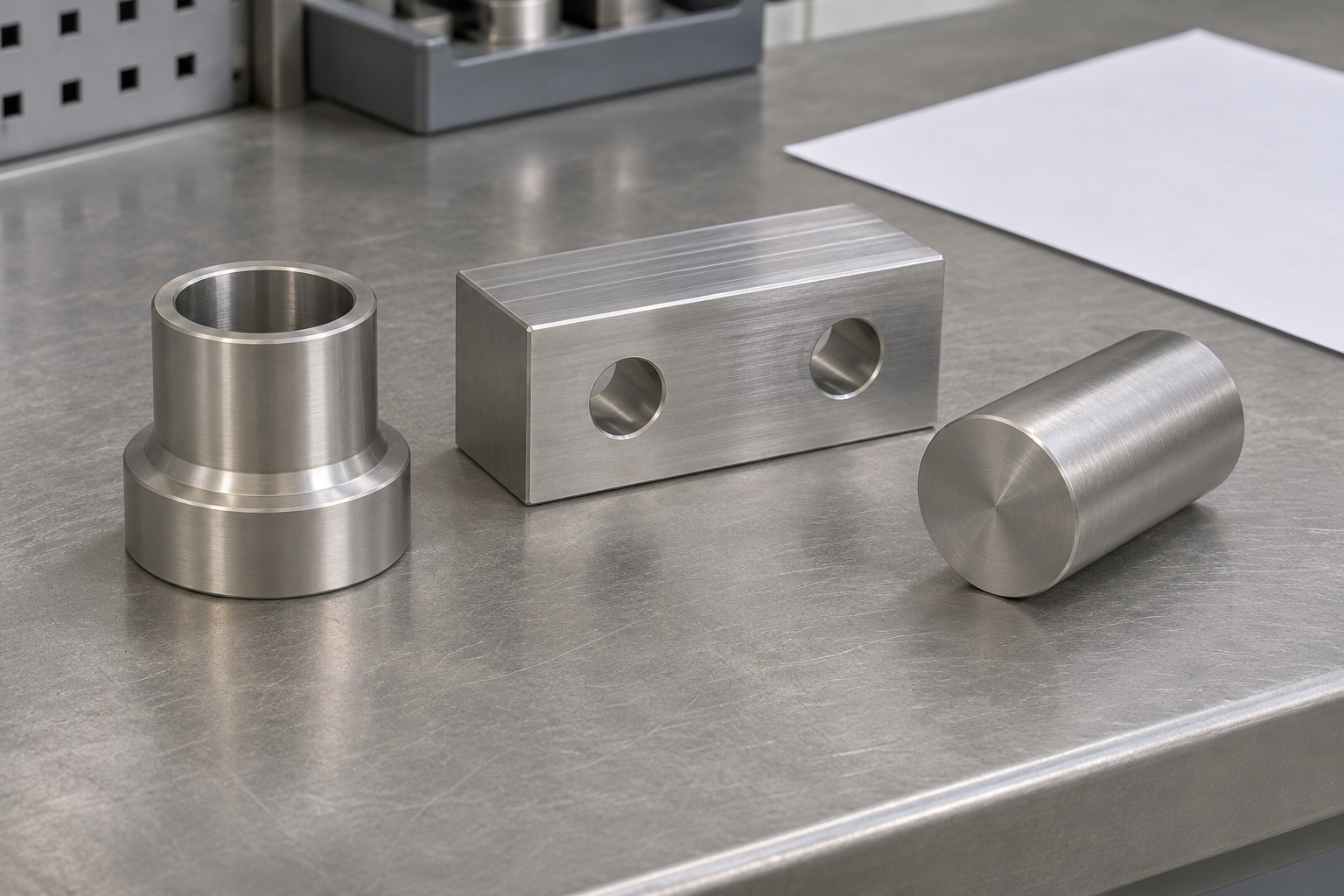
Design Rules for powder metallurgy components
Uniform wall thickness, generous radii, and a parting line that allows ejection make a component far easier to press. Undercuts, side holes, and reverse tapers cannot be formed directly and need secondary machining. Keeping the pressing direction simple is the single most effective way to control tooling cost and dimensional scatter across a long production run.
Very long, thin sections and abrupt changes in height create density gradients. Features such as flanges, bosses, and steps should be arranged so powder can flow into every level of the die cavity. A short design review with the toolmaker often removes the need for a costly multi-level punch setup without changing the function of the part or its mating interfaces.
Tolerances should be assigned by function. As-sintered dimensions can be held consistently, but very tight values on every feature drive up cost through sizing and inspection. Our powder metallurgy process guide explains the tooling implications in more detail, and the powder metallurgy vs CNC comparison helps decide when machining a critical interface is the better route.
Tolerances, Density and Mechanical Properties
Density is the master variable. Higher density improves strength, fatigue resistance, and impact behaviour, but it requires more compaction pressure and a more robust tool. Porosity is not always a defect: self-lubricating bearings deliberately retain open pores that hold oil. The right question is whether the porosity serves a function or simply reduces the performance the designer expected.
Dimensional repeatability is generally good across a run because the die defines the shape, but sintering shrinkage introduces a controlled offset that must be monitored. Critical interfaces are often sized after sintering. Buyers should ask for measured values near the tolerance limits rather than a pass mark, since a dimension sitting at the boundary deserves attention before volume increases.
Mechanical testing, hardness checks, and metallographic examination confirm that the furnace cycle produced the intended microstructure. For safety-critical components, documented evidence and lot traceability are part of the delivered value. Agree the test scope and acceptance criteria at the quotation stage, not after the first shipment has already arrived.
| Property | Influenced by | Typical buyer check |
|---|---|---|
| Density | Compaction pressure and powder | Mass and volume measurement |
| Strength | Alloy, density, sintering | Tensile or transverse rupture test |
| Dimensions | Die, shrinkage, sizing | First-article and in-process inspection |
| Hardness | Alloy and heat treatment | Hardness traverse |
| Porosity | Powder and process route | Metallographic section |

Cost and Volume Economics
Tooling, powder, pressing, sintering, and any secondary operations make up the price. Powder is usually a smaller share than in machining because there is almost no scrap, but tooling is a larger fixed cost. That is why the unit price of powder metallurgy components falls steeply as volume rises and why a small trial order looks expensive when it is quoted on its own.
Ask for a quotation that separates one-time tooling from recurring unit costs and lists every secondary operation. A single bundled number hides whether the production price will drop as forecast. For a wider comparison of manufacturing routes, see our powder metallurgy manufacturing article, which covers how the process scales from sampling to full production.
Energy for sintering, furnace capacity, and batch scheduling also affect lead time. A supplier running continuous furnaces can absorb volume more smoothly than one relying on batch cycles. Discuss annual demand and the call-off schedule early so the quoted capacity and delivery cadence are realistic rather than optimistic.
Quality Control and Inspection
Incoming powder, green density, furnace conditions, and finished dimensions are the four checkpoints that matter. A first-article inspection confirms the setup, in-process checks catch drift, and final inspection verifies the delivered lot. Asking at which stage each characteristic is measured tells you how a supplier actually controls the process rather than how it describes the process in a brochure.
Sintered components are measured on dimensions, density, hardness, and sometimes pore structure. Porous or thin sections need a defined support condition during measurement, and the inspection method should be stated on the drawing. A coordinate list is not the same as a valid assessment of a geometric control, and instrument resolution alone does not establish measurement uncertainty.
Keep the approved sample, the drawing revision, the powder lot certificate, and the inspection report together. When a reorder happens months later, that bundle makes the comparison straightforward and avoids a debate about which version was originally accepted or which furnace condition produced the reference values.
Typical Applications
Automotive transmissions, engine components, seat mechanisms, and oil pumps use large volumes of sintered gears, sprockets, and bushings. Appliances, power tools, locks, and industrial gearboxes use similar components. Anywhere a repeatable, near-net-shape metal part is needed in quantity, the route is worth evaluating before turning to machining from solid stock.
Specialist uses include self-lubricating bearings, filters with controlled permeability, electrical contacts, and soft magnetic cores. These exploit features that casting or cutting cannot easily reproduce, which is why powder metallurgy components remain a distinct manufacturing category rather than simply a low-cost substitute for a machined component.
Frequently Asked Questions
What are powder metallurgy components used for? Gears, bushings, structural brackets, bearings, and magnetic cores, mainly where volume is high and the shape suits pressing.
Are powder metallurgy components as strong as machined parts? They can be, but properties depend on density and alloy. High-density sintered and heat-treated grades approach wrought behaviour.
Can the process make threads or side holes? Not directly in the pressing direction. Those features are added by secondary machining, which is a normal part of the route.
What volume justifies tooling? It depends on part complexity, but the crossover with machining usually sits in the thousands rather than the hundreds.
Do powder metallurgy components shrink? Yes, during sintering. The die is cut oversize to compensate, and shrinkage is monitored as a process variable across each batch.
What should a buyer send for a quote? The drawing and model, alloy or required properties, annual volume, critical tolerances, finishing, and inspection evidence.
Powder metallurgy components: A Practical Buyer Checklist
Powder metallurgy components should always be quoted against a named drawing revision. Ask the supplier to print that revision on the tool drawing and on the inspection report for powder metallurgy components, because a mismatch is the most common cause of mixed configurations after a reorder.
Density drives the strength of powder metallurgy components. Request the expected final density and the test method used to confirm it, so two quotations for powder metallurgy components can be compared on measured properties rather than on alloy names alone.
Shrinkage is normal in powder metallurgy components. Ask how sintering shrinkage is monitored across batches for powder metallurgy components, and whether the die was compensated from measured data or from a nominal estimate made before any trial run.
Secondary operations belong in the specification for powder metallurgy components. List sizing, machining, impregnation, and plating for powder metallurgy components explicitly, otherwise a bundled unit price hides work that will reappear later as a change order.
Porosity can be functional in powder metallurgy components. Self-lubricating bearings rely on open pores, while structural powder metallurgy components need them minimised, so state the intent before agreeing an acceptance criterion with the supplier.
Inspection evidence for powder metallurgy components should include measured values, not only pass marks. Ask at which stage each characteristic of powder metallurgy components is checked, from green density through to the finished production lot.
Tooling ownership matters for powder metallurgy components. Confirm who owns and maintains the die for powder metallurgy components, and how a worn tool will be replaced before dimensional drift reaches the tolerance limit on a long run.
Change notification protects powder metallurgy components. A different powder lot, furnace profile, or finishing subcontractor can alter powder metallurgy components, so agree a written notice before any of those process elements is changed.
Technical Resources
For background on powder metallurgy components, see the Wikipedia overview of powder metallurgy, the Metal Powder Industries Federation technical resources, and independent guidance on preparing technical drawings for machining. Clear requirements reduce interpretation disputes and give the tooling team a stable reference for every batch.