
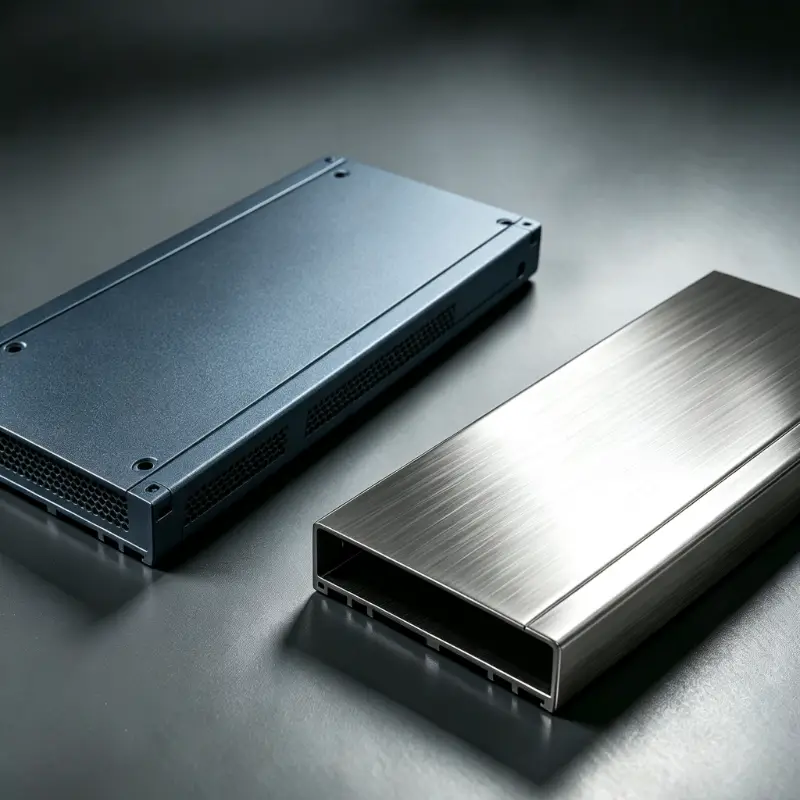
Sandblasting vs brushing is one of the most common decisions a buyer has to make when a machined or fabricated metal part needs a defined surface condition. Both processes remove a small amount of material and change the way light reflects from the surface, yet they produce very different textures, edge conditions and levels of dimensional risk. Choosing the wrong one can turn an otherwise acceptable part into a cosmetic reject or a coating failure.
This guide explains what the sandblasting vs brushing comparison actually involves, how each method works, and which drawing notes prevent disputes. It is written for purchasing teams and design engineers who specify finishes on custom components rather than for operators running the equipment. The goal is a specification that a supplier can quote accurately and an inspector can verify without ambiguity.
What sandblasting vs brushing Actually Compares
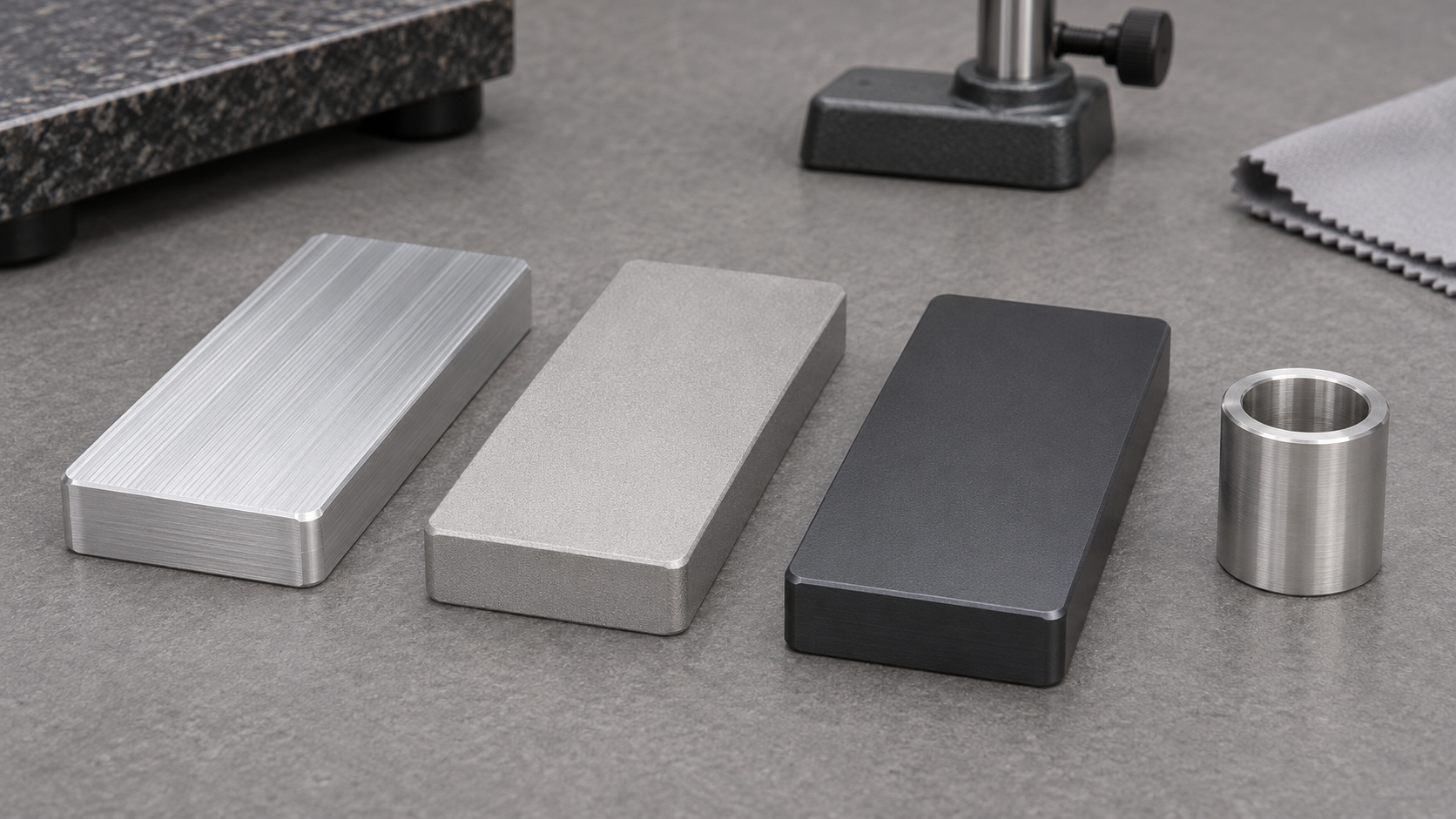
Abrasive blasting propels a stream of media at the surface under pressure, creating a random, matte, multi-directional texture. Brushing, by contrast, draws an abrasive belt, wheel or disc across the part in a controlled direction, leaving a directional or satin grain. Both are mechanical finishing operations, but one is an impact process and the other is a cutting and smoothing process. Confirm the sandblasting vs brushing requirement at this stage of the review.
Because the mechanisms differ, the sandblasting vs brushing decision is rarely about which finish looks nicer in isolation. It is about the required roughness value, whether a directional grain matters, how much material can be sacrificed, and what happens next in the process chain. A part destined for painting needs a different surface energy profile from a part destined for a visible cosmetic panel.
Buyers often use the words loosely, asking for a brushed look while describing a blasted texture. That ambiguity is expensive. A clear sandblasting vs brushing note on the drawing should name the process, the medium or grit, the target roughness, the direction of any grain, and the areas that must be masked. Without those details, two suppliers can quote completely different work for the same line item.
How Abrasive Blasting Works
Compressed air or a centrifugal wheel accelerates media such as aluminum oxide, glass bead, garnet, steel shot or plastic grit against the workpiece. The media fractures or peens the surface, removing oxide, scale, burr remnants and a thin layer of base metal. Nozzle distance, air pressure, media size and dwell time together determine how aggressive the result is. This is worth stating explicitly in any sandblasting vs brushing enquiry.
Glass bead blasting tends to peen rather than cut, producing a smooth, uniform satin appearance with modest material removal. Aluminum oxide cuts faster and leaves a sharper, more angular profile suited to coating adhesion. The sandblasting vs brushing distinction becomes important here, because a blasted anchor pattern is measurable as a surface profile while a brushed grain is measurable as a roughness average.
Blasting is non-directional, which is useful for hiding machining marks and blending welds or cast surfaces. It also reaches recesses, threads and internal corners that a belt cannot touch. The trade-off is that sharp edges can round over, thin walls can distort, and fine features can be erased if the operator dwells too long in one spot. Agree the sandblasting vs brushing route before the first article is produced.
How Brushing and Abrasive Belts Work
Brushing uses a rotating wheel, flap disc or continuous abrasive belt loaded with silicon carbide, aluminum oxide or fine nylon filaments. The abrasive passes across the surface in one direction, cutting a series of fine parallel scratches. Grit sequence, belt speed, contact pressure and the number of passes control the final grain. Confirm the sandblasting vs brushing requirement at this stage of the review.
A brushed finish is deliberately directional, which is why it is common on consumer-facing panels, appliance trim, nameplates and visible fasteners. The grain can be aligned with the longest dimension of a part to make scratches less noticeable in service. In the sandblasting vs brushing comparison, brushing generally removes less material than blasting but demands far more operator skill to keep the grain straight and consistent.
Brushing struggles with recesses, cross-holes, undercuts and internal corners. It also produces a surface with a strong orientation, so roughness readings differ depending on whether the stylus travels with or across the grain. A buyer who specifies a single Ra number without stating measurement direction may find that the sandblasting vs brushing result passes in one orientation and fails in the other.
Surface Texture and Roughness Targets
Roughness is usually expressed as Ra, the arithmetic average deviation of the surface profile, sometimes with Rz or Rmax for peak-to-valley control. Blasting produces an isotropic, random profile; brushing produces an anisotropic one with a dominant lay. Both can hit similar Ra values while looking completely different to the eye. This is worth stating explicitly in any sandblasting vs brushing enquiry.
A practical sandblasting vs brushing specification therefore names more than a number. It should state the measurement direction, the cut-off length, the instrument or standard used, and a visual reference sample or limit sample. Photographs alone are unreliable because lighting changes how a satin grain reads, while a physical reference panel removes most of the interpretation.
Typical blasted surfaces on machined aluminum fall in a broad band from fine bead-blasted satin to coarse cast-cleaning profiles. Brushed finishes are usually specified by grit, such as a 180 or 240 grain, rather than by Ra alone. Asking a supplier to translate a grit into a guaranteed Ra is a common source of disagreement in sandblasting vs brushing projects.
| Characteristic | Abrasive blasting | Abrasive brushing |
|---|---|---|
| Surface pattern | Random, non-directional | Directional, linear grain |
| Typical control | Media type, pressure, profile | Grit sequence, passes, direction |
| Material removal | Moderate and uniform | Light and localised |
| Recess access | Good, reaches internal features | Poor, limited to accessible faces |
| Edge effect | May round sharp edges | Preserves edges better |
| Coating prep | Creates anchor profile | Less suitable as a bonding base |
| Cosmetic consistency | High across batches | Depends on operator technique |
Material Removal and Dimensional Control
Every mechanical finish removes material, and on tight-tolerance parts that removal matters. Blasting can take several micrometres off a surface, more on soft alloys or with aggressive media. Brushing removes less in total but can be uneven at edges where the belt wraps around a corner, creating a local taper that a coordinate check may miss. Agree the sandblasting vs brushing route before the first article is produced.
The safe approach is to define critical dimensions as post-finish requirements and to protect them with masking. Bearings bores, sealing faces, thread pitch diameters and datum pads should be listed explicitly on the drawing. When the sandblasting vs brushing decision is made late in a project, those protections are often forgotten and the first article arrives out of tolerance.
Ask the supplier to state where material will be removed and how much. A simple note such as all dimensions apply after finishing, with a permitted stock loss of ten micrometres on non-critical faces, prevents a disagreement about whether a slightly undersize part was machined incorrectly or finished too heavily. Confirm the sandblasting vs brushing requirement at this stage of the review.
Edges, Burrs and Feature Definition
Blasting is effective at cleaning up light burrs and blending tool marks, but it is not a controlled deburring method. It rounds edges rather than cutting them to a defined radius, and it can leave media lodged in blind holes or cross-drilled passages. Media removal and cleaning must be part of the agreed process, not an afterthought.
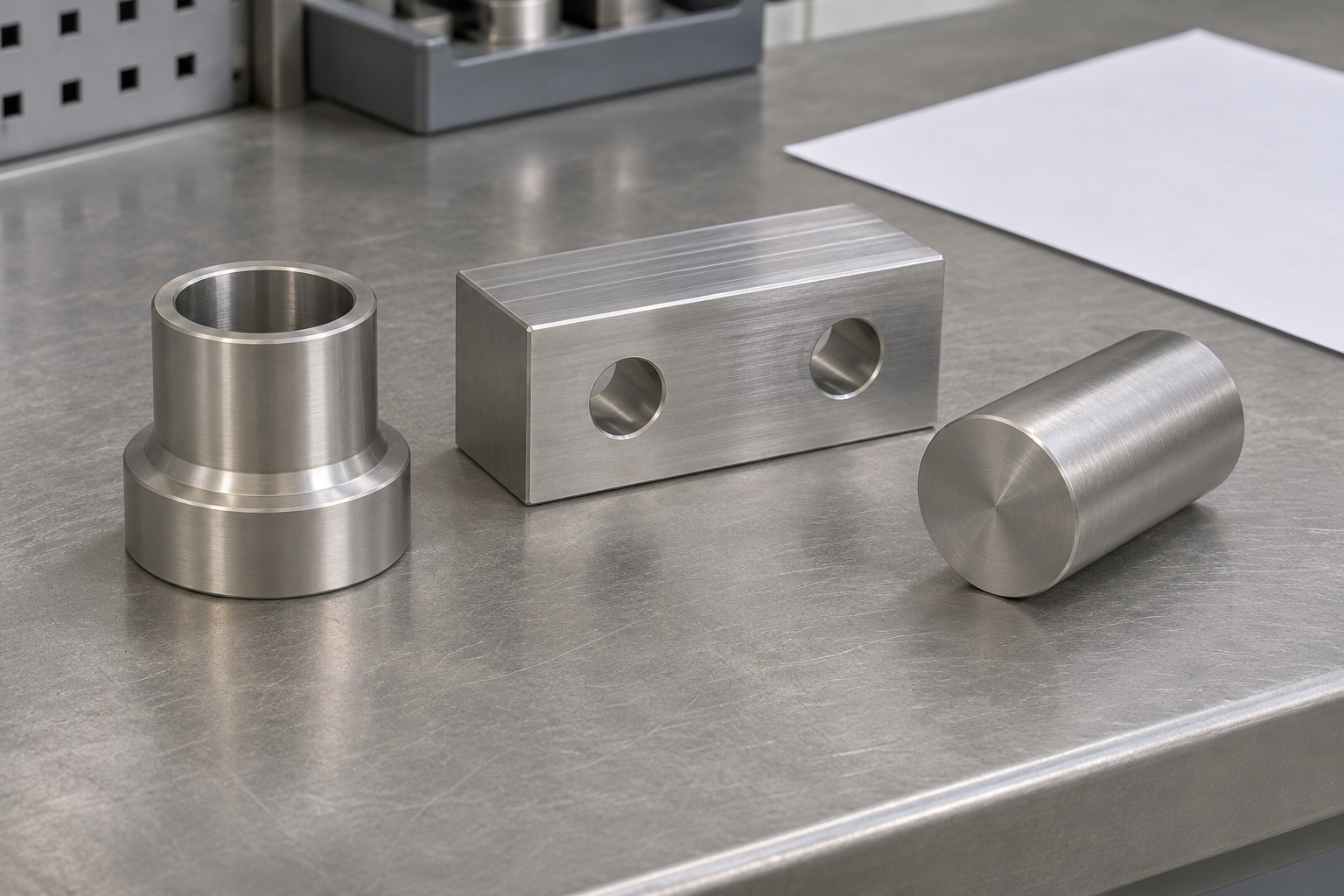
Brushing, especially with a deburring wheel or nylon filament brush, gives more deliberate control over edge break. It can produce a consistent small radius along a machined edge while leaving adjacent faces flat. For parts with functional edges, this is often the deciding factor in the sandblasting vs brushing comparison.
Fine features such as engraved markings, shallow knurls, thin ribs and sharp parting lines behave differently under the two methods. Blasting softens them; brushing can preserve them if the grain runs along the feature. A sample part processed both ways is the cheapest way to settle the question before a production lot is committed.
Appearance and Cosmetic Consistency
Cosmetic rejection is the most common cost arising from a poorly specified finish. A blasted surface is relatively forgiving because its random texture hides small handling marks. A brushed surface shows every finger print, every change in belt pressure and every misaligned pass, so batch-to-batch consistency depends heavily on fixtures and operator discipline.
Lighting direction matters as much as the finish itself. A brushed panel viewed along its grain looks smooth, while the same panel viewed across it shows a pronounced sheen difference. Agreeing the viewing conditions and the grain direction is part of a complete sandblasting vs brushing specification, particularly for parts assembled side by side on one product.
Anodising, plating or painting amplifies any underlying texture rather than hiding it. Blasting before anodising produces a uniform matte base, while brushing remains visible through a clear or lightly tinted coating. If the appearance after coating is the real requirement, the sample must be finished through the full process chain before approval.
Coating Adhesion and Surface Preparation
When a part will be painted, powder coated or bonded, the surface must be clean and have enough mechanical key for the coating to grip. Blasting is usually preferred because it removes oxide and creates a uniform anchor profile across the whole component. Standards for surface preparation grades, such as those published by ISO for blast-cleaned steel substrates, exist precisely because adhesion depends on profile as well as cleanliness.
A brushed surface can still be coated, but its directional scratches offer a less uniform key and may retain polishing compound or fine abrasive debris in the grain. Cleaning and degreasing steps should be written into the route card. In a sandblasting vs brushing decision for a coated part, the preparation requirement usually outweighs the visual preference.
Timing also matters. Blasted carbon steel begins to re-oxidise quickly in humid air, so the interval between blasting and coating needs an upper limit. Aluminum forms an oxide film almost immediately, which is generally acceptable for anodising but not for some adhesive systems. These constraints belong in the specification rather than in an informal shop-floor habit.

Material-by-Material Behaviour
Aluminum is soft and responds quickly to both methods, but it smears under aggressive belts and can embed media if blasted too hard. Stainless steel work-hardens and benefits from fresh, sharp abrasive with controlled pressure. Carbon steel tolerates blasting well but needs prompt protection against flash rust after the operation.
Brass, copper and bronze develop a warm, attractive brushed grain, yet they scratch easily and show handling marks. Titanium and nickel alloys are less forgiving of contamination, so dedicated media and clean abrasives are important. A general sandblasting vs brushing note that does not name the alloy leaves too much room for interpretation on these materials.
Castings and additively manufactured parts start with a rougher surface and often need blasting simply to reach a uniform baseline before any cosmetic finish. Our sandblasting surface finish guide covers media selection for those substrates in more detail, and the same logic applies when a brushed top layer is added afterwards.
Throughput, Tooling and Cost Structure
Blasting is fast for batches of small parts loaded into a cabinet or tumble basket, and the consumable cost is mostly media and compressed air. Brushing is more labour intensive per piece, especially when a straight grain must be maintained across several faces. The cost crossover depends on batch size, part geometry and how strict the cosmetic acceptance is.
Masking is a hidden cost in both routes. Tape, plugs, fixtures and the labour to apply them can exceed the finishing time itself on a complex part. A clear sandblasting vs brushing drawing note that identifies masked areas up front lets the supplier quote accurately instead of adding a contingency for guesswork.
Rework is the other major variable. A brushed panel that fails a visual check often has to be re-brushed from a coarser grit, which removes more material and may break a dimension. Blasted parts are usually easier to reprocess. When evaluating the sandblasting vs brushing quotation, ask how many parts are expected to need a second pass and who carries that cost.
Health, Dust and Environmental Controls
Blasting generates airborne dust and, with silica-containing media, a serious respiratory hazard. Enclosed cabinets, local exhaust ventilation, respiratory protection and media recovery are standard requirements, and some media are restricted or banned in certain jurisdictions. Disposal of spent media contaminated with metal fines also needs a defined route.
Brushing produces less airborne dust but creates fine swarf and abrasive debris that can contaminate machine ways and nearby assemblies. Dedicated finishing areas and cleaning after the operation protect downstream work. These practical constraints rarely appear on a drawing, yet they influence which of the sandblasting vs brushing options a supplier can offer at a given price.
For parts used in medical, food or optical applications, loose media or abrasive residue is unacceptable. Specify a cleaning verification step and, where relevant, a particulate limit. A shop that cannot document its cleaning process may be unable to meet the requirement even if the visual finish itself is straightforward.
Inspection and Acceptance Criteria
A surface finish is only verifiable if the acceptance method is defined. Name the roughness parameter, the measuring direction, the instrument, the number of reading points and the allowed range. Add a visual reference panel for cosmetic classes, and state the lighting and viewing distance used during inspection.
First-article approval should include at least one part finished through the complete route, not a bare coupon. Differences in alloy batch, tool wear and handling can shift the appearance enough to matter. Recording the approved media lot, belt grit and parameter settings makes the sandblasting vs brushing decision reproducible months later when the part is reordered.
Agree what happens to borderline parts. A defined accept, rework or scrap rule avoids a situation where the supplier considers a panel acceptable and the buyer does not. The same discipline used for dimensional inspection should apply to the finish, because a cosmetic dispute is still a quality dispute.
A Practical sandblasting vs brushing Selection Checklist
Check one: state the required roughness value together with the measurement direction, because directional grain makes a single number misleading.
Check two: name the process explicitly, so the sandblasting vs brushing choice is not left to the shop to interpret from a photograph.
Check three: specify the media type or grit sequence, since the same sandblasting vs brushing wording can cover very aggressive and very gentle operations.
Check four: list every surface that must be masked, including bores, sealing faces and threads, before any finishing begins.
Check five: confirm whether the part will be coated afterwards, because preparation for adhesion often decides the sandblasting vs brushing outcome.
Check six: require a first-article sample finished through the full process chain and keep it as the visual reference.
Common Specification Mistakes
The first mistake is describing a finish only by appearance, such as a satin look, without naming a process or a measurable parameter. Two shops will deliver two different surfaces and both can claim to have met the note. The second is assuming that a blasted surface and a brushed surface with the same Ra are interchangeable.
A third mistake is applying a finish requirement to the whole part when only one face is visible, which adds masking cost and dimensional risk everywhere else. A fourth is approving a loose sample and then expecting production parts to match it without a retained reference. Both problems show up repeatedly in sandblasting vs brushing enquiries.
Finally, buyers sometimes forget that finishing is the last operation but not the last variable. Packaging, handling and assembly can mark a brushed face far more easily than a blasted one. Include protection in the specification and in the quotation, not just in a verbal instruction at dispatch.
Frequently Asked Questions
Can the two methods be combined on one part? Yes, and it is common. A casting may be blasted to remove scale and unify the surface, then have one visible face brushed to create a directional grain. The drawing must say which areas receive each treatment and in what order.
Which option removes less material? Brushing generally removes less, but local pressure at an edge can still change a critical dimension. Blasting is more uniform across a surface but affects the whole exposed area. Neither should be treated as dimensionally neutral on a tight-tolerance part.
Is blasting always better before coating? Usually, because it produces a clean, uniform anchor profile, but the coating supplier should confirm the required profile range. A profile that is too coarse can show through a thin coating, while one that is too fine may not provide enough mechanical key.
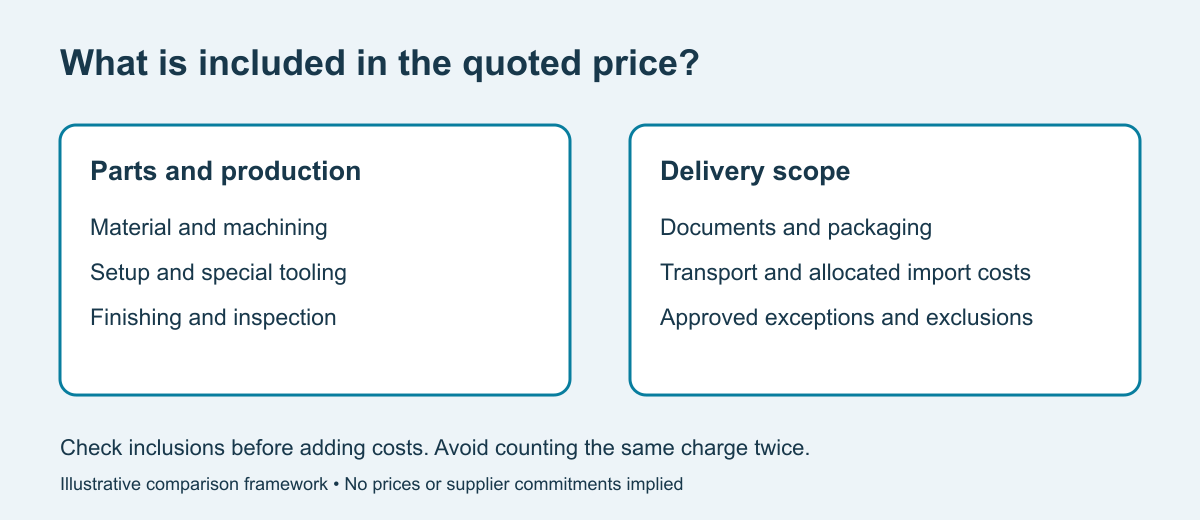
How should a buyer compare quotations? Ask each supplier to price the same scope: media or grit, masking, cleaning, inspection, rework allowance and a retained reference sample. A lower number that omits masking or cleaning is not a like-for-like comparison.
For a wider view of how finishing choices interact with forming and machining costs, see our metal stamping cost breakdown guide. The general reference on abrasive blasting processes and media is also useful when reviewing a supplier route card.