
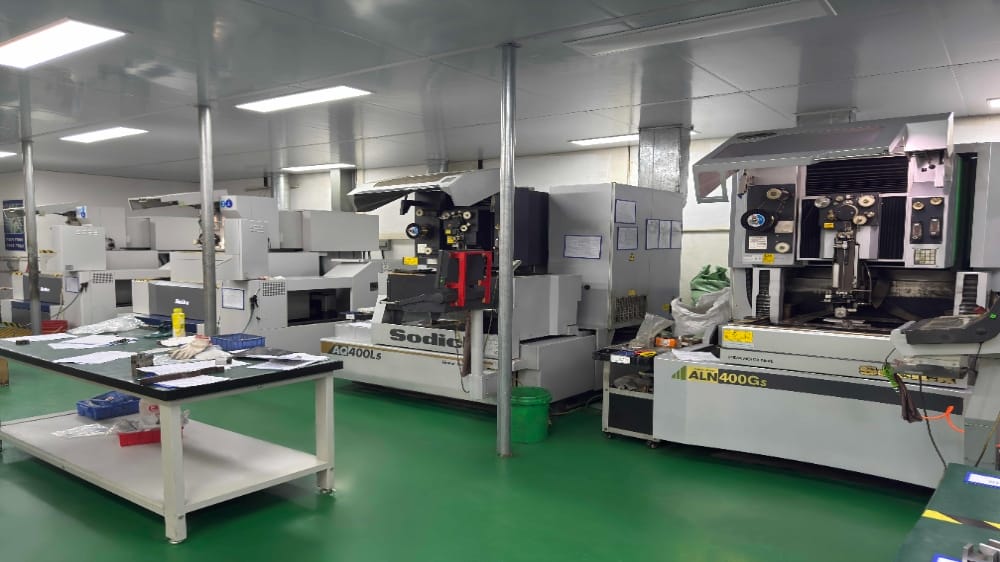
For mold makers, fixture manufacturers, and precision component engineers, surface quality determines yield, post-processing workload, and assembly performance. Many buyers outsource wire EDM only to receive parts with visible wire stripes, uneven texture, and an unsatisfactory Ra value. A natural question follows: can a better wire EDM surface finish be achieved?
The short answer is yes. A better wire EDM surface finish comes from optimized machine parameters, wire selection, cutting strategy, and disciplined process control. It cannot rely on one adjustment. It requires systematic tuning matched to the material, geometry, and tolerance of the specific part.

What Causes a Poor Wire EDM Surface Finish in Standard Cutting?
Before looking at solutions, it helps to identify the causes of a rough wire EDM surface finish. Most problems trace back to one of five areas.
- Unoptimized power and pulse settings. High-energy pulses increase speed but create deeper discharge craters, leaving a coarse texture. Shops focused on throughput often accept this trade-off.
- Single-pass cutting. A rough one-pass cut leaves prominent wire marks. Without skim passes, a fine wire EDM surface finish is not achievable.
- Wrong wire electrode. Brass wire cuts stably, while zinc-coated wire gives a finer surface. The wrong wire limits the result.
- Unstable flushing. Poor dielectric flow fails to remove debris, causing secondary discharge, pits, and scratches.
- Material and geometry limits. Thin parts, tall inserts, hardened steel, carbide, and graphite each add challenges to achieving a consistent wire EDM surface finish.
Practical Ways to Upgrade Wire EDM Surface Finish
1. Adopt a multi-cut skim strategy
Multi-pass machining uses one rough cut followed by one to four skim passes. The rough cut shapes the contour; low-energy skim passes remove the damaged layer left by the discharge. This is the most effective way to lower Ra and remove wire lines. Each skim pass improves the wire EDM surface finish, but it also adds time, so the number should match the requirement.
2. Match the wire electrode to the application
Standard brass wire is cost-effective for general structural parts. Zinc-coated wire is preferred when a fine wire EDM surface finish is needed, especially for mold cavities and core inserts that will see limited polishing. Choosing the wire at the quotation stage avoids a compromise later.
3. Fine-tune discharge parameters
Reducing pulse on-time and discharge energy during skim passes creates smaller craters and a smoother surface. Experienced operators adjust parameters to workpiece thickness, because a setting that works on a thin part may not hold on a tall one. Parameter control is central to a repeatable wire EDM surface finish.
4. Stabilize flushing pressure and flow
Controlled flushing removes eroded particles promptly, preventing secondary arcing and scratches. Poor flushing is often the overlooked reason for an inconsistent wire EDM surface finish on tall parts. Nozzle position, pressure, and dielectric condition all matter.
5. Reserve reasonable machining allowance
A uniform allowance for skim cutting ensures consistent material removal along the whole contour. Uneven stock produces fluctuating roughness. The allowance should be agreed before programming, not added as an afterthought.

Is a Perfect Wire EDM Surface Finish Always Necessary?
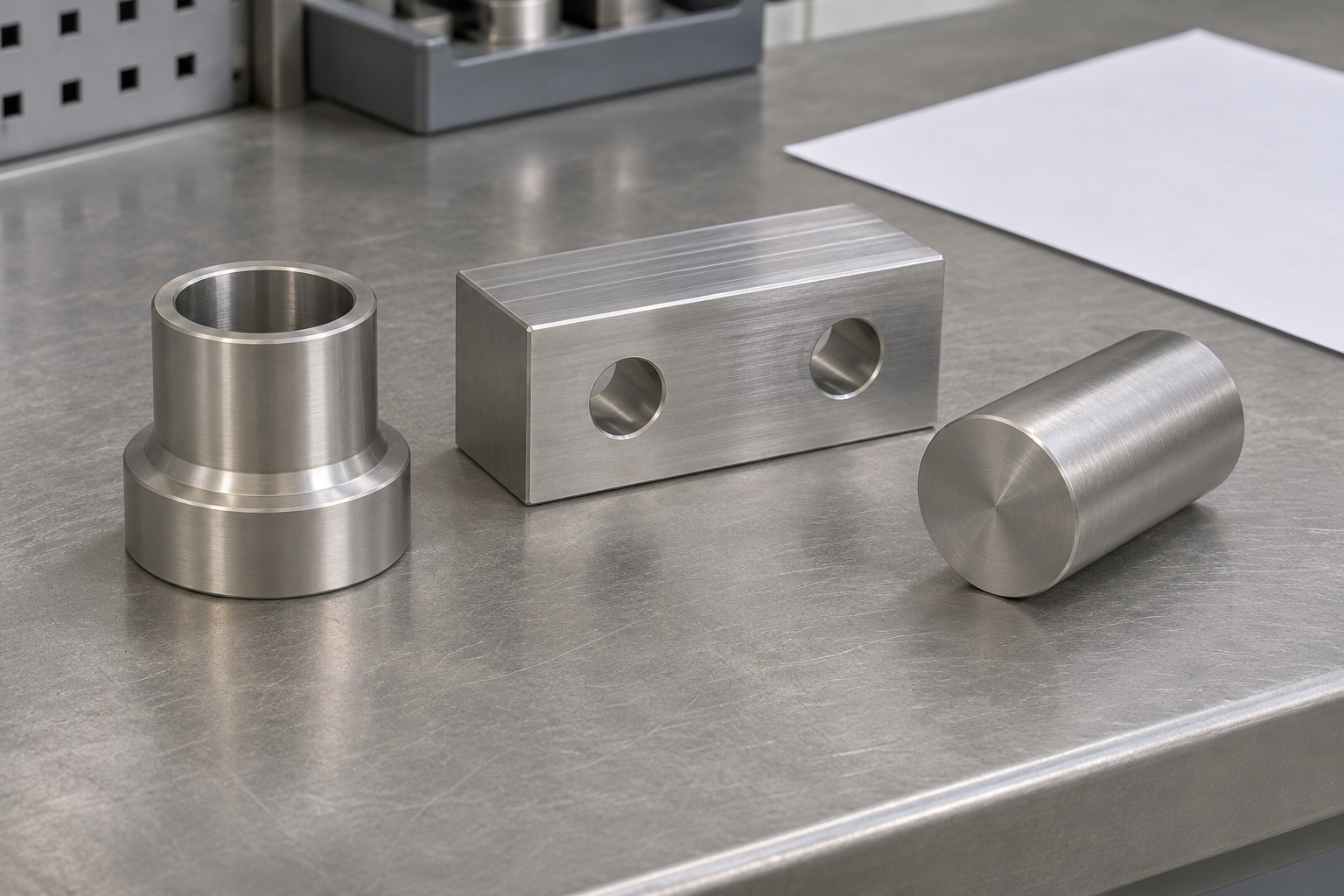
A high-quality wire EDM surface finish brings clear benefits, but it should be balanced against cost and lead time. Multi-skimming extends machining time and raises price. For non-critical mating surfaces, a standard one- or two-pass cut meets the specification and controls the budget.
For mold parting lines, sealing faces, and precision sliding fits, investing in a better wire EDM surface finish reduces manual polishing and shortens the mold cycle. The saving in bench work often outweighs the extra machine time. The decision should be made feature by feature, not for the whole part.
How to Choose a Supplier for a Better Wire EDM Surface Finish
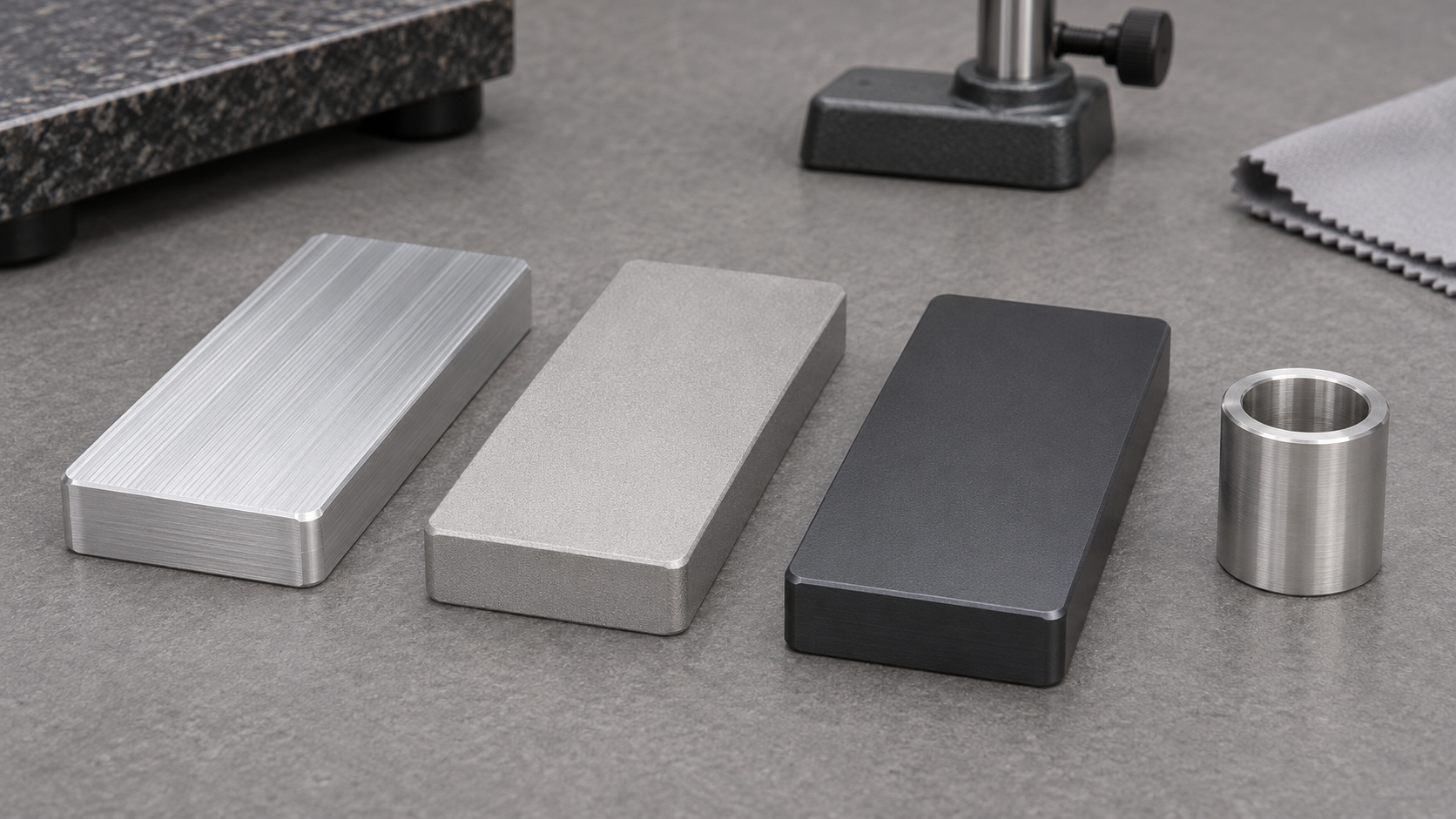
When sourcing wire EDM services, state your surface roughness requirement clearly. Give a target Ra value, say whether post-polishing is allowed, and mark the critical functional surfaces. A supplier who understands the wire EDM surface finish requirement will ask about material and cutting height before quoting.
A reliable supplier will confirm whether multi-skimming is included, provide reference samples in matching material and height, adjust the strategy rather than using universal parameters, and deliver consistent quality from prototype to batch. For related guidance on how drawings define surface requirements, see our surface roughness inspection guide. An independent overview of technical drawing preparation also explains how to communicate finishing requirements clearly.
Frequently Asked Questions
What Ra can wire EDM achieve? It depends on material, height, and the number of skim passes. A fine wire EDM surface finish is realistic with the right wire and parameters, but it should be confirmed on a sample.
Does zinc-coated wire improve the surface? Yes. It is commonly used when a fine wire EDM surface finish matters and polishing time must be reduced.
Is multi-skimming worth the cost? For critical sealing or sliding surfaces, usually yes, because it cuts downstream polishing. For non-critical faces, a standard cut is often enough.
How Material and Heat Treatment Affect the Result
The material being cut has a large influence on what a wire EDM process can deliver. Hardened tool steel, stainless steel, aluminum, titanium, carbide, and graphite each respond differently to electrical discharge. A setting that produces a clean contour in one material may leave recast material or micro-cracks in another.
Heat treatment adds another variable. Material that has been hardened can move as internal stress is released during cutting, which changes the effective allowance for skim passes. A supplier who understands this will plan the rough and finish sequence around the material condition rather than applying a fixed program.
Conductive materials are required for the process, and the resistivity of the material affects discharge behavior. Carbide, for example, needs different pulse settings from steel. Discussing the exact grade at the request stage helps the supplier select parameters that protect both accuracy and surface quality.
Workpiece thickness and height also matter. A tall, thin insert can deflect or vibrate, making a consistent result harder to hold. Cooling, support, and cutting speed must be adjusted accordingly. This is why a sample in the same material and height is more useful than a generic polished sample from a different job.
Measuring Wire EDM Surface Finish and Roughness
Wire EDM surface finish is usually specified as an Ra value, measured in micrometers. Ra describes the average height of the surface texture over a sampling length. A lower Ra means a smoother surface, but the number alone does not tell the whole story. The direction of the texture, the presence of recast layers, and the shape of the peaks all influence how a surface performs in service.
For functional faces, the measurement method and sampling direction should be agreed. A reading taken across the wire lines can differ from one taken along them. On curved contours, access for the stylus may be limited, so the inspector needs a defined location and approach.
It is also useful to separate roughness from other surface requirements. A part may need a certain Ra for sealing, but also a defined edge condition, flatness, or absence of a recast layer. Stating each requirement separately prevents a supplier from optimizing one number while missing the real need.
Balancing Speed, Cost, and Surface Quality
Every improvement in surface quality has a cost in time. Rough cutting is fast, each skim pass adds machine hours, and very fine finishes may require slow, careful passes with frequent inspection. Understanding this trade-off helps engineers specify only what the function needs.
A practical approach is to classify surfaces. Critical sealing, sliding, or fatigue-sensitive areas receive the full skim sequence. General mating faces may need one skim pass. Hidden or non-functional faces can be left with the rough cut. This grading keeps cost proportionate to value.
Where manual polishing would otherwise be heavy, paying for an extra skim pass is often cheaper. Polishing is labor intensive and can change geometry if overdone. A controlled machine finish is more repeatable, especially across a production batch where hand work varies from operator to operator.
Common Mistakes When Specifying Wire EDM Surface Finish
One common mistake is asking for a single tight Ra value across the entire part. This raises cost without improving function, because most surfaces do not need it. Mark the critical faces on the drawing and allow a general finish elsewhere.
Another mistake is leaving out the material condition. A supplier who quotes a finish without knowing whether the part is hardened may plan the wrong sequence. Include the grade, condition, and any heat treatment in the request.
A third mistake is ignoring inspection. If the requirement matters, agree how it will be measured and when the report is issued. A visual impression is not the same as a measured value, and a recorded result is what allows a repeat order to be compared with the first.
Applications Where Surface Quality Matters Most
Injection molds, surface texture transfers directly to the molded part, so a poor cavity finish is reproduced on every shot. Polishing time is a major part of mold cost, and a better starting surface reduces it substantially. This is one of the clearest cases for investing in a fine finish at the machining stage.
Sealing surfaces are another case. A rough face can leak even when dimensions are correct, because peaks and valleys prevent full contact. Precision sliding fits also depend on texture, since an overly rough surface wears quickly while an overly smooth one may fail to retain lubricant.
Medical and aerospace components often combine tight tolerances with demanding surface requirements, where both the texture and the absence of surface damage matter. In these applications, process records and inspection evidence are as important as the measured Ra value.
Planning a Wire EDM Project
A good request includes the model, a controlled drawing, the material grade and condition, the quantity, the critical surfaces, the target Ra, and whether polishing is allowed. State the delivery date and any inspection requirement. If a revision is issued during bidding, send it to every supplier and ask for an updated quotation.
Ask each bidder to confirm the number of skim passes, the wire type, and the inspection method. Treat differences as scope differences rather than price differences. Teams that also need milling or turning can review our CNC machining services to plan the full route.
Final Thoughts
A better result is achievable with the right combination of multi-cut strategy, wire selection, parameter control, and flushing. The key is to define which surfaces need it and to confirm the approach on a representative sample.
When surface quality is specified clearly, a supplier can plan the process and quote accurately. When it is left vague, the result depends on assumptions and the buyer pays for either unnecessary finishing or disappointing texture. A short, precise requirement is the most effective way to control both cost and quality.
Comparing Wire EDM with Other Finishing Routes
Buyers sometimes assume that a mirror finish can only come from grinding or lapping after wire cutting. That is not always true. With enough skim passes and the right wire, wire EDM surface finish can reach a level that greatly reduces or even removes the need for manual polishing on many contours.
Grinding is excellent for flat, regular surfaces and can achieve very tight tolerances, but it is difficult to apply to complex profiles and internal corners. Wire cutting follows the programmed path regardless of shape, which is why it is preferred for cavities, inserts, and intricate profiles. The two processes are complementary rather than competitive.
Hand polishing remains useful for mold cavities where a specific texture is required. However, it depends heavily on operator skill and is hard to reproduce across a batch. A machine-controlled wire EDM surface finish is more consistent, and it leaves the polisher with a uniform starting point rather than a variable one.
The Role of Machine Condition and Maintenance
Even with a good program, a machine in poor condition cannot hold a consistent result. Wire guides, rollers, and the dielectric system all influence path stability and discharge quality. Worn guides allow the wire to wander, which shows up as waviness on the cut face and undermines the intended wire EDM surface finish.
Regular maintenance of filters, pumps, and flushing nozzles keeps the dielectric clean and the flow stable. Contaminated dielectric causes erratic discharges and surface marks that are easily mistaken for parameter problems. A disciplined shop treats maintenance as part of quality control, not as a reaction to a bad part.
Machine calibration is equally important. Positioning accuracy affects dimensional consistency, while wire tension affects straightness. For tall parts, these factors become more visible. Asking a supplier about its maintenance and calibration routine is a practical way to judge whether a fine finish can be repeated on a production order.
How to Review a Sample Before Production
A sample is the most reliable way to confirm that a supplier can meet a surface requirement. The sample should use the same material, heat-treatment condition, and cutting height as the production part. A polished sample from a different job says little about what will happen on your component.
When the sample arrives, examine it under controlled lighting and measure the critical surfaces at defined locations. Compare the result with the agreed Ra target and check for recast material, wire lines, and edge damage. Record the outcome so later batches can be judged against the same basis.
If the first sample falls short, discuss the specific cause rather than simply asking for a finer finish. The answer may be an extra skim pass, a different wire, better flushing, or revised allowance. Understanding the cause lets both sides agree on a process that will hold through production.
Planning for Repeatability
Once a good result is achieved, freeze the process. Record the machine, wire type, pulse settings, number of skim passes, flushing setup, and inspection results. If a later order changes any of these, treat it as a process change and confirm the surface before shipping production quantities.
Repeatability is what separates a capable shop from a lucky one. A single good part proves that the right result is possible; a documented process proves it can be delivered again. For buyers, that documentation is as valuable as the sample itself.
In summary, a better wire EDM surface finish is a matter of matching the process to the part and confirming it with evidence. Define the critical surfaces, agree the number of skim passes, review a representative sample, and keep the process record. With those steps in place, a smooth, consistent contour becomes a normal outcome rather than a special request.
Frequently Asked Questions
How many skim passes are usually needed? One to four, depending on the target roughness and material. Non-critical faces may need only one, while sealing or sliding surfaces benefit from more.
Can the process remove wire lines completely? Additional skim passes greatly reduce them, and zinc-coated wire helps. Confirm the achievable result on a sample in the same material and height.
Does a finer finish always cost more? Yes in machine time, but it can reduce manual polishing and inspection rework, so the total project cost may fall.