
Introduction
If you’re a procurement manager, product engineer, or manufacturing business owner sourcing mass-produced sheet metal components, metal stamping is almost certainly a core production process you will encounter. Many buyers struggle to distinguish stamping from CNC machining, casting, or laser cutting, and misunderstand its cost thresholds, material limits, and quality control standards.
This complete buyer’s guide breaks down every essential detail of metal stamping in plain manufacturing language. By the end, you will know whether custom metal stamping fits your project, how to communicate requirements to suppliers, and how to avoid costly production delays and defective parts.
1. Basic Definition: What Exactly Is Metal Stamping?
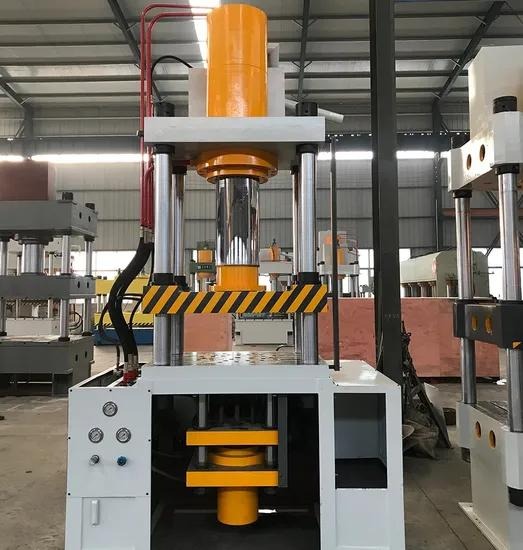
Metal stamping (also called sheet metal stamping) is a cold forming manufacturing method that transforms flat metal sheets or coils into custom-shaped components with dedicated stamping dies and mechanical/hydraulic stamping presses.
The whole process relies on physical pressure rather than melting metal. Metal blanks are placed between matched upper and lower dies; the press applies tons of force to cut, bend, stretch, or form the metal into fixed geometries in one or multiple strokes.
It is a high-volume, repeatable production technology designed for standardized parts, widely preferred over low-volume machining for mass manufacturing orders.
Core Advantages for Buyers
- Ultra-low unit cost for large batch orders (10,000+ pieces)
- Consistent dimensional tolerance across thousands of identical parts
- Fast cycle time, supporting mass rapid delivery schedules
- Compatibility with most common industrial metal alloys
- Supports integrated secondary operations in one production line
2. Main Metal Stamping Processes Every Buyer Should Know
Suppliers combine these individual stamping operations to finish a single part. When requesting quotes, specify which forming steps your component requires.
Blanking & Punching
The most fundamental cutting process. Punching creates small holes, slots, or cutouts on metal sheets; blanking cuts out the full outline of the finished part from raw metal coils. Ideal for brackets, flat shims, terminal connectors.
Bending
Uses bend dies to fold flat metal into angular or curved profiles. Common for enclosures, chassis frames, support brackets. Buyers need to specify bend radius and bend tolerance to prevent cracking.
Deep Drawing
Stretches metal blanks into deep, hollow 3D shapes without tearing. Typical applications: battery shells, cookware, automotive oil pans, and electronic casing housings. Thin stainless steel and aluminum are the most popular deep drawing materials.
Embossing & Coining
Embossing raises logos, text, or patterns on metal surfaces; coining delivers ultra-flat, high-precision surface textures for electrical contacts. Frequently used for brand marking and conductive metal terminals.
Trimming
Removes excess leftover metal flash after deep drawing or complex forming to meet precise dimensional standards.
3. Common Materials Used in Custom Metal Stamping
Material choice directly impacts part performance, production difficulty, and final quotation price. Here are mainstream options for industrial buyers:
- Stainless Steel (304 / 316) High corrosion resistance, suitable for home appliances, medical equipment, marine parts, and electronic housings. Harder to form, requires professional die design to avoid cracks.
- Aluminum Alloy (5052, 6061) Lightweight, low cost, easy to stamp. Widely used for EV battery components, consumer electronics shells, heat sinks. Perfect for mass lightweight production.
- Cold Rolled Steel / Hot Rolled Steel Low-cost structural material for automotive frames, machinery brackets, hardware fasteners. Easy welding and surface coating.
- Copper & Brass Excellent electrical conductivity, the top choice for busbars, wiring terminals, electrical connectors. Soft metal with simple stamping workflows.
- Galvanized Steel Pre-coated anti-rust layer, eliminates extra plating processes, used for outdoor equipment and cabinet parts.
4. Key Industries That Rely on Metal Stamping
Automotive & New Energy EVs
Structural frames, battery trays, motor housing brackets, door panels, connector terminals. EV manufacturers depend heavily on high-volume precision stamping to cut vehicle weight and production costs.
Consumer Electronics
Phone middle frames, laptop shells, shielding covers, metal SIM trays, small conductive terminals. Micro-precision stamping handles ultra-thin metal sheets under 0.5mm.
Home Appliances
Washing machine inner tanks, oven panels, refrigerator brackets, small hardware accessories. Large batch stamping drastically reduces appliance production costs.
Medical Equipment
Sterilizable stainless steel stamped parts, surgical tool brackets, medical device enclosures with strict surface smoothness requirements.
General Industrial Hardware
Mounting brackets, spring clips, fastener bases, cabinet fittings, mechanical support parts.
5. Metal Stamping vs Other Manufacturing Processes: Buyer Comparison Chart
表格
| Factor | Metal Stamping | CNC Machining | Die Casting | Laser Cutting |
|---|---|---|---|---|
| Best Batch Size | Large volume (10k+) | Small / Medium batches | Large complex hollow parts | Prototypes, low volume |
| Unit Cost (High Volume) | Very Low | High | Medium | High |
| Initial Tool Cost | High (custom dies) | Low | High casting molds | No tool charge |
| Tolerance Accuracy | Medium-High | Ultra-high | Medium | Medium |
| Lead Time for Mass Production | Fast after die completion | Slow piece-by-piece | Medium | Slow for bulk orders |
| Ideal Part Type | Thin sheet metal parts | Solid thick blocks | Thin-walled cast alloy housings | One-off flat cutting prototypes |
Critical Takeaway for Buyers
Choose metal stamping if you plan repeated mass production of sheet metal components. If you only need dozens of prototype samples, CNC machining or laser cutting is more economical to avoid expensive custom die fees.
6. Full Production Workflow for Custom Stamped Parts (For Buyer Reference)
- Submit 2D/3D CAD drawings with tolerance, material, surface finish requirements to your supplier
- Supplier conducts DFM (Design for Manufacturability) review to fix design flaws that cause stamping defects
- Quote release: separate charges for stamping die tooling and per-piece unit price
- Die manufacturing & prototype sample production
- Buyer sample approval for dimension, surface, strength testing
- Mass stamping production on automated press lines
- Secondary processing: deburring, plating, powder coating, welding, assembly
- Final inspection, packaging, shipment
7. Common Stamping Defects & How Buyers Can Prevent Them
Communicate these risks clearly with your manufacturer to reduce rejection rates:
- Metal cracking during bending/deep drawing: caused by too-small bend radius or improper material hardness
- Uneven dimensional tolerance: unstable die wear, uncalibrated stamping presses
- Surface scratches and dents: poor material handling, unpolished die surfaces
- Burrs on cutting edges: dull punch dies, insufficient trimming processes
Prevention Tips:
- Provide clear DFM drawings and specify minimum bend radius
- Request first article inspection (FAI) reports before mass production
- Ask suppliers to use polished dies and protective material film during processing
- Set burr height limits in your technical specification sheet
8. Essential Buying Tips for Manufacturing Sourcing
8.1 Clarify Tooling Ownership Before Order
Confirm whether you fully own the custom stamping dies after payment. Many overseas manufacturers retain die ownership if orders stop, which will block future reorders. Sign a die ownership clause in the sales contract.
8.2 Balance Tool Cost & Unit Price
Small batch orders have high average costs due to one-time die charges. Consolidate your annual demand to negotiate lower per-piece prices with suppliers.
8.3 Specify Surface Finishing Standards
Clearly state requirements: bare metal, zinc plating, nickel plating, powder coating, passivation, or polishing. Unclear surface standards lead to rework and delayed shipments.
8.4 Request Complete Quality Documentation
Ask for material mill certificates, dimension inspection reports, hardness test data, and batch quality records for industrial and automotive-grade components.
8.5 Evaluate Supplier Equipment Capacity
Large automated stamping lines support faster delivery for bulk orders. Confirm the supplier’s press tonnage range to match your part thickness and forming complexity.
9. The Future of Metal Stamping Manufacturing
Modern metal stamping evolves rapidly with automation and smart manufacturing technologies, bringing more benefits to buyers:
- Robotic feeding and unloading lines cut labor costs and shorten lead times
- In-line real-time dimensional inspection reduces defective output
- Combined stamping + laser welding integrated production lines for complex assemblies
- Green manufacturing processes with recyclable metal scrap to lower overall raw material expenses
- Micro-precision stamping technology for miniature electronics and medical micro-components
Suppliers with upgraded automated workshops can offer more stable pricing and consistent quality for long-term bulk orders.