
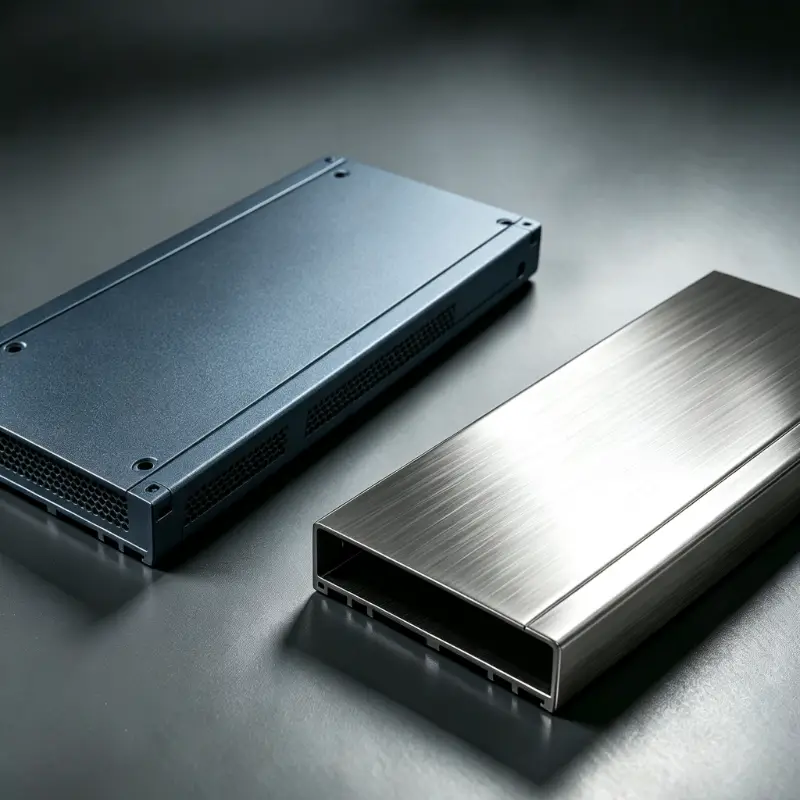
In industrial metal manufacturing, surface finishing is not merely for aesthetic improvement but a critical process to optimize workpiece performance, enhance coating adhesion, and extend service life. Among all physical surface treatment technologies, mechanical sandblasting and wire brushing (linear brushing) are the two most widely used, cost-effective, and versatile processes. Unlike chemical treatments that focus on anti-corrosion modification, these two mechanical methods reshape the metal surface texture through physical grinding and impact, solving common defects such as rough blanks, surface oxides, and poor coating bonding. This blog elaborates on the core functions, unique advantages, application scenarios, and key differences of sandblasting and brushing, helping manufacturers select the optimal surface finishing solution.
1. What Is Mechanical Sandblasting? Core Functions & Benefits
Sandblasting is a physical surface treatment process that uses high-pressure compressed air to spray uniform abrasive media (sand, glass beads, steel grit) onto metal workpiece surfaces. It forms a fine, uniform matte rough texture by impacting and polishing the surface, achieving multiple functional optimizations.
Key Functions of Sandblasting
Thorough Surface Cleaning & Derusting Sandblasting completely removes surface impurities including rust, oxide scales, welding slag, oil stains, and burrs that cannot be eliminated by simple manual cleaning. It thoroughly cleans the dead corners of complex workpieces, restoring the pure metal substrate and eliminating hidden dangers of subsequent coating peeling and corrosion.
Improve Coating & Adhesive Adhesion The uniform micro-rough texture formed by sandblasting creates countless tiny anchor points on the metal surface. This texture greatly enhances the bonding force of powder coating, liquid paint, glue, and electroplating layers, effectively preventing coating falling off, blistering, and cracking, and significantly improving the durability of surface finishing.
Relieve Surface Stress & Improve Fatigue Resistance The high-speed abrasive impact produces a moderate cold hardening effect on the metal surface, which disperses residual stress generated by machining, welding, and cutting. It effectively improves the fatigue resistance and impact resistance of metal parts, reducing the risk of structural fracture for mechanical components.
Uniform Matte Aesthetic Modification Sandblasting eliminates tool marks, scratches, and uneven textures on raw metal surfaces, forming a consistent, delicate matte finish. It avoids light reflection and glare, presenting a high-end, industrial minimalist texture suitable for decorative and functional workpieces.
2. What Is Metal Wire Brushing? Core Functions & Advantages
Metal brushing is a precision physical finishing process that uses high-speed rotating wire brushes or abrasive belts to perform linear grinding on metal surfaces. It forms continuous, regular linear grain textures, focusing on fine surface modification and defect optimization without changing the overall dimensional accuracy of workpieces.
Key Functions of Metal Brushing
Fine Polishing & Defect Removal Brushing efficiently removes minor surface flaws such as fine scratches, tool traces, oxidation dullness, and burrs on precision metal workpieces. It realizes smooth and flat surface transition without damaging the workpiece substrate, making it the preferred process for fine finishing of high-precision parts.
Create Unique Linear Textured Aesthetics The most prominent function of brushing is to form regular, delicate linear brushed grains (including straight grain, cross grain, and wave grain). This classic metal texture covers surface defects while enhancing the layering and texture of products, which is irreplaceable in high-end decorative metal products.
Maintain Dimensional Accuracy & Surface Smoothness Compared with sandblasting’s strong impact grinding, brushing features mild and uniform grinding force. It will not change the workpiece size, edge contour, or wall thickness, and will not produce excessive surface roughness. It perfectly retains the precision size of mechanical parts while optimizing surface quality.
Enhance Surface Wear Resistance Moderately The brushed texture forms a dense and stable surface structure after fine grinding, which improves the surface friction resistance and scratch resistance of metal materials. It can effectively resist daily friction and minor abrasion, maintaining the long-term stable appearance of products.
3. Core Differences Between Sandblasting and Brushing
| Comparison Item | Sandblasting | Metal Brushing |
|---|---|---|
| Surface Texture | Uniform matte, random micro-rough surface | Regular linear brushed grain, textured and layered |
| Grinding Strength | Strong, suitable for heavy cleaning | Mild, for fine finishing |
| Dimensional Impact | Slight material loss | Almost no dimensional change |
| Core Function | Derusting, roughening, stress relief, coating base treatment | Defect repair, aesthetic texture, precision finishing |
| Application Focus | Industrial functional parts, pre-coating treatment | Decorative parts, precision electronic components |
4. Application Scenarios: How to Choose the Right Process
Choose Sandblasting If You Need:
- Thorough derusting and oxide removal for steel structures, outdoor hardware, and mechanical equipment
- High-adhesion pretreatment before powder coating, liquid painting, and electroplating
- Stable matte finish for industrial casings, aluminum profiles, and auto parts
- Stress relief treatment for welded and forged metal parts
Choose Metal Brushing If You Need:
- High-end decorative texture for stainless steel products, hardware accessories, and building decoration materials
- Fine finishing for precision electronic shells, communication equipment parts, and medical hardware
- Minor scratch repair and surface optimization without changing workpiece precision size
- Classic brushed metal appearance for home appliance panels and automotive interior parts