
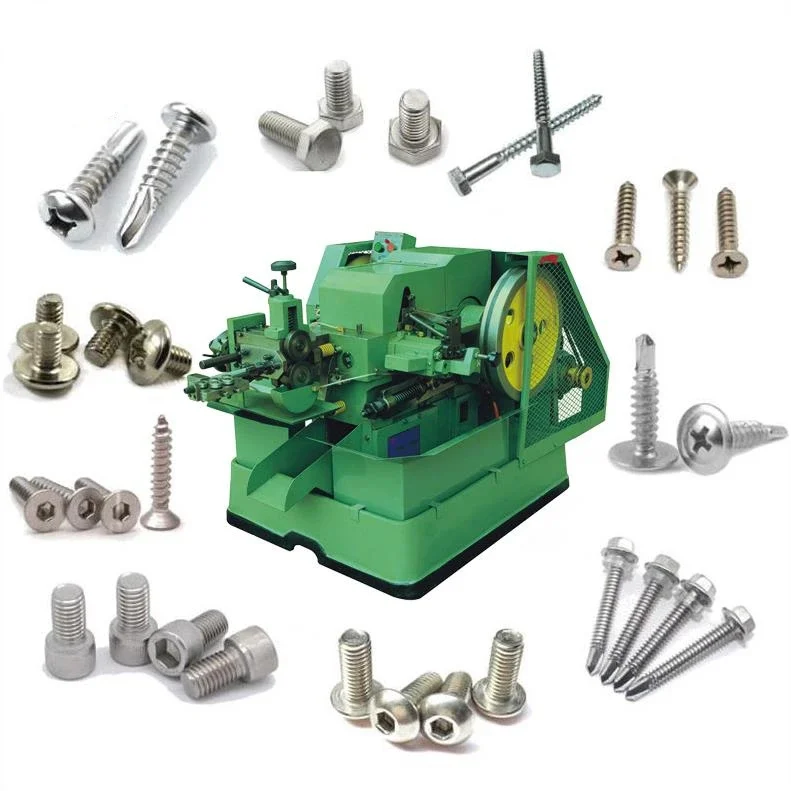
In modern precision metal manufacturing and fastener mass production, manufacturers constantly balance mechanical strength, dimensional accuracy, material utilization, and production cost. Among all metal forming technologies, cold heading (also known as cold forging) stands out as one of the most efficient and reliable solutions for producing high-strength fasteners and symmetrical metal components. Widely adopted in automotive, electronics, hardware, and industrial machinery industries, cold heading has become the core process for standard and custom fastener mass production.
If you are looking for a clear explanation of what cold heading is, how it works, and where it is applied, this complete guide will break down the cold heading process, key benefits, applicable materials, and typical industrial use cases.
1. What is Cold Heading?
Cold heading is a cold metal forming manufacturing process that reshapes solid metal wire or rod stock at room temperature through continuous high-pressure extrusion and impact forming. Unlike hot forging, which requires high-temperature heating or CNC machining, which removes excess material, cold heading deforms metal physically without cutting or melting the raw material.
The process uses professional cold heading machines to apply instantaneous strong pressure on metal blanks, forcing the metal to flow and fill the precision mold cavity. This permanent plastic deformation creates near-net-shape parts with intact metal fiber structure, greatly improving the overall mechanical performance of finished components.
Common cold heading products include bolts, screws, rivets, pins, studs, and various symmetrical precision hardware parts. It is especially suitable for high-volume, standardized metal component production.
2. How Does the Cold Heading Process Work? Step-by-Step Workflow
Cold heading features a highly standardized and automated production workflow. The entire process runs at room temperature with stable cycles and extremely high yield rates. The complete manufacturing steps are as follows:
Step 1: Raw Material Preparation
Select qualified metal wire or rod materials, including carbon steel, stainless steel, aluminum, brass, and copper. Straighten the raw materials and remove surface oxide, oil stains, and impurities to ensure uniform forming quality. Surface lubrication is applied to reduce mold friction and prevent part cracking.
Step 2: Precision Cutting
The automated cold heading machine cuts the continuous metal wire into fixed-length blanks according to part specifications. Each blank maintains consistent weight and size, laying a foundation for batch dimensional consistency.
Step 3: Cold Heading Forming (Core Process)
The cut metal blank is sent to the precision die station. Through one or multiple impact extrusion strokes, the metal blank undergoes plastic deformation to form the head shape, diameter, and basic structure of fasteners. Multi-station cold heading machines can complete complex forming in one cycle without secondary clamping.
Step 4: Trimming & Shaping
Remove tiny burrs and excess material edges generated during forming. Fine-tune part dimensions to meet tight tolerance requirements and ensure smooth surface finish.
Step 5: Secondary Machining & Surface Treatment
For parts requiring thread tapping, groove milling, or high-precision hole positioning, manufacturers adopt professional 3-axis,4-axis,and 5-axis CNC machining for secondary finishing. Finally, surface treatments such as galvanizing, passivation, black oxide, and anodizing are applied to improve corrosion resistance and aesthetics.
3. Key Advantages of Cold Heading
Compared with traditional CNC turning, hot forging, and stamping processes, cold heading has irreplaceable advantages in mass production and part performance:
3.1 Higher Mechanical Strength & Structural Toughness
Cold heading does not cut off the metal fiber flow line. The metal fiber structure is continuously compacted during extrusion forming, effectively improving part hardness, tensile strength, and fatigue resistance. Cold-headed fasteners feature stronger impact resistance and longer service life than purely machined parts, fully meeting industrial high-load working standards.
3.2 100% Material Utilization & Lower Cost
CNC machining produces a large amount of metal scraps by cutting excess material. In contrast, cold heading is a non-cutting forming process with almost zero material waste. It greatly saves raw material costs, especially suitable for mass production of high-cost stainless steel and alloy materials.
3.3 Ultra-High Production Efficiency
Automated cold heading equipment supports continuous high-speed cyclic production, producing hundreds of parts per minute. Its production efficiency is dozens of times higher than CNC machining, perfectly adapting to large-batch orders and greatly reducing unit manufacturing costs.
3.4 Excellent Dimensional Consistency
Formed by precision molds at a stable room-temperature environment, cold-headed parts feature ultra-high batch consistency, uniform size, and stable tolerance. It effectively avoids dimensional deviations caused by manual operation and tool wear in traditional machining.
3.5 Smooth Surface & Stable Quality
Room-temperature extrusion forming delivers smooth and delicate part surfaces without high-temperature oxidation, shrinkage, or deformation defects common in hot forging. The finished parts require minimal post-processing.
4. Common Materials for Cold Heading
Cold heading requires materials with good ductility and plasticity to ensure smooth plastic deformation without cracking. The most widely used industrial materials include:
- Carbon Steel: The most common cold heading material, cost-effective and high-strength, widely used in standard bolts, screws, and structural pins.
- Stainless Steel: Features corrosion resistance and high temperature resistance, suitable for environmental, medical, and automotive high-standard fasteners.
- Aluminum Alloy: Lightweight and ductile, ideal for lightweight fasteners and precision structural parts in 3C electronics and new energy industries.
- Brass & Copper Alloy: Excellent electrical conductivity and ductility, mainly used for electrical connectors and conductive hardware components.
5. Cold Heading vs CNC Machining vs Hot Forging
To better understand the positioning of cold heading manufacturing, here is a clear industry comparison:
- Cold Heading: Best for mass-produced standard symmetrical parts. High strength, low cost, zero material waste, low flexibility for ultra-complex shapes.
- CNC Machining: Best for custom complex, irregular, low-batch parts. High precision and flexible, but slow speed and high material waste.
- Hot Forging: Suitable for super-large and high-pressure load-bearing parts. High strength but low surface quality, high energy consumption, and poor dimensional accuracy.
In actual production, cold heading + CNC secondary machining has become the optimal combination: cold heading completes rapid mass production of part blanks, while 3-axis/5-axis CNC machining finishes precision holes, grooves, and special structures, balancing efficiency, cost, and accuracy.
6. Industrial Applications of Cold Heading Parts
Cold heading technology covers almost all industries that require precision fasteners and symmetrical metal components:
6.1 Automotive Industry
Automotive manufacturing is the largest application scenario for cold heading parts. It produces engine bolts, chassis fasteners, brake system rivets, vehicle body studs, and new energy battery structural pins, requiring high strength and anti-fatigue performance.
6.2 3C & Electronic Industry
Miniature cold heading screws, precision pins, and connector hardware are widely used in mobile phones, laptops, home appliances, and industrial control equipment, featuring small size, high precision, and stable assembly performance.
6.3 Industrial Hardware & Machinery
Various standard and non-standard fasteners, mechanical positioning pins, tool hardware, and equipment connection components are mass-produced through cold heading to ensure equipment operation stability.
6.4 Aerospace & Medical Equipment
High-precision stainless steel and titanium alloy cold heading parts are applied in precision instruments, medical devices, and aerospace equipment, meeting strict corrosion resistance and high-reliability standards.
7. Limitations of Cold Heading
Although cold heading has outstanding advantages, it also has certain application limitations: It is not suitable for ultra-complex asymmetrical structures, and the initial mold cost is higher, making it uneconomical for small-batch prototype production. For personalized complex parts, CNC machining is still the preferred solution.