
Introduction
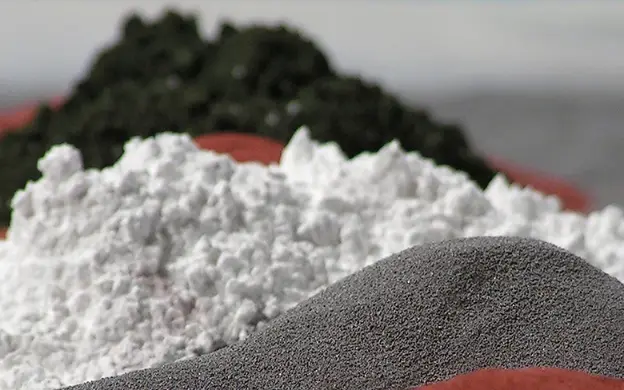
Traditional metal manufacturing processes including CNC turning, milling and hot forging face prominent drawbacks: massive metal scrap, long multi-step processing cycles, high thermal energy consumption, and difficulty fabricating tiny porous or intricate symmetrical parts. Powder metallurgy addresses these pain points through room-temperature powder compaction and low-temperature sintering without melting metal stock. All data, performance comparisons and process theories in this guide are sourced from peer-reviewed academic literature, with exclusive academic paper links attached for cross-verification, eliminating industrial manufacturer promotional content.
1. Definition & Fundamental Theory of Powder Metallurgy
Powder metallurgy refers to a solid-state metal forming technology that shapes fine metal/alloy powders into pre-set geometries under high pressure, then sinters green compacts below the metal melting point to realize metallurgical bonding between powder particles, forming complete functional metal parts. Its core advantage lies in near-net-shape forming, which minimizes secondary cutting and grinding work.
The forming mechanism and grain bonding theory are fully demonstrated in this open-access review paper:
https://pmc.ncbi.nlm.nih.gov/articles/PMC10342793/PMC
2. Four Standard Powder Metallurgy Production Stages
The whole PM workflow is highly standardized to guarantee stable dimensional consistency across mass batches:
Step 1 Powder Blending & Homogenization
Base metal powders are mixed with lubricants and alloy additives to improve particle fluidity and compression uniformity, avoiding uneven density in finished workpieces.
Step 2 Cold Compaction
Mixed powder fills precision molds and is hydraulically pressed into rigid green compacts with fixed geometry but low mechanical strength.
Step 3 Atmosphere-Controlled Sintering (Core Stage)
Green parts are heated in nitrogen/hydrogen protected furnaces to trigger particle fusion, determining final density, hardness and wear resistance.
Step 4 Optional Secondary Post-Treatments
Sizing, oil impregnation, heat treatment or plating are applied to meet tight tolerance, self-lubrication or anti-corrosion requirements.
Full process parameter control and sintering mechanism research:
https://www.mdpi.com/1996-1944/16/13/4575/pdfMDPI
3. Five Core Technical & Economic Advantages (Academic Data Supported)
3.1 Ultra-High Material Utilization, Minimal Raw Material Waste
CNC machining only reaches 30–50% material utilization with massive metal chip waste; PM lifts utilization to 95–99%, drastically cutting alloy material expenditure for bulk orders.
Material waste comparison between subtractive machining and powder forming:
https://doi.org/10.3390/jcs8010033
3.2 Unique Capacity for Complex Miniature & Porous Geometries
PM fabricates integrated gears, tiny connectors and self-lubricating porous bearings that require multi-axis complex programming in CNC machining. Complex profiles are formed in one single compaction stroke.
Microstructure and forming analysis of complex PM alloy components:
https://advanced.onlinelibrary.wiley.com/doi/abs/10.1002/adem.202500563
3. Excellent Batch Dimensional & Performance Consistency
Mold-based forming avoids dimensional drift caused by tool wear or manual operation. Automated sintering parameters ensure identical density and mechanical properties across millions of parts, matching automated assembly line standards.
3.3 Customizable Composite Alloy Performance
PM mixes different metal powders to develop exclusive properties unavailable via forging or casting, including self-lubricating porous structures, high-wear resistant gear alloys and lightweight EV structural materials.
Custom alloy powder formulation research:
https://www.powdermat.org/articles/search_result.php?term=Alloy
3.4 Lower Unit Cost for High-Volume Mass Production
Although custom mold development is required, PM sharply reduces labor, equipment depreciation and post-processing expenses for orders above 10,000 pieces, with lower overall cost than CNC machining for large batches.
Cost modeling of near-net-shape powder forming:
https://doi.org/10.1016/j.powtec.2025.121526OSTI.GOV
4. Main Industrial Application Fields of PM Components
PM sintered components are widely adopted across precision mass-production industries, verified by multiple academic application studies:
- Automotive & EV: transmission gears, motor bushings, valve seats, new energy power system structural parts
- Consumer Electronics: miniature conductive hardware, wearable device tiny locking components
- Industrial Machinery: self-lubricating bearings, pump gears, power tool internal parts
- Medical & Aerospace: lightweight biocompatible and high-strength precision alloy hardware Biomedical titanium alloy PM component research: https://advanced.onlinelibrary.wiley.com/doi/abs/10.1002/adem.202500563
5. Process Selection Guide: When to Adopt Powder Metallurgy
Choose Powder Metallurgy if your project meets all key criteria:
- Mass production volume (10,000+ pieces per batch)
- Small, symmetrical, porous or multi-step complex geometries
- Cost reduction priority for expensive stainless steel, alloy steel or copper raw materials
- Strict requirements for uniform batch dimensional tolerance and mechanical performance
Choose CNC Machining / Hot Forging instead if:
- Low-volume prototype batches or ultra-large-sized components
- Ultra-high full-density structural parts with extreme tensile strength demands
6. Objective Limitations of Powder Metallurgy
Academic research confirms PM has clear applicable boundaries: part maximum size is restricted by compaction mold equipment; standard sintered PM parts have lower density and tensile strength than fully forged metal; upfront mold investment is uneconomical for small-batch custom prototypes. For most small precision mass-produced hardware, PM’s comprehensive cost-performance remains irreplaceable.
Microstructure and mechanical property comparison between PM and forged alloys:
Conclusion
Peer-reviewed manufacturing and materials science papers fully validate powder metallurgy as a sustainable, cost-efficient near-net-shape forming technology for modern industrial precision components. Its ultra-high material utilization, flexible complex forming capability and stable batch quality make it the preferred manufacturing solution for automotive, electronics and machinery mass production. For procurement teams plagued by high machining costs and excessive metal scrap, switching eligible parts to PM manufacturing delivers long-term supply chain cost optimization.
Custom PM Manufacturing Support
If you own complex precision parts with high machining expenses and severe material waste, our engineering team provides one-stop OEM powder metallurgy services. We deliver free DFM design evaluation, customized alloy formulation and professional cost modeling to lower your component procurement expenses.