
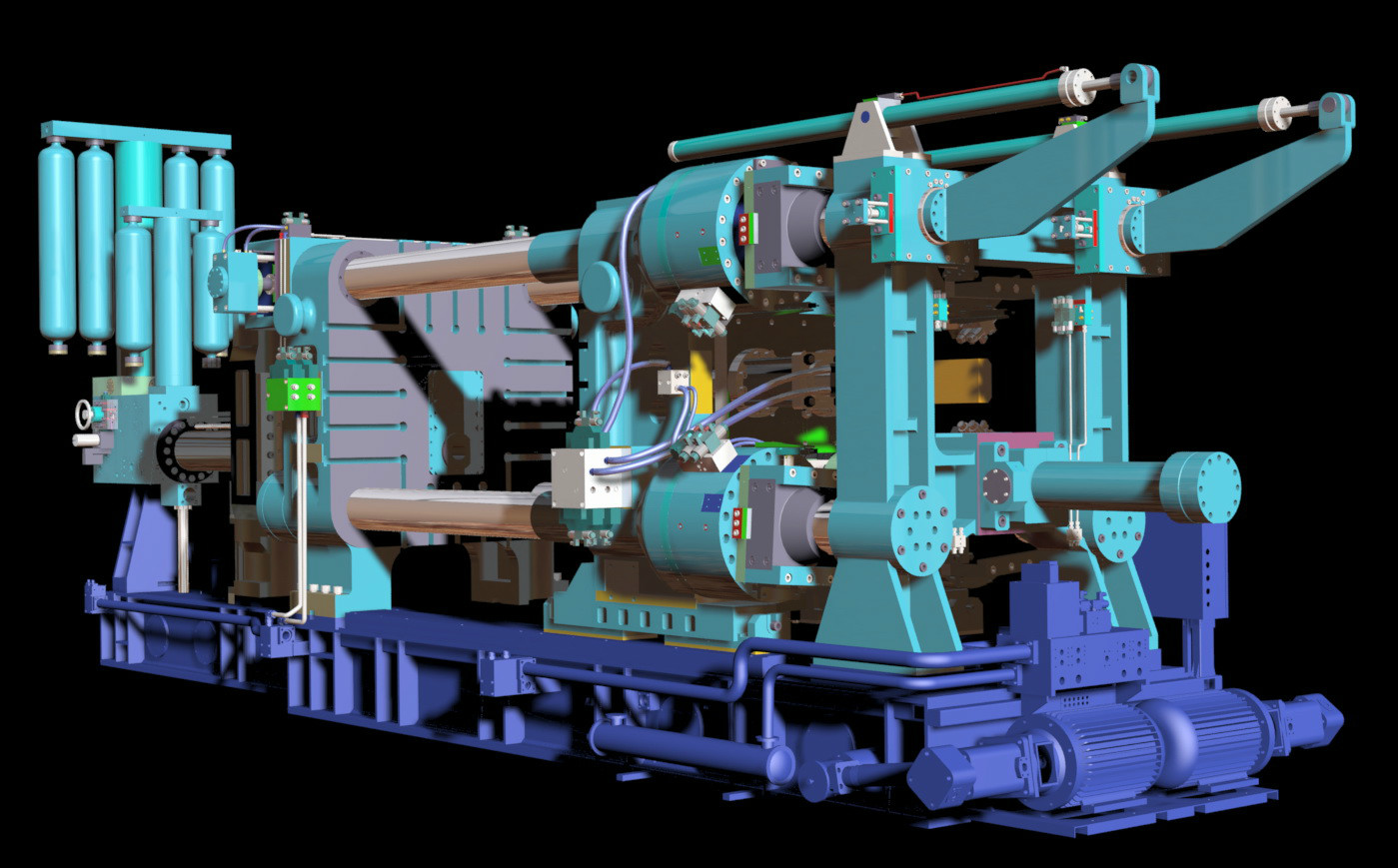
In modern manufacturing, speed, precision, and cost efficiency are the three core pillars of mass production. When it comes to producing high-quality, complex-shaped metal components in large volumes, die casting stands out as one of the most indispensable processes across automotive, electronics, industrial equipment, and consumer goods industries. If you have ever wondered how lightweight, smooth, and dimensionally consistent metal parts are manufactured at scale, die casting is the answer.
1. What Exactly Is Die Casting?
Die casting, also known as pressure die casting, is a high-precision subtractive and forming manufacturing process that injects molten non-ferrous metal alloys into custom hardened steel molds (called “dies”) under extreme high pressure and fast velocity . The molten metal fills every tiny cavity and intricate detail of the mold, solidifies rapidly within milliseconds, and is then ejected automatically to form finished or semi-finished metal parts .
Unlike traditional sand casting with low accuracy and rough surfaces, die casting uses reusable steel dies. It is a permanent mold casting technology that delivers tight dimensional tolerances, smooth surface finishes, and ultra-high production repeatability, making it ideal for standardized mass production . Most die-cast parts only require minimal post-processing, such as CNC 3-axis or 5-axis machining, to meet ultra-precision assembly requirements.
2. How Does the Die Casting Process Work?
The entire die casting workflow is automated and cyclic, ensuring stable output and consistent part quality. The standard process includes four core steps:
Step 1: Mold Preparation Clean and lubricate the precision steel die to prevent metal adhesion and ensure smooth part ejection.
Step 2: Melting & Injection Melt low-melting-point non-ferrous alloys into a liquid state, then inject the molten metal into the closed die cavity under high pressure (10–200 MPa).
Step 3: Rapid Solidification The molten metal cools and solidifies quickly in the sealed die, locking the precise shape, thin walls (as thin as 0.5mm), and complex structural details of the mold.
Step 4: Ejection & Trimming Open the die, eject the solidified part via ejector pins, then remove excess material (sprue and flash) to get the primary die-cast blank.
3. Two Core Types of Die Casting
Based on machine structure and applicable materials, die casting is mainly divided into hot chamber and cold chamber types, each with unique application scenarios :
Hot Chamber Die Casting
The melting furnace is integrated with the casting machine. It features a shorter cycle time and higher efficiency, suitable for low-melting-point alloys such as zinc, tin, and lead. This method is widely used for small, lightweight parts like electronic connectors and small appliance hardware.
Cold Chamber Die Casting
The melting furnace is separated from the casting machine. Molten metal is manually or mechanically transferred to the injection chamber, adapting to high melting point alloys including aluminum, magnesium, and copper. It is the mainstream process for medium and large structural parts, such as automotive housings and industrial equipment brackets.
4. Common Die Casting Materials
Die casting is exclusively for non-ferrous metal alloys, which offer lightweight, high strength, corrosion resistance, and good thermal conductivity:
- Aluminum Alloys: The most popular material, lightweight, heat-resistant, and cost-effective, perfect for automotive and electronic heat dissipation parts.
- Zinc Alloys: High dimensional accuracy and excellent surface finish, suitable for tiny precision components and decorative hardware.
- Magnesium Alloys: Ultra-lightweight with high rigidity, widely used in new energy vehicles and 3C electronic structural parts.
5. Key Advantages & Limitations
Advantages
- High Production Efficiency: Fast cycle speed, suitable for large-batch mass production to reduce unit cost.
- Superior Precision & Surface Quality: Minimal surface roughness, tight tolerances, greatly reducing subsequent machining workload.
- Complex Shape Forming: Capable of manufacturing thin-wall, hollow, and irregular structural parts that are difficult for forging and machining.
- Excellent Consistency: Reusable steel dies ensure zero difference between batches, meeting industrial assembly standards.
Limitations
- High Initial Tooling Cost: Custom precision steel dies require a high upfront investment, not suitable for small-batch or customized prototype production.
- Material Restrictions: Only applicable for non-ferrous alloys, unable to process steel, iron, and other high-melting-point ferrous metals.
- Minor Porosity Risk: Tiny air holes may exist inside parts, requiring post-processing to improve compactness for high-strength scenarios.
6. Main Industrial Applications
Thanks to its unique advantages, die casting covers almost all mainstream precision manufacturing fields :
- Automotive Industry: Engine housings, transmission shells, brake system parts, new energy battery trays, and lightweight body structural components.
- 3C Electronics: Laptop and mobile phone housings, heat sinks, connector shells, and precision internal brackets.
- Industrial Equipment: Tool housings, mechanical brackets, valve bodies, and instrumentation structural parts.
- Home Appliances & Consumer Goods: Air conditioner and refrigerator accessories, lighting hardware, and daily-use metal fittings.
- Medical & Energy: Lightweight medical device parts and power equipment structural components with high stability requirements.
7. Die Casting + CNC Machining: Perfect Precision Combination
Although die-cast parts have high initial accuracy, they still need fine post-processing to meet ultra-precision industrial standards. This is where 3-axis,4-axis and 5-axis CNC machining play a key role.
Standard 3-axis CNC machining is used for conventional trimming, hole drilling, and surface polishing of simple die-cast parts, featuring low cost and high efficiency. For complex curved surfaces, multi-sided structural parts, and high-precision assembly surfaces, 5-axis CNC machining completes one-time clamping and full-angle processing, eliminating cumulative errors and improving part accuracy and surface smoothness. The combination of die casting’s mass production efficiency and CNC’s ultra-precision processing capability has become the standard manufacturing solution for high-end industrial parts.