
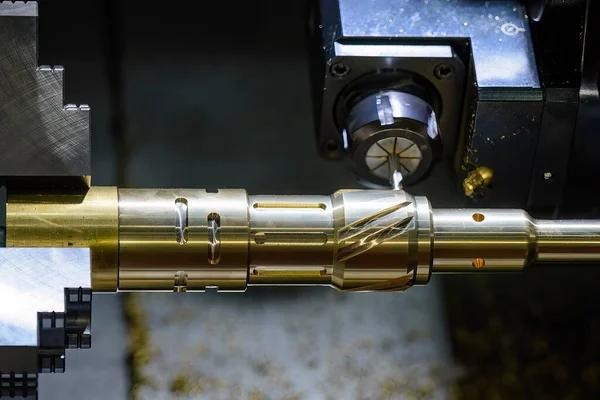
In modern manufacturing, not every project requires thousands of identical parts. For product validation, functional prototyping, custom mechanical components, and niche market production, small batch CNC machining has become the most cost-effective, flexible, and reliable solution. It fills the critical gap between one-off prototype machining and high-volume mass production, helping engineers, startups, and industrial manufacturers accelerate time-to-market while maintaining strict precision standards.
This blog breaks down everything you need to know about small batch CNC machining—its core advantages, ideal applications, material options, key differences from mass production and 3D printing, and practical tips to optimize your low-volume manufacturing projects.
What Is Small Batch CNC Machining?
Small batch CNC machining, also widely referred to as low-volume CNC machining, is a computer-controlled subtractive manufacturing process that produces precision parts in limited quantities. In the industry, it typically covers production runs from 10 to 500 units, serving as the perfect middle ground for iterative product development and small-scale commercial production.
Unlike mass production that relies on custom molds, fixed tooling, and standardized assembly lines, small batch CNC machining directly fabricates parts from solid material blanks via milling, turning, drilling, and grinding. It requires no expensive mold investment, supports rapid design modifications, and delivers consistent precision across every part in the batch.
Core Benefits of Small Batch CNC Machining
Small batch CNC machining stands out in the competitive manufacturing industry thanks to its unique balance of flexibility, precision, and economy. Its key advantages are tailored to solve the pain points of low-volume production:
1. Zero Mold Cost & Low Upfront Investment
Mass production requires high upfront costs for mold opening, fixture customization, and production line debugging, which is uneconomical for small-quantity orders. Small batch CNC machining only needs CNC programming and simple standard fixturing, eliminating mold expenses and greatly reducing initial investment risks. This makes it ideal for startups and enterprises testing new products.
2. Unmatched Design Flexibility & Iteration Speed
Product development always involves continuous design optimization. Small batch CNC machining allows engineers to adjust part structures, dimensions, and tolerances between batches without huge cost losses or long lead-time delays. Compared with rigid mass production processes, it supports fast design iteration, helping teams perfect product functions and appearances in the shortest cycle.
3. Industrial-Grade Precision & Consistent Quality
Different from 3D printing with limited precision and layer-line defects, CNC machining delivers industrial-level accuracy (tolerance up to ±0.005mm) and smooth surface finishes. Every part in small batch production maintains uniform dimensional accuracy and mechanical performance, fully meeting functional testing, assembly verification, and formal small-scale delivery standards.
4. Fast Lead Time & Flexible MOQ
With simplified setup procedures and no mold development cycle, small batch CNC machining usually completes production within 5–10 business days. It supports flexible MOQs from dozens to hundreds of pieces, avoiding inventory pressure caused by overproduction and perfectly matching the pace of small-batch market demand and project testing.
5. Diverse Material Compatibility
CNC machining adapts to almost all industrial metal and plastic materials, including aluminum alloy, stainless steel, copper, titanium alloy, POM, ABS, and PC. It can meet different requirements of strength, hardness, corrosion resistance, and weight reduction for various industrial scenarios.
Typical Applications of Small Batch CNC Machining
Small batch CNC machining is widely used in high-precision and low-volume industries, covering the whole cycle from product R&D to small-scale commercialization:
- Aerospace & UAV: Custom structural brackets, precision connector parts, and lightweight functional components for iterative testing and small-batch equipment assembly
- Medical Devices: Disposable tool parts, precision instrument shells, and customized medical accessories with high biocompatibility and tolerance requirements
- Automotive Prototyping: New energy vehicle trial parts, interior and exterior structural components, and sensor brackets for performance verification
- Robotics & Automation: Custom robot joint parts, automation equipment fixtures, and non-standard mechanical accessories
- Consumer Electronics: Small-batch customized shells, heat dissipation parts, and structural components for new product trial sales
- Research & Education: Laboratory custom parts, scientific research test fixtures, and student project prototype batches
Small Batch CNC vs Mass Production vs 3D Printing
Many manufacturers struggle to choose the right production process for low-volume projects. Here is a clear comparison to help you make smarter decisions:
- VS Mass Production: Mass production has a lower unit cost for thousands of parts but requires high mold costs and long lead times, with inflexible designs. Small batch CNC machining has no mold fees, supports flexible iteration, and is more cost-effective for 10–500 pieces.
- VS 3D Printing: 3D printing is suitable for ultra-complex geometric prototypes but has poor surface quality, low material density, and unstable mechanical properties. Small batch CNC parts feature higher precision, better surface finish, and stronger durability, applicable for formal assembly and industrial use.
Practical Tips to Optimize Small Batch CNC Projects
To balance cost, quality, and lead time in small batch CNC production, follow these industry-proven optimization strategies:
1. Optimize Design for Machinability
Simplify overly complex internal structures, avoid ultra-thin walls and deep narrow grooves, and standardize hole sizes and fillets. Proper design optimization reduces multiple setup operations and tool wear, effectively cutting production costs and shortening cycles.
2. Select Cost-Effective Materials
For non-core stressed parts, replace high-cost materials with cost-effective alternatives without sacrificing basic performance. For example, 6061 aluminum can replace 7075 aluminum for conventional structural parts, improving machinability and reducing material and processing costs.
3. Unify Tolerance Standards
Avoid setting ultra-high tolerances for non-critical surfaces. Classify dimensional tolerances according to assembly and functional needs—strict precision for key matching positions and conventional tolerances for ordinary surfaces, which greatly reduces processing difficulty.
4. Choose a Professional Processing Partner
Small batch production has high requirements for manufacturer’s flexible processing capability and quality control. A reliable supplier can provide one-stop services including programming optimization, material selection, surface treatment, and quality inspection, ensuring batch consistency and delivery efficiency.