
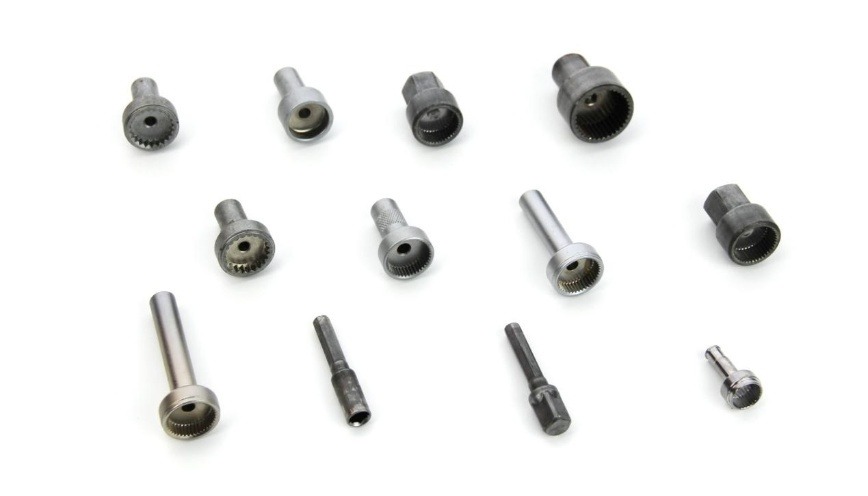
Cold heading (cold forging) is a high-precision, zero-waste metal forming process widely used to manufacture mass-production fasteners, pins, studs, and symmetrical precision metal parts. Unlike cutting-based CNC machining, cold heading requires raw materials with excellent ductility, plasticity, and stable molecular structure to achieve flawless room-temperature plastic deformation without cracking or deformation.
Among all industrial cold heading materials, steel, brass, and aluminum are the three most common and practical options, covering over 90% of cold heading manufacturing scenarios for automotive, electronics, home appliances, and industrial hardware. Each material has unique formability, mechanical strength, corrosion resistance, and cost characteristics. Choosing the right cold heading material directly determines part performance, production yield rate, and overall manufacturing cost. This blog comprehensively analyzes the properties, advantages, limitations, and typical applications of steel, brass, and aluminum for cold heading projects.
Core Selection Criteria for Cold Heading Materials
Before exploring specific materials, it is essential to understand the core requirements for cold heading raw materials. Qualified cold heading metals must meet three key standards: superior ductility for continuous extrusion forming, stable hardness to avoid mold damage, and uniform material texture to ensure batch consistency. Materials that are too hard or brittle cannot withstand instantaneous high-pressure impact, resulting in cracks, burrs, or high scrap rates during cold heading production.
1. Cold Heading Steel (Carbon Steel & Stainless Steel) — The Most Versatile Industrial Choice
Steel is the most widely used material in cold heading manufacturing, divided into low/medium carbon steel and stainless steel. It perfectly balances mechanical strength, formability, cost efficiency, and structural stability, making it the mainstream material for standard and high-strength cold heading fasteners.
1.1 Low & Medium Carbon Steel
Low-carbon steel (1006, 1008, 1010) and medium-carbon steel (1018, 1022) are the most cost-effective cold heading materials. With moderate hardness and excellent ductility, these carbon steel grades support multi-station continuous cold heading forming, delivering ultra-high production efficiency and a near-100% material utilization rate. After cold heading forming, the metal fiber structure remains continuous and compact, significantly improving the tensile strength and fatigue resistance of finished parts.
Carbon steel cold heading parts are usually treated with galvanizing, black oxide, or passivation to enhance surface corrosion resistance, fully meeting the working requirements of conventional mechanical and structural components.
1.2 Stainless Steel
Common stainless steel grades for cold heading include 302, 304, and 316 austenitic stainless steel. These grades feature outstanding corrosion resistance, high-temperature resistance, and oxidation resistance, suitable for harsh working environments. Compared with carbon steel, stainless steel has higher hardness and poorer fluidity, requiring optimized cold heading process parameters and professional lubrication to avoid cracking during forming.
Steel Cold Heading Advantages & Applications
- Advantages: High structural strength, excellent wear resistance, mature forming technology, low comprehensive production cost, strong compatibility with secondary CNC machining, and ultra-high batch consistency.
- Limitations: High density leading to heavy part weight; ordinary carbon steel lacks natural corrosion resistance and requires surface treatment.
- Typical Applications: Automotive high-strength bolts, mechanical screws, positioning pins, construction fasteners, equipment structural studs, and marine hardware (stainless steel grades).
2. Cold Heading Brass — High-Conductivity & Decorative Precision Material
Brass alloy (mainly CuZn37 standard cold heading brass) is a classic ductile alloy tailored for cold heading processing. Featuring ultra-high plasticity, smooth fluidity, and stable forming performance, brass can produce ultra-precision tiny parts and complex structural components without cracking. It is the preferred material for conductive and decorative cold heading parts.
Brass has excellent electrical conductivity, thermal conductivity, and surface gloss. After cold heading forming, the part surface is smooth and delicate with no burrs, requiring minimal post-processing. Its natural anti-oxidation and anti-rust properties eliminate the need for complex surface treatments for conventional applications.
Brass Cold Heading Advantages & Applications
- Advantages: Superior cold formability, ultra-smooth surface finish, excellent electrical and thermal conductivity, good corrosion resistance, and high dimensional accuracy for micro-components.
- Limitations: Higher raw material cost, low mechanical tensile strength, unsuitable for high-load and high-pressure structural parts.
- Typical Applications: Electronic conductive terminals, electrical connector pins, precision instrument hardware, decorative fasteners, plumbing valve components, and communication equipment micro-parts.
3. Cold Heading Aluminum — Lightweight & Energy-Saving Industrial Material
Aluminum alloy is the lightest mainstream cold heading material, with 6061 and 7075 as the most commonly used grades for cold heading production. Aluminum features low density, excellent ductility, fast heat dissipation, and low forming resistance, making it easy to achieve high-speed mass cold heading forming. It perfectly fits the global industrial lightweight trend in new energy, 3C electronics, and automotive manufacturing.
Aluminum cold heading parts have outstanding thermal conductivity and low weight, effectively reducing the overall load of equipment and vehicles. The material supports diverse surface treatments including anodizing, sandblasting, and powder coating, enabling rich personalized appearance effects for finished products.
Aluminum Cold Heading Advantages & Applications
- Advantages: Ultra-light weight, excellent heat dissipation performance, low cold forming resistance, fast production cycle, diverse surface treatment options, and low comprehensive processing energy consumption.
- Limitations: Low hardness and poor wear resistance, prone to deformation under heavy load, not applicable for high-strength structural fasteners.
- Typical Applications: New energy vehicle lightweight fasteners, 3C electronic equipment structural pins, heat dissipation component accessories, aerospace precision lightweight parts, and household appliance hardware.
Steel vs Brass vs Aluminum: Cold Heading Material Quick Comparison
- For High-Strength Structural Parts: Choose carbon steel / stainless steel. It delivers superior mechanical stability and wear resistance for heavy-load industrial scenarios.
- For Conductive & Decorative Parts: Choose brass. Its excellent conductivity and smooth surface meet precision electronic and decorative hardware requirements.
- For Lightweight & Heat-Dissipating Parts: Choose aluminum. It is the optimal solution for lightweight and heat-dissipation industrial components.
Post-Processing Matching for Different Cold Heading Materials
To achieve tighter tolerances and higher surface quality, most cold heading blanks require secondary finishing. Steel cold heading parts are highly compatible with 3-axis and 5-axis CNC machining for drilling, tapping, and precision milling. Brass parts usually only need simple deburring due to their high forming precision. Aluminum cold heading parts require low-speed CNC finishing to avoid tool wear and part deformation, paired with professional anodizing treatment to enhance surface durability.