
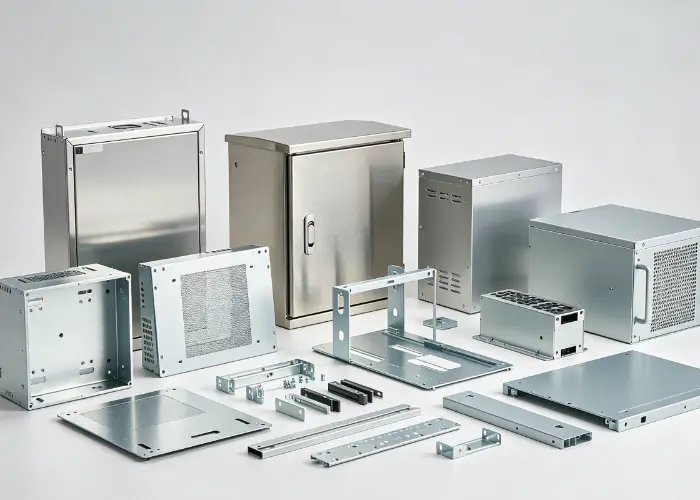
If you are an engineer, product designer or procurement manager looking for custom metal components, you have likely heard of sheet metal fabrication. It is one of the most widely used metal manufacturing techniques across nearly all industrial sectors. This guide covers all fundamental knowledge to help you fully understand sheet metal fabrication.
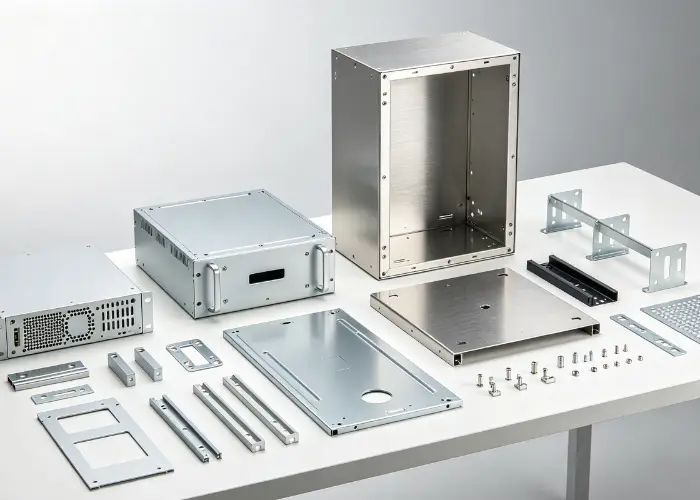
1. Definition of Sheet Metal Fabrication
Sheet metal fabrication refers to a set of manufacturing processes that transform thin, flat metal sheets into custom-shaped finished components. Manufacturers use cutting, bending, punching, welding and surface treatment to turn raw metal plates into enclosures, brackets, frames, cabinets and structural parts.
Sheet metal work applies to metal sheets ranging from around 0.1mm to 12mm thick. It balances low prototyping costs, structural strength and lightweight performance, making it ideal for both small-batch prototypes and large-scale mass production.
2. Core Processes in Sheet Metal Fabrication
Every sheet metal product goes through several standard production steps:
- Laser Cutting: High-precision cutting to create complex outlines, holes and cutouts with smooth, burr-free edges.
- CNC Bending: Automated bending machines fold flat sheets into 3D shapes with consistent angles.
- Punching & Stamping: Fast mass hole drilling and simple forming for standardized parts.
- Welding: TIG welding, spot welding and MIG welding join separate metal pieces into one rigid assembly.
- Deburring & Polishing: Remove sharp edges for safe assembly and better appearance.
- Surface Finishing: Powder coating, anodizing, galvanizing, brushing and silk printing to boost corrosion resistance and aesthetics.
3. Popular Materials for Sheet Metal Fabrication
Different metals fit distinct working environments and functional requirements:
- Aluminum: Lightweight, good thermal conductivity — ideal for electronics casings and automotive parts
- Stainless Steel: Strong anti-rust performance, widely used in medical, food and outdoor equipment
- Cold Rolled Steel: Low cost, high hardness for general machinery structural parts
- Copper & Brass: Excellent electrical conductivity for electrical and communication components
4. Main Industrial Applications
Sheet metal fabricated parts can be found everywhere in modern industries:
- Consumer & industrial electronic housings
- Automotive brackets, battery shells and chassis components
- Medical device equipment casings
- Communication cabinets and server racks
- Automation machinery guards and frames
- Household appliances and new energy equipment
5. Key Advantages of Sheet Metal Fabrication
- No expensive custom molds required for prototyping, greatly lowering early development costs
- Highly flexible design that supports complex shell and structural shapes
- Lightweight yet high structural strength compared to solid metal blocks
- Flexible production volume: works for one-off samples and millions of bulk parts
- Rich surface finish options to meet waterproof, anti-corrosion and branding demands
6. Sheet Metal Fabrication vs Other Manufacturing Methods
Many buyers confuse sheet metal fabrication with CNC machining or die casting. Here is a simple comparison:
- Sheet metal: Best for thin-wall enclosures, low mold cost, slow for ultra-high volume
- CNC Machining: For thick, solid precision parts, higher single-piece cost
- Die Casting: Fast mass production of complex alloy parts but requires high mold investment
7. Choose a Reliable Sheet Metal Fabrication Supplier
A qualified sheet metal manufacturer provides one-stop service: from CAD drawing review, rapid prototyping, mass production to surface finishing and global logistics.
With a full set of automated laser cutting, CNC bending and welding lines, Yueyi delivers precision custom sheet metal parts with fast turnaround for clients worldwide. We support both prototype testing and large bulk orders, with efficient communication and stable on-time delivery.
Final Words
Sheet metal fabrication remains an indispensable manufacturing solution for modern product development. Whether you need simple metal brackets or complex electronic enclosures, understanding its basic processes, materials and strengths will help you optimize designs and control production costs efficiently.