
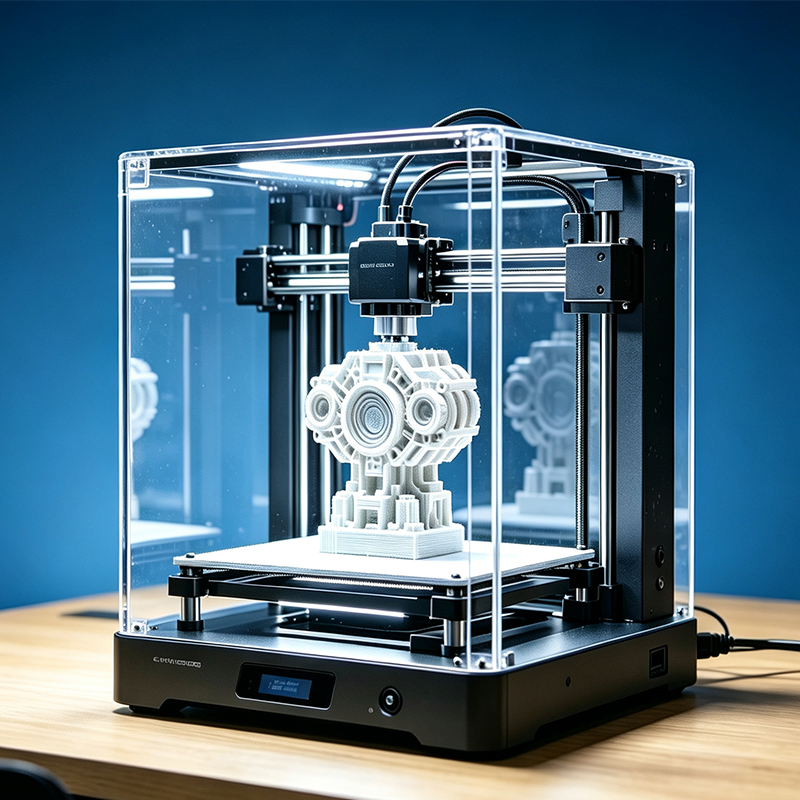
If you’ve ever dreamed of turning a digital design into a physical object overnight, 3D printing makes that magic possible. From tiny toy figurines and custom phone cases to aerospace parts and life-saving medical implants, this innovative technology is reshaping how we create, manufacture, and innovate. But what exactly is 3D printing, and why has it become one of the most transformative tech trends of the past few decades? Let’s break it down simply for everyone.
What Is 3D Printing in Simple Terms?
Officially known as additive manufacturing (AM), 3D printing is a manufacturing technology that builds three-dimensional solid objects from digital model files by stacking materials layer by layer. Unlike traditional manufacturing methods that follow a “subtractive” logic—cutting, drilling, or carving excess material away from a solid block to get the final shape—3D printing only adds material where it is needed. This core difference makes it far more efficient and flexible for complex, customized creations.
To put it vividly, traditional manufacturing is like carving a statue from a big stone, wasting lots of raw materials in the process. 3D printing, by contrast, is like building a layered cake: the printer lays down countless ultra-thin horizontal layers of material, fuses each layer firmly to the last one, and gradually assembles a complete solid object from bottom to top.
How Does 3D Printing Work? The Core Workflow
The entire 3D printing process is a seamless combination of digital design and physical manufacturing, with four simple, repeatable steps:
1. Design a Digital 3D Model
Everything starts with a digital blueprint. Designers use CAD (Computer-Aided Design) software to create precise 3D models of the target object. Beginners can also download ready-made models from online platforms, which greatly lowers the entry barrier. The most common file format for 3D printing is STL, which simplifies the model’s geometry for printer recognition.
2. Slice the Model into Layers
A dedicated slicer software cuts the complete 3D model into hundreds or thousands of flat, ultra-thin horizontal layers. This step converts the complex 3D design into a set of simple 2D printing instructions that the 3D printer can understand and execute accurately.
3. Start Layer-by-Layer Printing
The 3D printer reads the sliced instructions, then deposits, melts, or cures materials layer by layer. Each thin layer is precisely positioned and bonded to the previous one, gradually building up the full shape of the object. The printing speed and precision depend on the printer type, material, and model complexity.
4. Post-Processing
Most finished prints need simple post-processing, such as removing support structures, polishing surfaces, curing resin, or sanding rough edges, to achieve a smooth, functional, and aesthetically perfect final product.
Common Types of 3D Printing Technologies
3D printing is not a one-size-fits-all technology. Different printing methods suit different materials, precision requirements, and usage scenarios. Here are the three most mainstream types:
1. FDM (Fused Deposition Modeling)
As the most popular and affordable consumer-level 3D printing technology, FDM melts thermoplastic filaments like PLA and ABS, then extrudes the molten material through a tiny nozzle to stack layers. It is easy to operate, low-cost, and perfect for beginners, hobby projects, and daily customized items.
2. SLA (Stereolithography)
SLA uses ultraviolet (UV) light to cure the liquid resin layer by layer. It delivers extremely high precision and ultra-smooth surface finishes, making it ideal for detailed models, jewelry prototypes, dental molds, and miniature crafts that require fine textures.
3. SLS (Selective Laser Sintering)
Designed for industrial use, SLS uses a high-power laser to sinter powdered materials such as nylon, metal, and ceramic. It requires no support structures during printing, can produce high-strength, complex structural parts, and is widely used in industrial manufacturing and aerospace fields.
Key Materials for 3D Printing
The versatility of 3D printing comes from its rich range of printable materials, covering multiple fields from daily consumption to high-end industry:
- Plastics: PLA, ABS, and PETG are the most common, lightweight, low-cost, and suitable for daily prototypes and crafts.
- Resin: High-precision photosensitive resin for detailed artworks, medical molds, and precision parts.
- Metal powders: Titanium alloy, aluminum alloy, and stainless steel for high-strength industrial, aerospace, and automotive parts.
- Special materials: Ceramics, wood composites, biocompatible materials, and even food-grade materials, expanding 3D printing’s application boundaries continuously.
Where Is 3D Printing Used? Real-World Applications
From personal hobbies to industrial manufacturing, 3D printing has penetrated almost every industry, bringing unprecedented convenience and innovation:
Daily Life & Hobby
Ordinary users can print custom home decorations, personalized gifts, tool parts, toy models, and storage gadgets. It turns personalized DIY creativity into reality at a low cost.
Medical & Healthcare
This is one of the most valuable application fields. 3D printing can produce custom prosthetics, dental aligners, surgical guides, and even organ models for preoperative simulation. It greatly improves the accuracy of medical treatment and brings personalized rehabilitation solutions for patients.
Aerospace & Automotive
Aerospace and automotive industries use industrial 3D printing to manufacture lightweight, high-strength complex parts. It reduces material waste, shortens product development cycles, and optimizes the structural design of aircraft and car components.
Architecture & Education
Architects quickly print building models to verify design solutions. Schools and universities use 3D printers for STEM teaching, helping students understand structural principles and cultivate hands-on innovation abilities.
Pros and Cons of 3D Printing
Advantages
- Unlimited design freedom: It can create complex hollow, curved, and nested structures that traditional manufacturing cannot achieve.
- Low cost for small-batch customization: No need for expensive molds, perfect for prototype verification and personalized production.
- Minimal material waste: Only uses materials required for the object, far more eco-friendly than subtractive manufacturing.
- Fast iteration: Shortens the cycle from design to physical product, greatly improving R&D efficiency.
Limitations
- Slow mass production: Layer-by-layer printing is efficient for small batches but is unable to compete with traditional assembly lines for mass production.
- Material restrictions: Many high-strength, high-temperature-resistant industrial materials are not yet fully adaptable to 3D printing.
- Surface precision gaps: Consumer-level printers have limited precision and often require manual post-processing.
The Future of 3D Printing
3D printing is no longer a niche sci-fi technology but a mainstream manufacturing and creative tool. With the continuous upgrading of printing technology, richer material options, and lower equipment costs, it is moving from industrial workshops to ordinary families.
In the future, we will see faster printing speeds, higher precision, more environmentally friendly materials, and even 3D printing technology applied in aerospace manufacturing, bionic medicine, and smart construction. It will continue to break the boundaries of traditional manufacturing, empowering personalized innovation and industrial upgrading.