
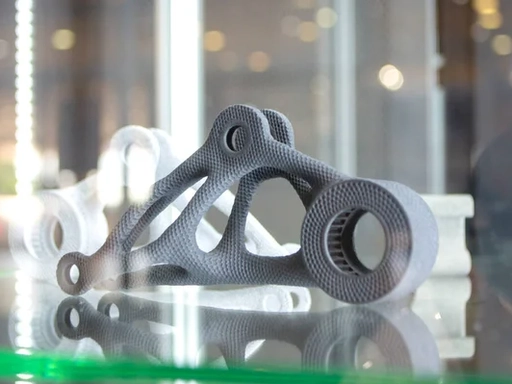
Choosing between 3D printing and CNC machining is one of the most critical cost decisions for prototyping, low-volume production, and custom part manufacturing. While CNC is a traditional subtractive manufacturing method and 3D printing is an additive process, their cost structures vary drastically based on production volume, part complexity, material type, and precision requirements. This blog provides a detailed, data-driven cost comparison based on the 2026 domestic and global manufacturing market, helping engineers and product teams select the most cost-effective solution.
1. Core Cost Structure Differences
1.1 CNC Machining (Subtractive Manufacturing)
Total Cost = One-time Programming & Fixture Cost + Raw Material Cost + Machining Hourly Rate + Post-processing Cost (Deburring, Anodizing, Polishing)
- High fixed costs: For single-piece prototyping, parts fully bear CAM programming, clamping setup, and tool wear costs with no amortization.
- Variable costs rise with material removal volume: Hollow structures, deep cavities, and undercut features require multiple re-clamping or 5-axis machining, leading to doubled working hours.
- Low material utilization: Material waste for complex parts ranges from 70% to 90%, especially for solid bar stock cutting.
1.2 3D Printing (Additive Manufacturing)
Total Cost = Printing Hourly Rate + Consumable Cost (Resin/Nylon/Metal Powder) + Post-processing Cost (Support Removal, Powder Cleaning, Heat Treatment, Polishing)
- No recurring programming or fixture fees: Direct printing from STL files; design modifications require no reprogramming.
- Cost is barely affected by geometric complexity: Lattice structures, internal flow channels, and integrated hollow parts cost nearly the same as solid parts.
- High material utilization: Over 90% material usage, with only minor waste from support structures; unit cost hardly drops with mass production.
2. Plastic Part Cost Comparison (FDM/SLA/SLS vs CNC Plastic Machining)
The comparison covers medium and small-sized parts (50–200mm), the most common size range for consumer and industrial prototyping.
| Production Volume | SLA Resin 3D Printing (Unit Price) | CNC Machining (ABS/PC/Nylon, Unit Price) | Cost Advantage |
|---|---|---|---|
| 1–5 pcs | $4–$22 | $22–$88 | 3D Printing (50%–70% cheaper) |
| 10–50 pcs | $3–$18 | $12–$44 | 3D Printing |
| 50–150 pcs | $2–$15 | $6–$18 | 3D Printing for complex parts; break-even for simple parts |
| 200+ pcs | $2–$13 | $2–$9 | CNC Machining (fixed cost amortization) |
Key Cost Rules for Plastic Parts
- Simple solid shells without internal structures: CNC is more cost-effective for volumes over 100 units.
- Parts with inner cavities, lattice structures, or integrated complex assemblies: 3D printing delivers lower total costs even below 200 units, as CNC requires repeated clamping and expensive 5-axis processing.
- Post-processing premium: 3D printing polishing and dyeing add 15%–30% extra cost; CNC plastic parts only need simple deburring with minimal extra fees.
3. Metal Part Cost Comparison (SLM Metal 3D Printing vs CNC Metal Machining)
Metal 3D printing has far higher equipment depreciation and material costs than conventional CNC machining, leading to a completely different cost logic from plastic parts.
3.1 2026 Raw Material Price Benchmark
- CNC Raw Materials: 6061 Aluminum Bar ($1.7–$2.8/kg); 304 Stainless Steel ($2.5–$4.2/kg); TC4 Titanium Alloy ($25–$36/kg)
- SLM Metal Powder: 316L Stainless Powder ($55–$98/kg); AlSi10Mg Aluminum Powder ($42–$70/kg); TC4 Titanium Powder ($110–$170/kg)
3.2 Unit Price for Medium-Complexity Metal Parts
| Part Type | 1 Prototype Piece | 50 Units Batch | 200 Units Batch |
|---|---|---|---|
| CNC 6061 Aluminum Part | $29–$118 | $12–$29 | $6–$15 |
| SLM 3D Printed Aluminum Part | $118–$370 | $88–$265 | $80–$235 |
| CNC TC4 Titanium Part | $118–$440 | $52–$176 | $26–$88 |
| SLM 3D Printed Titanium Part | $440–$1470 | $380–$1250 | $335–$1150 |
3.3 Break-even Rules for Metal Manufacturing
- Conventional simple aluminum/steel parts: CNC is more economical for all batch sizes, with 3–8 times lower costs than metal 3D printing.
- High-complexity parts (topology optimization, internal cooling channels, un-machinable hollow structures): 3D printing achieves lower comprehensive costs for 1–100 units, avoiding expensive CNC splitting, welding, and assembly processes.
- Mass production over 200 units: Split CNC machining and assembly become more cost-effective.
- Hidden cost note: Metal 3D printing requires mandatory post-processing including heat treatment, substrate wire cutting, and support removal, accounting for 20%–40% of total costs. High-precision fitting surfaces still require secondary CNC finishing, further increasing expenses.
4. Four Core Variables That Determine Final Costs
4.1 Production Volume (Most Critical Factor)
- 1–50 units (Prototyping & Trial Run): 3D printing dominates plastic part manufacturing; metal 3D printing is only cost-effective for extremely complex structures.
- 50–200 units (Low-volume Production): Simple parts see CNC cost convergence; complex parts still favor 3D printing.
- 200+ units (Mass Production): CNC unit cost continues to decline while 3D printing prices remain flat, making CNC the optimal choice.
4.2 Part Geometric Complexity
- Simple parts (solid exterior, no undercuts): CNC offers lower costs with stronger advantages in large batches.
- Complex parts (internal channels, lightweight lattices, integrated multi-structure, deep cavities): CNC programming and clamping costs surge, while 3D printing costs remain nearly unchanged.
4.3 Material Type
- Plastic resin/nylon prototypes: 3D printing is preferred for low volumes.
- Ordinary aluminum/steel structural parts: CNC is economical in most scenarios.
- Titanium alloy, high-temperature alloy, and conformal cooling mold parts: Metal 3D printing has comprehensive cost advantages for small-batch complex structures.
4.4 Precision & Surface Requirements
- High-precision scenarios (Tolerance ±0.05mm, sealing surfaces, threads, precise fitting): CNC delivers qualified finished parts without secondary processing; 3D printing requires additional finishing, eliminating its price advantage.
- Appearance prototypes & non-stress structures (loose tolerance): 3D printing saves significant time and cost.
5. Scenario-based Cost Selection Guide
| Application Scenario | Cost-effective Process | Cost Gap |
|---|---|---|
| Single-piece plastic appearance prototype with complex curved hollow structures | SLA/SLS 3D Printing | 50%–70% cheaper than CNC |
| Single-piece simple aluminum bracket structural part | CNC Machining | Over 70% cheaper than metal 3D printing |
| 50 aluminum parts with internal cooling channels | Metal 3D Printing | Lower total cost than CNC splitting & assembly |
| 300 standard aluminum shell parts with no internal structures | CNC Machining | Unit cost only 1/5 of 3D printing |
| Single-piece topology-optimized titanium aerospace parts | SLM Metal 3D Printing | Saves 5-axis machining & welding costs |
| High-strength, high-precision sealed functional parts | CNC Machining | 3D printing with finishing costs higher overall |
6. Hidden Cost & Lead Time Comparison
6.1 Design Revision Cost
3D printing supports direct STL file modification and reprinting with no extra programming fees. Each CNC design revision requires new toolpath programming, incurring an additional 30%–100% cost premium.
6.2 Lead Time Cost
Urgent single-piece parts can be finished via 3D printing within one day. CNC requires at least 1–3 days for programming and fixture setup, bringing significant implicit time costs for project progress.
6.3 Scrap Rate Cost
CNC machining features stable procedures with a yield rate above 95%. Metal 3D printing suffers from thermal stress deformation, with a 10%–20% scrap rate for complex parts, and the quotation already includes loss premium.
Final Conclusion
For low-volume, high-complexity plastic prototypes and functional parts, 3D printing is always the most cost-efficient option. For medium-to-large batch, simple-structure plastic and all conventional metal parts, CNC machining dominates in cost performance. Metal 3D printing is only economical for small-batch, ultra-complex metal components that cannot be manufactured by traditional machining. Reasonable process selection can cut manufacturing costs by 30%–80% while shortening project cycles greatly.