
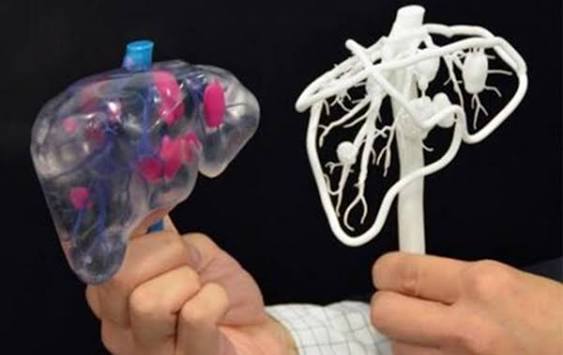
Medical product development cycles demand frequent design revisions, complex organic structures and patient‑specific customization. Traditional CNC machining and injection molding face high upfront costs for early‑stage prototypes and low‑run custom components. 3D printing fills this gap well, widely applied in medical equipment R&D, surgical auxiliary fixtures, diagnostic hardware and customized accessory production.
Nevertheless, medical manufacturing has strict requirements on biocompatibility, chemical resistance, surface cleanliness and regulatory compliance. Not all common 3D‑printing materials and processes can be directly used for medical‑grade parts. Distinguishing between non‑clinical prototypes and end‑use functional components is the first step to avoid compliance risks and unnecessary cost waste.
1. Two Major Application Categories: Prototypes vs Functional Medical Parts
1.1 Medical R&D Prototypes
Prototypes are mainly used for appearance review, mechanical assembly test, ergonomic validation and internal demonstration, without direct human‑body contact.
- Device housing prototypes for diagnostic instruments
- Assembly‑verification jigs for surgical equipment
- Ergonomic handle mock‑ups for rehabilitation devices
- Internal proof‑of‑concept models before formal tooling
Manufacturing notes: Standard industrial‑grade SLA, FDM or SLS materials are acceptable. Focus on dimensional accuracy and surface quality; biocompatibility certification is not mandatory for non‑contact prototypes.
1.2 End‑Use Functional Medical Parts
Functional parts may touch skin, mucous membranes or medical fluids, used in assembled medical devices, surgical aids and rehabilitation hardware. These require strict material performance and traceability.
- Custom surgical positioning jigs and guides
- Rehabilitation equipment structural components
- Housings and internal supports for portable diagnostic devices
- Fluid‑contact non‑implant medical module parts
Manufacturing notes: Must prioritize certified medical‑grade materials. Surface finish, sterilization compatibility and batch consistency become critical evaluation indicators.
2. Common 3D Printing Processes for Medical Devices
| Process | Medical‑oriented Advantages | Typical Usage |
| SLA | High surface quality, fine detail reproduction | Appearance prototypes, ergonomic mock‑ups, surgical guides |
| SLS / MJF | No support needed, good mechanical performance | Functional structural parts, rehabilitation device components |
| FDM | Low cost for large‑size prototypes | Non‑critical R&D mock‑ups, internal test fixtures |
| Metal 3D Printing | High strength, complex porous structures | Metal surgical tools, structural supports for medical equipment |
3. Core Material Selection Key Points
Material selection is the most critical link for medical‑related 3D‑printed parts. Differentiate application scenarios first: non‑contact prototype, skin‑contact component, or fluid‑contact functional part.
3.1 Prototype‑Grade Materials (Non‑human‑contact)
- Standard SLA resin: Good detail performance for appearance and assembly verification
- PLA / ABS (FDM): Low‑cost option for large internal test mock‑ups
- Standard Nylon SLS: Used for mechanical function simulation without clinical contact
3.2 Medical‑Grade Functional Materials
- Medical‑grade SLA resin: Biocompatibility certified, suitable for surgical guides and short‑term skin‑contact parts; verify sterilization adaptability (EtO, gamma‑ray).
- Medical‑grade Nylon (SLS): Excellent impact resistance, widely used for rehabilitation aids and non‑implant functional assemblies.
- Medical‑grade PEKK / PEEK: Outstanding high‑temperature and chemical resistance, supports repeated high‑temperature sterilization, ideal for reusable medical equipment components.
- Titanium alloy (metal 3D printing): High‑strength biocompatible metal for medical tooling and structural hardware.
3.3 Material Selection Checklist
- Confirm whether direct human‑body contact exists and contact duration
- Check available sterilization methods the material can withstand
- Request material certification documents and batch traceability records
- Match mechanical requirements: impact, rigidity, chemical‑liquid resistance
- Avoid using general‑purpose industrial materials for clinical‑contact functional parts
4. Practical Manufacturing & Compliance Tips
- Distinguish prototype and functional part requirements clearly at the quotation stage to prevent mis‑selection of materials.
- Pay attention to post‑processing: medical functional parts require controlled cleaning and residue removal; ordinary sanding may leave contaminants affecting clinical use.
- Reserve reasonable tolerance: medical assembly structures usually keep ±0.1 mm ~ ±0.2 mm according to feature size.
- Keep full manufacturing records including material batch number, printing parameters and post‑processing steps for audit traceability.
- 3D‑printed parts are not automatically medical‑certified. The final whole‑device certification still follows local medical regulatory rules.
5. Conclusion
3D printing greatly accelerates medical device R&D iteration and supports custom low‑volume manufacturing. For medical‑industry projects, the core is not simply pursuing fine printing appearance, but making reasonable distinction between prototype and functional‑part requirements. Select matching processes and certified medical‑grade materials according to contact scenarios, and pay attention to post‑processing and full‑process traceability, so as to balance R&D efficiency, manufacturing cost and medical‑level reliability.