
1. Basic Definition
Teflon is the well-known brand name for PTFE (Polytetrafluoroethylene), a high-performance fluoropolymer thermoplastic invented by DuPont. Its molecular structure consists of carbon chains fully wrapped by fluorine atoms, giving it unmatched unique properties among all plastics.
2. Main Classifications
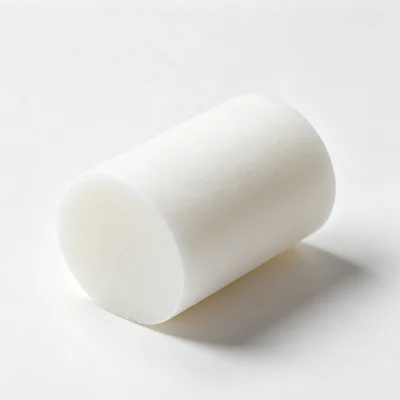
- Virgin PTFE: Pure raw material, highest chemical stability, used for high-standard sealing and medical parts.
- Filled PTFE: Mixed with glass fiber, carbon, bronze, graphite or molybdenum disulfide to improve wear resistance, hardness and creep resistance.
- Modified fluoroplastics (PFA, FEP): Melt-processable fluoropolymers with similar Teflon performance, suitable for injection molding.
3. Outstanding Advantages
- Extreme chemical inertness Resists almost all acids, alkalis, solvents, strong oxidants, aqua regia and corrosive gases; only molten alkali metals can erode it.
- Ultra-low friction coefficient One of the slipperiest solid materials; self-lubricating, no oil required for sliding friction pairs.
- Wide temperature working range Continuous operating temperature from -200°C up to 260°C, remains flexible at cryogenic temperatures and stable under high heat.
- Perfect non-stick surface Almost no substance adheres to PTFE surface, widely used for non-stick cookware coatings.
- Excellent insulation performance Stable dielectric properties, resistant to high voltage, ideal for electronic insulating components.
- Zero water absorption Completely waterproof and moisture-proof, dimensional stability will not be affected by humid environments.
- Biocompatible & non-toxic Medical-grade PTFE meets food and medical contact standards, harmless to human body.
4. Drawbacks
- Poor wear resistance for pure PTFE; easy to creep and deform under long-term heavy load (filled grades can fix this).
- Cannot be melted and injection molded; only processed by compression molding, sintering or coating.
- Low surface hardness, easy to scratch.
- Poor adhesion; special surface etching treatment is needed for bonding or coating.
5. Typical Applications
Industrial Sealing & Mechanical Parts
Gaskets, O-rings, valve seats, pump liners, bearing sliding strips, wear-resistant bushings.
Chemical Equipment
Corrosion-resistant pipes, tank linings, filter membranes, reaction vessel inner coatings.
Electronic & Electrical
High-temperature wire insulation, circuit insulation sheets, cable sheaths.
Food & Kitchen
Non-stick pan coatings, food conveyor belts, sealing gaskets for food machinery.
Medical Devices
Vascular grafts, surgical implant parts, medical pipeline liners.
Daily & Special Fields
Waterproof breathable fabrics, anti-corrosion tape, lab experimental utensils.
6. Key Physical Parameters
- Density: 2.14–2.20 g/cm³
- Melting point: 327 °C
- Continuous service temperature: -200 ~ 260 °C
- Water absorption: 0%
- Coefficient of friction: ~0.04 (extremely low)
PTFE (Teflon) Material Parameter Table
| Parameter Name | Reference Specifications |
|---|---|
| Price | Higher raw material cost; price calculated by part weight, machining difficulty, order quantity and grade |
| Delivery time | Prototypes: 4–6 working days; Mass production: 8–14 working days |
| Wall thickness | Minimum 1.5 mm; optimal range 2–8 mm; Thin walls are prone to bending and chatter during cutting |
| tolerance | Standard tolerance ±0.12 mm; Precision tolerance ±0.05–0.08 mm with extra processing cost, complies with ISO 2768-m |
| Maximum part size | CNC solid sheet/block/rod machining: 1200 × 1000 × 300 mm |
| Available PTFE Grades | 1. Virgin pure PTFE (natural white, superior chemical corrosion resistance)2. Glass filled PTFE: enhanced dimensional stability, reduced creep3. Carbon filled PTFE: anti-static, improved wear resistance4. Graphite filled PTFE: self-lubricating for sliding bearings5. Bronze filled PTFE: high compression resistance for heavy-load components6. FDA food-grade PTFE for food processing equipment |