
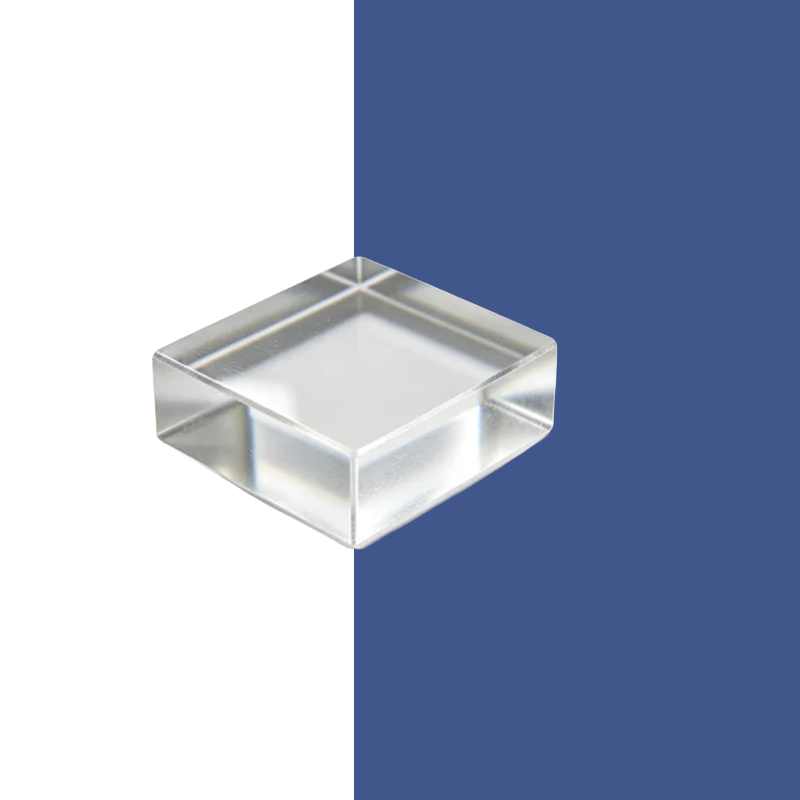
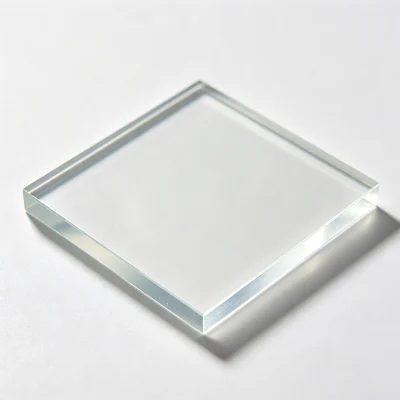
Polycarbonate, short for PC, is a high-performance transparent amorphous engineering thermoplastic. Its polymer backbone contains carbonate groups, and bisphenol A polycarbonate is the most common commercial type.
Key Advantages
- Excellent impact resistance PC has ultra-high toughness, with impact strength hundreds of times higher than ordinary glass and acrylic. It remains tough at temperatures from -40°C to 120°C and hardly breaks under strong impact, known as “shatterproof transparent plastic”.
- Good optical transparency Light transmittance reaches 88%–90%, close to glass. It features low fogging and stable optical performance, suitable for lens and transparent cover production.
- Wide temperature tolerance Long-term usable temperature ranges from -40°C to 120°C. It resists deformation under moderate heat and has good low-temperature toughness.
- Reliable electrical insulation It maintains stable dielectric properties over various temperatures and frequencies, ideal for electronic insulating components.
- Easy processing As a thermoplastic, PC can be injection molded, extruded, blow molded and thermoformed repeatedly after melting, supporting complex thin-wall precision parts.
- Inherent flame retardancy Standard PC achieves UL94 V-2 flame resistance without extra flame retardants; modified grades can reach UL94 V-0.
Disadvantages
- Weak scratch resistance: The surface gets scratched easily without hard coating treatment.
- Poor chemical resistance: It is corroded by strong alkali, ketones and aromatic solvents, prone to stress cracking.
- UV aging issue: Unmodified PC turns yellow and brittle under long-time sunlight exposure.
- Molding internal stress: Improper processing causes residual stress, leading to cracking later.
- Regular PC contains BPA, so BPA-free grades are required for food-grade products.
Common Applications
- Electronics & appliances: Phone cases, charger housings, LED lamp covers
- Optical products: Eyeglass lenses, camera lenses, display protective panels
- Daily goods: Water bottles, food containers, safety goggles
- Automotive & construction: Car lamp shades, transparent safety shields, skylight panels
- Safety equipment: Anti-impact protective shields, riot helmets
Material parameter table
| Parameter Name | Reference Specifications |
|---|---|
| Price | Calculated based on raw material cost, part volume, processing difficulty, order quantity and surface treatment |
| Delivery time | Prototype order: 3–5 working days; Mass production: 7–12 working days |
| Wall thickness | Minimum 1.0 mm; optimal 1.5–5 mm; Extra thick walls need stress relief annealing to avoid cracking |
| tolerance | Standard tolerance ±0.08 mm; Precision tolerance ±0.03–0.05 mm with additional cost, complies with ISO 2768-m |
| Maximum part size | CNC solid sheet/rod machining: 1200 × 1000 × 300 mm |
| Available PC Grades | 1. Unfilled general-purpose PC (transparent, natural black)2. UV-stabilized PC (outdoor anti-yellowing)3. Flame retardant PC UL94 V0 (electronic housings)4. Glass fiber reinforced PC (10%/20%/30% GF, high rigidity)5. Impact-modified high-toughness PC6. PC/ABS alloy (balanced heat & impact resistance) |