Definition
Electrolytic polishing (short for electropolishing, EP) is a precision electrochemical metal surface finishing process, regarded as the reverse reaction of electroplating.
The metal workpiece acts as the anode submerged in special acid electrolyte; controlled direct current triggers selective anodic dissolution. Microscopic protrusions on the metal surface dissolve preferentially to level roughness, remove micro burrs and create mirror-bright, ultra-clean metal surfaces without mechanical abrasion or extra coating layers.
It applies to conductive metals: stainless steel, aluminum, titanium, copper, brass and nickel alloys.
Core Working Mechanism
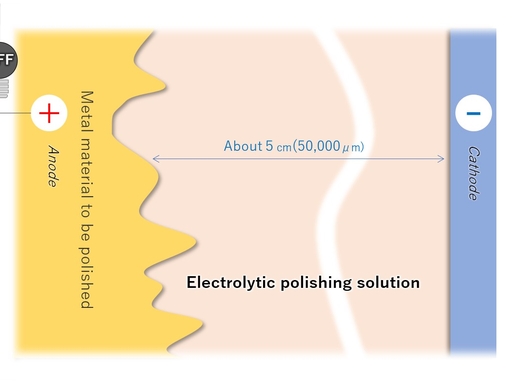
- Connect the workpiece to DC positive terminal (anode), inert metal plate as cathode inside electrolyte tank.
- After power-on, a high-resistance viscous ion film forms uniformly on the metal surface.
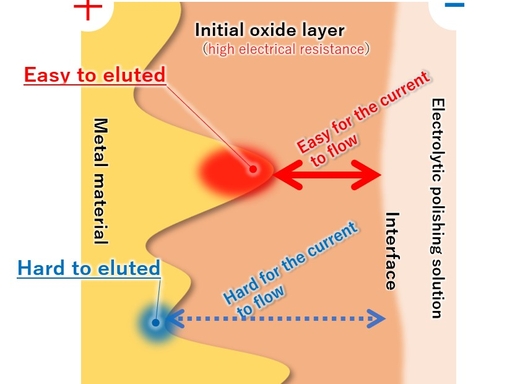
- The viscous film is thinner on surface peaks and thicker in surface valleys.
- Current density concentrates on thin-film convex areas, accelerating metal ion dissolution; recessed zones with thick film bear low current and barely dissolve.
- Continuous differential dissolution gradually eliminates micro peaks, leveling scratches, tool marks and burrs to achieve smooth mirror finish.
- For stainless steel, EP simultaneously generates a dense, uniform chromium-rich passive film to boost corrosion resistance.
Standard Process Flow
- Degreasing & Ultrasonic Cleaning Remove cutting oil, fingerprints, grinding debris to avoid surface defects.
- Rinsing Multi-stage flowing water wash to eliminate alkaline cleaner residues.
- Electrolytic Polishing (Core Step) Immerse parts in matched electrolyte under fixed voltage, temperature and time; remove 0.5–5 μm thin metal layer from surface.
- Neutralization & Pickling Neutralize residual strong acid electrolyte to prevent post-treatment corrosion.
- Final Rinsing (Hot + Cold Water) Fully flush chemical residues from tiny surface pores.
- Drying Hot air dehydration to avoid water spots.
Key Advantages of Electropolishing
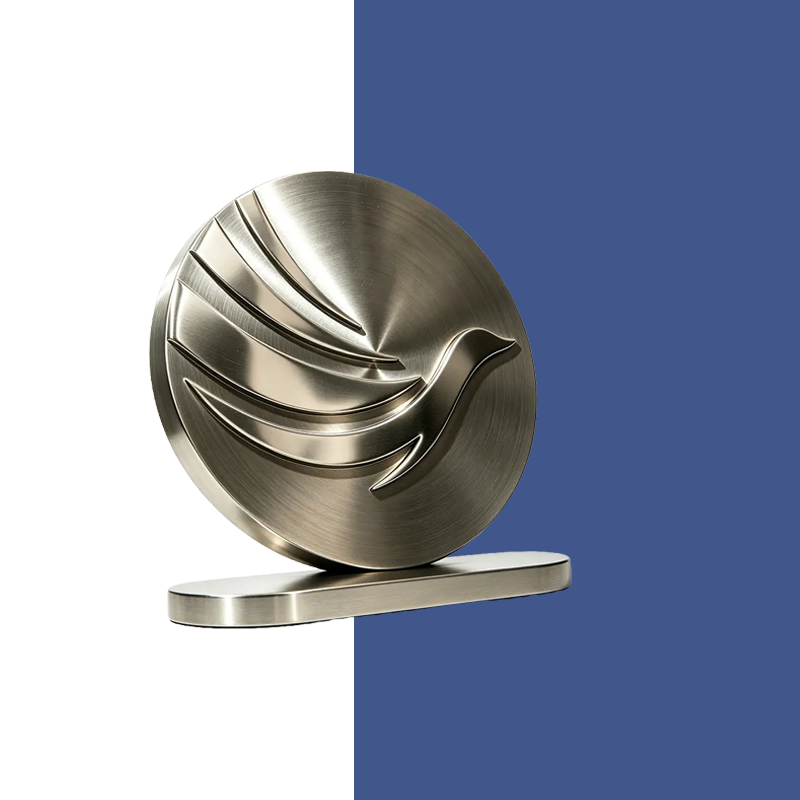
- Perfect Surface Leveling & Mirror Gloss Eliminates micro burrs, grinding scratches and uneven texture; reduces surface roughness by 1–2 grades, reaching Ra 0.01–0.2 μm mirror effect.
- No Mechanical Stress & Deformed Layer Unlike mechanical buffing, EP generates no compression stress, metal flow or surface metamorphic layer; ideal for thin-walled, precision and fragile components.
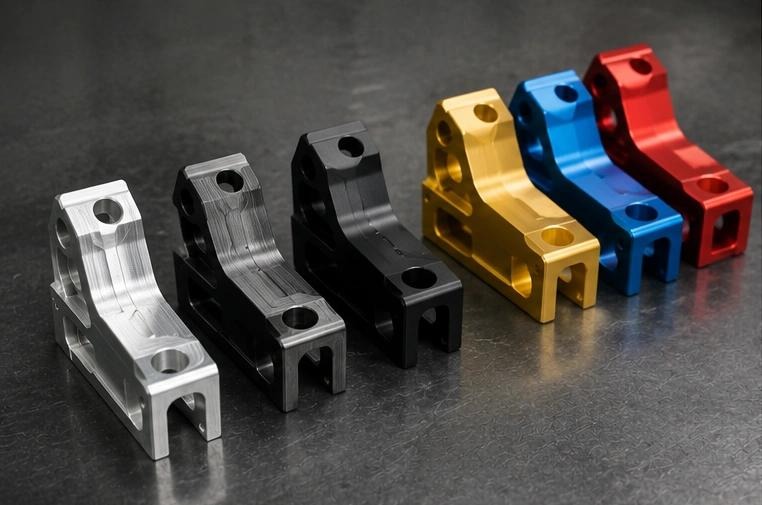
- Polishes Complex & Hard-to-Reach Geometry Electric field penetrates deep holes, narrow gaps, internal pipes and intricate cavities that grinding wheels/polishing cloths cannot access. Batch processing is available for high efficiency.
- Ultra-Clean & Anti-Bacterial Surface Smooth non-porous surface minimizes particle adhesion, bacteria growth and fluid residue; meets strict hygiene standards for medical and food equipment.
- Enhanced Natural Corrosion Resistance Especially for stainless steel: EP forms uniform chromium oxide passive film without mechanical damage, greatly improving rust resistance in humid or saline environments.
- Stable Dimensional Control Only a tiny metal layer is removed; dimensional tolerance loss is predictable and controllable for precision CNC machined parts.
- Uniform Finish on All Surfaces Consistent brightness on edges, inner walls and curved surfaces without uneven polishing marks.
Limitations & Disadvantages
- Material Specific Electrolyte Required Different alloys (304/316 stainless steel, aluminum, titanium) demand exclusive polishing solutions; poor versatility across all metals.
- Edge Rounding Risk Sharp corners and thin edges dissolve faster, causing slight chamfering; unsuitable for parts requiring strict sharp edge tolerance.
- High Chemical & Equipment Cost Polishing electrolyte contains concentrated strong acids with strict safety and waste treatment requirements.
- Cannot Remove Deep Defects Deep scratches, pits and heavy oxidation layers need pre-grinding before EP treatment.
- Limited Material Removal Capacity Only thin surface material can be stripped; not applicable for heavy stock removal.
Main Industrial Applications
- Medical Devices: Surgical instruments, implant accessories, hypodermic needles, sanitary tube fittings (hygienic, anti-corrosion, non-toxic)
- Food & Beverage Equipment: Stainless steel pipelines, mixing tanks, valves, food processing molds (easy sanitization, no residue buildup)
- Aerospace & Precision Hardware: Titanium alloy structural parts, hydraulic components, ultra-precision CNC parts
- Semiconductor & Vacuum Equipment: Vacuum chambers, fluid manifolds, gas pipelines (ultra-clean, low particle emission)
- Daily Hardware & Decoration: Stainless steel tableware, watch parts, decorative mirror metal trim
- Metallographic Specimen Preparation: Stress-free surface for accurate microscopic microstructure observation
Comparison: Electropolishing vs Mechanical Buffing
表格
| Item | Electrolytic Polishing | Mechanical Buffing/Grinding |
|---|---|---|
| Surface Stress | Zero residual stress | Severe compression stress & deformed layer |
| Complex Inner Cavities | Fully accessible | Cannot reach deep holes/narrow gaps |
| Micro Burr Removal | Complete micro-burr elimination | Residual tiny burrs remain |
| Hygiene Performance | Ultra-smooth, low bacterial adhesion | Micro grooves trap dirt & bacteria |
| Corrosion Resistance | Improved passive film on stainless steel | Damages natural passive layer |
| Edge Condition | Slight edge rounding | Sharp edges retained |
| Batch Efficiency | High, multiple parts processed together | Low, manual one-by-one operation |